
 •
Rating:
•
Rating:
THE REVIEW
The Jethro Tull, led by Ian Anderson, certainly need no introduction. What can be said about one of the most important prog-rock bands of the seventies? This British quartet, born in the late sixties, alongside Gentle Giant, Van Der Graaf Generator, and King Crimson, are among the major exponents of progressive music from thirty years ago and still today are a source of inspiration for prog metal bands like Dream Theater and Symphony X.
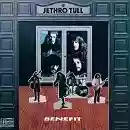
After the second beautiful album "Stand Up," which contained good moments such as the early hits "Nothing Is Easy" and "A New Day Yesterday," Ian Anderson and company recorded a very good album entitled "Benefit." This CD is considered by many as a transitional album of the band or as the predecessor of the GRAND MASTERPIECE "Aqualung." The style of the songs, compared to the folk atmospheres of "This Was" and "Stand Up," is rather hard, more dark, and sometimes even hard rock like the Led Zeppelin. The album, therefore, as you might have guessed, presents various styles, alternating between hard pieces ("To Cry You A Song"), folk ballads ("Inside"), very beautiful melodic songs ("For Michael Collins, Jeffrey And Me"), and some incredible virtuosity of Ian Anderson's flute ("Play In Time"), with the addition of four very interesting bonus tracks like "Teacher" and "Witch's Promise".
The album starts with Ian's beautiful initial flute introduction, which leads to the fantastic "With You There To Help Me," a melodic song with alternating hard parts that create a magical atmosphere played in perfect Jethro Tull style. In the rest of the track, you can appreciate the technical skills of Anderson on flute and Martin Barre on guitar, who manages to perform very beautiful rock-blues solos. It continues with "Nothing To Say," which begins with a rather particular riff and then flows into a very emotional melody, supported by Ian Anderson singing impeccably, managing to unleash every emotion in every note of this fabulous piece. "Alive And Well And Living In" is another track rich in melody, where John Evan's flute and piano blend perfectly, and Barre's distorted guitar gives its contribution in the engaging chorus. "Son" can be considered the least convincing track on the record, although the band still offers a pleasant hard rock piece with some bluesy tones typical of the seventies, enriching this track. The fifth track is the fantastic ballad "For Michael Collins, Jeffrey And Me," where Ian sings divinely and accompanies himself on acoustic guitar, managing to convey very strong emotions, making this piece one of the most beautiful tracks on the album. With "To Cry You A Song," a great hard rock song is masterfully played by guitarist Barre, thanks to his very interesting riffs and solos, where you can hear some influences of Led Zeppelin or even Gentle Giant from the "Octopus" period.
"A Time For Everything" keeps the album on very high levels, a bit reminiscent of the style of the previous "Alive And Well And Living In," both for the folk-rock style and the short duration. "Inside" is a ballad where Jethro Tull manages to combine in just under four minutes the characteristics of their sound, namely folk, melody, and rock. A very beautiful song, especially for Cornick's notable bass work. The next "Play In Time" is a fabulous and incredible piece, especially for the initial flute "riff" and Anderson's subsequent solos, Barre's surprising and strange guitar effects, the powerful rhythm of bass and drums, and a bit of psychedelia that adds an extra touch of originality to this astonishing Jethro Tull piece. The last song on the album is the sweet ballad "Sossity; You're A Woman," reminiscent of some pieces from "Aqualung," such as "Mother Goose" or "Up To Me," where you can also hear a beautiful organ by Evans in the background accompanying the guitar arpeggios, magnificently concluding this lovely Jethro Tull album.
The subsequent tracks featured in "Benefit" are bonus tracks that do not function as fillers, but this time further enrich the CD. "Singing All Day" is a song with very pleasant jazzy rhythms, while "Witch's Promise" is a famous and interesting ballad from the band, whereas "Just Trying To Be" is a folk piece not very exciting. The last track "Teacher," which has influences from the Grand Funk Railroad during the "We're An American Band" period, features a rather powerful riff by Barre and a quite catchy and enterprising chorus with a great performance by the whole band, including Evans who contributes with his keyboard parts.
Loading comments slowly
Summary by Bot
Jethro Tull’s Benefit is a pivotal album showcasing a darker, harder prog rock style with folk and blues influences. The band’s technical skill shines through diverse tracks, highlighted by Ian Anderson's flute and Martin Barre’s guitar work. Seen as a bridge to the masterpiece Aqualung, this album mixes melodic ballads and hard rock with emotional intensity. The bonus tracks add further value without feeling like fillers.Tracklist Lyrics Videos
Jethro Tull
Jethro Tull are an English rock band formed in 1967 and long led by Ian Anderson. They are known for blending progressive and folk rock around Anderson's prominent flute and for landmark early-1970s albums such as Aqualung and Thick as a Brick.84 Reviews
Other reviews
By the green manalishi
"Benefit was the continuation of Stand Up: it contained heavy rock riffs along with a few more acoustic and delicate episodes."
"Ian Anderson is one of the greatest lyricists in rock history."
By sanvalentino3
If we could step out of the comfort zone that tells us Aqualung is the Masterpiece and that Benefit is just a good Jethro Tull album... I'd be inclined to say the opposite.
Ian Anderson... revels in it like a pig in mud.
