
 •
Rating:
•
Rating:
THE REVIEW
Jethro Tull, distinctive feature: Ian Anderson.
Indeed, the main architect behind the career of this band has undoubtedly been the “pied piper” Anderson with his genius, immense creativity and, let's be honest, sometimes madness. The most brilliant high point in the long history of this group is probably the 1971 album, “Aqualung”, a prime example of the kind of music to which the Tull have accustomed us over the years: a Progressive Rock with vigorous Hard elements mixed with a strong Folk vein dictated also by a massive but never trivial use of the legendary flute that embroidered and seasoned with particular fantasy the various tracks of this and their other albums.
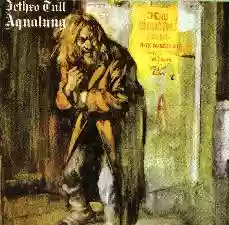
Even before inserting the disc into the player, one is immediately struck by the highly original and very enigmatic title and cover in terms of meaning. "Aqualung” is the name of a tramp (invented by Anderson's mind) who is then depicted, in fact, on the cover and is meant to indicate one of the main themes addressed within the album, which is the living conditions of the poorer strata of society. Another theme of great importance, touched upon especially in the second part of the record, is then an articulated reflection, through sharp and venomous irony, on the church and religion.
In addition to the great mastery of the flute, Anderson displays another peculiarity that allows him to interpret all his songs to the fullest: a voice capable of perfectly adapting to the theme of the songs performed, shifting from rough, harsh, and aggressive tones (as in the title track or the captivating Cross Eyed Mary) to calmer, serene, and composed tones (especially in acoustic tracks such as Slipstream or Cheap Day Return) always with great professionalism and effectiveness.
I wouldn't dwell too much on the album's tracklist except to say that it is very varied, alternating turbulent moments (Up To Me, Hymn 43 or Locomotive Breath) with more introspective and refined parts (Mother Goose or Wondr’ing Aloud).
Instead, I reserve special mention for the song, in my opinion, the symbol of “Aqualung”: I'm talking about “My God”. What can I say? Certainly a masterpiece made such by its structure: distant echoes of guitar chords, which become more and more intense, more sustained. These are joined by a heavy piano accompanying the scathing voice ready for its anticlerical invective. Could the Flute be missing? Certainly not, Anderson indeed delights us with a wonderful solo that leads into epic and grandiose choruses driving the song to its highest point and then back down again to the melody of the first part. Any other word diminishes the majesty of this song. Just listen to it!!!
Loading comments slowly
Summary by Bot
The review praises Jethro Tull's 1971 album Aqualung as the band's creative peak, highlighting Ian Anderson's inventive flute work and dynamic vocals. Themes include social issues and religious critique. The album is noted for its variety, blending hard, progressive, and folk elements. Special mention is given to the track "My God" as a masterpiece showcasing the album's depth and power.
Jethro Tull
Jethro Tull are an English rock band formed in 1967 and long led by Ian Anderson. They are known for blending progressive and folk rock around Anderson's prominent flute and for landmark early-1970s albums such as Aqualung and Thick as a Brick.84 Reviews
Other reviews
By Stràfiko Piezzecore
One of these is Aqualung, the 1971 album by Jethro Tull. It’s the story of a tramp – Aqualung, indeed – seen as a product of a self-generated and destructive humanity.
An album that – for crying out loud! – cannot be missing from the shelves of a person with honest intellectual capabilities.
By alaindelon
He would take it all back and, with conspicuous embarrassment, would immediately apologize and rush to compliment him, the great Jan.
Aqualung will especially appeal to those who particularly love the Medieval era because undoubtedly one can particularly sense in the last songs the medieval English charm, the theme of the wanderer and the minstrel.
By STIPE
"The famous supreme guitar solo by Martin Barre leaves you breathless. One of the best solos of all time!"
"The album has represented a milestone in the history of rock, certifying the legend 'of the man who played the flute on one leg.'"
By pier_paolo_farina
An album whose half is dedicated to harsh criticism of those churches intent on hoodwinking the pious souls.
His flute so supreme and coquettish adorning both My God and Cross Eyed Mary, two pieces that fall perfectly so beautiful and charming.
