
 •
Rating:
•
Rating:
THE REVIEW
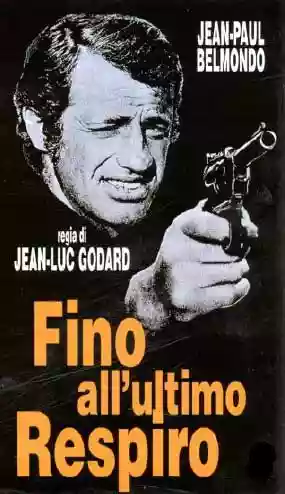
"Breathless" film by Jean-Luc Godard, is a tribute to American noir and to Humphrey Bogart, the classic icon of the genre, but it is also an ironic farewell to that way of making cinema and to the gangster figure as it had been portrayed until then, no longer tough and winning, but a loser with neither art nor part.
The plot is of extreme simplicity: the young amoral and indifferent delinquent Michel (Jean Paul Belmondo), kills a policeman while traveling to Paris in a stolen car. Despite being wanted by the police, he manages to reach the capital, where he finds refuge with Patricia (Jean Seberg), an American student he had met in the past, and he will try to convince her to leave with him to Italy, while the police investigate the murder of the policeman.
Analyzing the film, which is nothing more than a trivial crime story and nothing more, we realize that some of the classic rules used in film construction before then are radically modified. The conventional dependence of the director on the screenplay is downsized, giving more space to the director's creativity, allowing the artist to imprint a personal style on the work. In this way, Godard created a fundamental work in the development of subsequent cinematography, introducing the use of the handheld camera, but especially conducting an in-depth study of the dialogues, never vulgar or artificial, indeed, of exquisite taste. This aspect is particularly noticeable while Michel and Patricia talk, argue, philosophize, in the woman's hotel room. Their atypical way of conversing for those times was the first thing that impressed me when I saw the film for the first time; I was literally fascinated by their conversation. "Why did you come here, Michel?" "Me? Because I want to make love to you again." "That's not a good reason, I'd say." "Yes, it is, it means that I love you." Belmondo speaks and acts like his "master" Humphrey Bogart, so he lives in his own reality because he does not like the real one, but he is spontaneous because he is entirely identified with the character, Michel is always himself, he does not copy his model. Jean Seberg supports him excellently, carving out the personality of a woman without certainties, indicated by the phrase "I don't know if I'm unhappy because I'm not free, or I'm not free because I'm unhappy".
In these long sequences, the director uses an unprecedented editing technique, cutting dialogues and joining scenes with no connection. For example, Belmondo is seen wearing a shirt, right after without it, or holding a cigarette, which is gone in the next shot. Surprisingly, the continuity of the scene does not lose effectiveness; on the contrary, it gives the film an unexpected dynamism. This technique was later adopted, and today it is used in music videos and advertising. In a scene, Patricia quotes William Faulkner, "Between pain and nothing, I choose pain, what would you choose?" Michel replies " Pain is for fools, I choose nothing" Then the young man realizes that his is a hopeless escape, unlike the gangsters of the past, he quickly loses the will to live, thus he flees, aware of the nothingness he is heading towards, making no compromises, all or nothing. After Patricia realizes they are not meant for each other, Michel's odyssey will end, as he had roamed Paris searching for a bit of money to leave for Italy with the girl, in reality without any purpose.
With a bit of pain, I will not describe the last scene, which features the charming Belmondo-Seberg couple (one of the most famous in cinema history) to leave some suspense for those who have not seen the film. "Breathless" is a film about the superficiality of living, the most famous manifesto of the Nouvelle Vague, and even today, it appears fresh, young, without having lost any of the vitality it had when it was first shown.
Loading comments slowly
Summary by Bot
Jean-Luc Godard's Breathless pays tribute to classic American noir while reinventing cinema with fresh narrative and stylistic approaches. The film's simplicity masks groundbreaking techniques such as handheld camera work and unconventional editing. Belmondo's and Seberg's performances bring depth to characters caught in existential uncertainty. The film remains a vibrant and influential landmark of the Nouvelle Vague movement.
Jean-Luc Godard
Jean‑Luc Godard (1930–2022) was a French‑Swiss director, critic, and leading figure of the French New Wave. Moving from Cahiers du Cinéma to radical filmmaking, he reshaped cinematic language through innovations in editing, sound, and narrative, later expanding into essay films such as Histoire(s) du cinéma.04 Reviews
