
• Rating:
THE REVIEW
Premise: two reviews of this film have already been published on the site; this is not another one, but a different critical angle - one that takes issue with the ‘banality of goodness’ and with the equally lazy habit of wrenching a story out of its historical context.
Grave of the Fireflies is widely hailed as a poetic anti-war masterpiece, which is precisely the problem. What the film really demonstrates is something closer to what might be called the banality of goodness: the impulse to extract a story from its very specific historical context and elevate it into a universal parable of innocent suffering.
The plot itself is almost skeletal. In the final months of World War II, the orphans Seita, a teenage boy, and his younger sister Setsuko slowly starve after running away from their grudging - but dependable - aunt.
The story is based on real events. But when Akiyuki Nosaka wrote it, he did not intend it as a tribute. It was a confession. Nosaka openly admitted that his own survival came at the expense of his sister’s. He stole food meant for her. He even struck her while she cried from hunger.
The film, however, transforms Seita into a tragic, fundamentally decent boy destroyed by circumstance.
- Moral ambiguity disappears.
- Confession becomes elegy.
- The audience weeps, safely reassured that tragedy has been purified into something noble. Much easier to cry when you don’t have to think about guilt.
But Seita and Setsuko were not casualties of some abstract “war.” They were casualties of a system that functioned exactly as designed. Total-war ideology, the tonarigumi (隣組) neighbourhood surveillance system, and state-controlled distribution of resources all worked to deprioritize civilian survival. The policeman who dismisses Seita and the doctor who offers nothing do not fail by accident. They just do their job, as thought in Imperial Japan. And yet the film lifts this machinery out of view, leaving behind only the purified image of innocent suffering.
Even Seita’s supposed tragic pride is often misread. It is not the hubris of a Greek hero. It is indoctrination. As the son of a naval officer, raised within a rigid hierarchy where begging signified disgrace, Seita cannot submit to his aunt’s authority. This is not merely a character flaw. It is militarist conditioning, thoroughly absorbed.
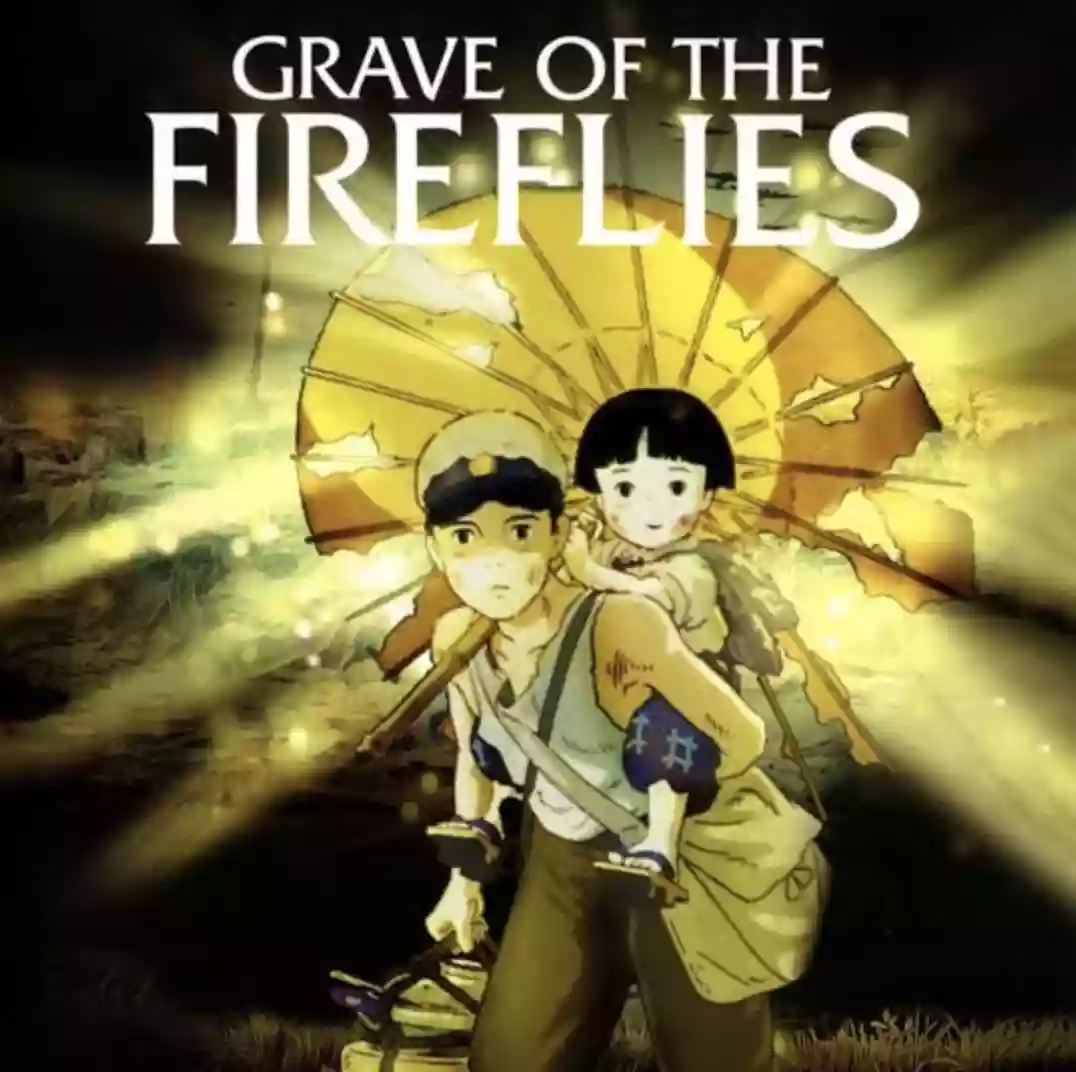
Then there is the aesthetic treatment. Studio Ghibli wraps the story in delicate beauty: pastel skies, gentle gestures, and of course the famous fireflies. But those fireflies are not poetic symbols of fleeting life. They are small, pointless bursts of light extinguished by a system that assigned no value to small lives.
On screen, however, they glow like jewellery. Death becomes luminous, almost tender - a visual sedative. Critics, especially Italian ones, eagerly invoke poetica and universale, and suddenly the deaths of two Japanese children during the collapse of an imperial war state float free of history in a mist of “innocence destroyed.” Convenient. Comforting. But mostly misleading.
The poetica delle lucciole politely conceals the uglier reality: theft, starvation, resentment, and guilt. The fashionable “neorealist” label does little to clarify matters. Unlike the characters in Bicycle Thieves, who suffer within an indifferent postwar economy, the children in Grave of the Fireflies suffer under a system built around the logic of total war, a system in which civilian survival was negotiable.
None of this diminishes the film’s craft. It is devastating. Beautiful. Meticulously made. But its beauty performs a very specific trick: it comforts and universalizes.
In doing so, it quietly transforms Nosaka’s confession into something far more palatable: a sentimental meditation on lost innocence, carefully stripped of the machinery that produced the suffering in the first place.
But the fireflies are not poetry, they are evidence.
Loading comments slowly
Summary by Bot
This review challenges the conventional view of 'Grave of the Fireflies' as a universal anti-war masterpiece. It argues the film oversimplifies complex historical realities, sacrificing moral ambiguity for poignant sentimentality. The analysis contrasts Nosaka’s original confessional intent with Takahata’s poetic adaptation. The review notes Studio Ghibli’s aesthetic choices, claiming they comfort and universalize. It ultimately urges viewers to see beyond the beauty to the real machinery behind the tragedy.
Isao Takahata
Isao Takahata (1935–2018) was a Japanese film director and co‑founder of Studio Ghibli. Celebrated for Grave of the Fireflies, Only Yesterday, Pom Poko, My Neighbors the Yamadas, and The Tale of the Princess Kaguya, he championed animated realism and formal experimentation.06 Reviews
Other reviews
By squall_leonhear
Grave of the Fireflies is as wrenching as few other products, but unlike many of them, it is not so forcibly.
If it manages to touch your heart even half as much as it did mine, you can only give in to tears and be thankful that such horror is no longer part of our lives.
By Survivor 12
"Grave of the Fireflies is not a film for children."
"This film did not achieve success, overshadowed by the release of My Neighbor Totoro in the same year."
