
 •
Versione 1
Rating:
•
Versione 1
Rating:
THE REVIEW
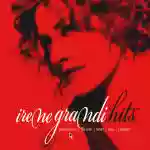
IRENEGRANDI.HITS (2007) 4.5/10
You might be wondering why talk about Irene Grandi, who is, all in all, a rather irrelevant figure in the vast Italian music scene? Good question. Firstly because you never forget your first love, and she was my first (not very chaste) one, and secondly because while rummaging through the piles of knick-knacks accumulated over the years, I found a double CD (one that, back in the day, sold incredibly well) by the aforementioned Grandi Irene which I had the audacity to listen to again just a few days ago. It’s a total of 140 minutes: I think over at the Quirinale, if they read this review, they should at least grant me an honorary degree honoris causa.
To my surprise, of the 33 songs present (apparently there’s also an edition with one more track), I remembered more than half, which means our singer really churned out chart hits (as the title suggests) by the truckload in a rather short period, between 1992 and 2007, the year this greatest hits was released. It sold like crazy thanks (or because?) of that “damned” song that dear old Pippo Baudo rejected at the 2007 Sanremo Festival, and which became the catchphrase of that same summer: "Bruci la città". As for Bianconi, and consequently Baustelle, aside from a few things, they’ve always left me rather indifferent (if not actually annoyed, with those songs full of pseudo-adolescent university malaise that, after you turn 30, just make you laugh), and I never really loved this song either. After all, there was already the old "Se bruciasse la città" by Massimo Ranieri, which was more than enough, and then the lyrics of the song, which as usual tries to sound “high” and philosophical, boils down, when you get to the core, to the banal "Come te non c'è nessuno" from “pavoniana” memory, plus a series of extremely annoying quotes: "…E tutti quei ragazzi come te non hanno niente..." comes from "Tous les garçons et les filles", while the “spietato” "...muoia sotto un tram, più o meno tutto il mondo..." presumably refers to the double-decker bus that hits the lovers in the Smiths’ "There is a light that never goes out". So, Bianconi piles on the quotes and manages to cook up the “big hit” of the year: had he even put half an original idea in, it might have been better, but that’s life, you can’t have it all.
Anyway, yeah, it’s a greatest hits, so everything’s here: from "Un maledetto motivo" to "Bum Bum", from "Che vita è" to "Lasciala andare", with a few tracks that probably wouldn’t be allowed anymore today. Just think of "Per fare l’amore" (she doesn’t want a man to love, but to sleep with so she can have a baby, then he can just get lost: now think of the gender-reverse, would they let you record that today?). Needless to say, Grandi, who has never written even a single line of her own songs, has always had help from big names, most notably Vasco. Although even he was at his most downward phase; just like her early, carefree songs—which might be her best ("Fuori"; "T.V.B.")—but unfortunately have aged terribly (and are modest to the point of ridiculousness: the word "sedere" (butt), not "culo" (ass), is almost treated like a shockingly iconoclastic turn of phrase—and this was already 1994!).
Still, our heroine treats us to a few unplugged tracks in this double album. Now, I’d forgotten about these, and with good reason—they’re all terrible, except maybe, and it’s a big maybe, "Bum Bum" (which I still think is the only decent song she ever performed). Grandi (I mean Irene, not Serena) does have a nice voice, I’ll grant her that, but her career has always been teetering between lowest-common-denominator commercial pop, "Radio Italia" summer Sunday afternoon songs, Festivalbar ditties and not much else (often with arrangements that are nothing short of abysmal, or annoyingly “trendy”): never taking advantage of her abilities has always seemed a complete heresy to me, or maybe no record executive ever gave her the chance to take herself seriously. And what does she do? She gets her revenge this time by weighing down the double CD with all sorts of covers: thus, she massacres Battisti ("Uno in più"), demolishes Mina ("Sono come tu mi vuoi"), butchers Bruno Martino ("Estate") and murders Aretha Franklin ("A Natural Woman"). Then, since jazz “ennobles” any road paved with good intentions, she throws in a piano and voice number, "E' solo un sogno" (by the late Paolo Benvegnù), which she turns into a moan somewhere between lethargic and faintly sentimental.
So, there’s nothing worth saving, you’ll say. No, there’s a little something. "In vacanza da una vita" (recorded in a new version); "Cose da grandi", unplugged, works. But you really have to dig with your bare hands, especially because the last track is just insane: it’s the remix of "La tua ragazza sempre", club and tunz-tunz at maximum volume with the “special” contribution of Ricky Montanari (and who’s that?). No, Mr. President, I don’t actually deserve the honorary award. I admit that this last track (almost 7 minutes long), after barely two minutes I skipped it.
Loading comments slowly
Summary by Bot
The reviewer found 'Irene Grandi - Hits' underwhelming, granting it the lowest possible rating. The compilation fails to impress, particularly for those familiar with Irene Grandi’s body of work. Little stands out in this release, making it one to skip for all but the most dedicated fans.Tracklist Lyrics
01 Un motivo maledetto (04:47)
03 T.V.B. (03:53)
06 In vacanza da una vita (2001 version) (04:51)
08 (You Make Me Feel) Like a Natural Woman (03:39)
09 Che vita è (04:26)
11 Eccezionale (04:38)
13 Un bagno in mare (04:39)
14 Fai come me (03:38)
15 Verde, rosso e blu (04:15)
16 Per fare l'amore (03:34)
Irene Grandi
Irene Grandi is an Italian pop-rock singer active since the early 1990s, known for radio staples and Sanremo performances. Her catalog spans chart hits, collaborations with prominent songwriters, and multiple compilations.02 Reviews
Other reviews
By marcounali
She has proven with her simplicity, skill, and charm that she deserves it.
One of the many mysteries surrounding the already gloomy domestic music scene.
