
 •
Rating:
•
Rating:
THE REVIEW
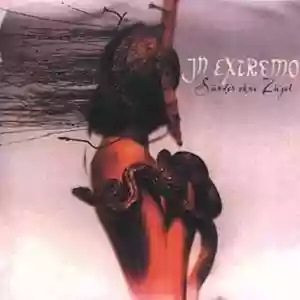
Germany, Anno Domini 2001. In Extremo, a collective of 7 members, have already embarked on the path of Folk Metal and "Sünder ohne Zügel" is the third album associated with this particular genre. With "Weckt Die Toten", they marked the definitive transition from strictly medieval music to an original mix (although not the first attempt in Rock history in this sense), made of instruments, languages, themes, and both medieval and modern sounds. The first three works (the aforementioned "Weckt Die Toten", "Verehrt und Angespien", and this "Sünder ohne Zügel") form a cohesive whole, even though some evolution can be recognized from one album to the next (which will become more radical in the future), starting with the first album, more rigid and dry, progressing to a fuller and more detailed sound. The voice is always rough and hoarse, the electric guitar increasingly dominates along with the drums and bagpipes. Other traditional instruments are used consistently but are less crucial than before. The result is a robust and powerful impact, which does not become aggressive or disturbing, but leads us into a hard and varied rock that entertains. Often the tracks open with the sound of the guitar, a testament to the pursuit of modernity (perhaps an early millennium trend?) which will increase their fame shortly. Here and there are slower and acoustic tracks (as every production of a certain type requires) usually based on harps, such as "Mersburger Zaubersprüche II", but they are sporadic episodes because the album is rhythmic and Germanically robust. In Extremo are, admittedly, very skilled at alternating original pieces, songs of popular origin, carmina burana, without compromising the uniformity of the album.
"Wind" is the opening track, very fast, with a chorus that explodes with bagpipes. "Krummavísur" is more rhythmical and complex; the third track "Lebensbeichte" derives from the Carmina Burana but makes less impact than the first two. Among the 13 tracks that make up the CD, I note "Vollmond", which was released as a single, a good song with a melancholic vein, the "classic" beautiful ballad "Die Gier" in the middle of the album, and the very lively "Der Rattenfänger" and "Nature Nous Semont". A separate discussion deserves "Omnia Sol Temperat", undoubtedly the gem of the album, also derived from Orff's Carmina Burana (completely unrecognizable in the original version, of course, but still sung in Latin), perhaps the most compelling and captivating piece.
Overall, "Sünder ohne Zügel" completes and concludes, in my opinion, the first part of their career as it reaches a higher level of maturity compared to the two previous ones, without deviating too much from them. Already the following "7", while maintaining the basic characteristics of the band, is softer and slightly relegates medieval instruments to the background, vaguely "rammsteinizing" the attitude of the septet.
Loading comments slowly
Summary by Bot
In Extremo's 2001 album 'Sünder Ohne Zügel' solidifies their transition to a unique Folk Metal style that blends medieval instruments with modern rock. The album features powerful instrumentation dominated by electric guitars and bagpipes, balanced by occasional acoustic tracks. It completes the first phase of the band’s career, showing increased maturity and cohesion. Highlights include tracks inspired by Carmina Burana and the memorable single 'Vollmond.'Tracklist Lyrics Videos
In Extremo
In Extremo are a German medieval/folk metal band formed in the mid-1990s, known for fusing ancient instruments (bagpipes, hurdy-gurdy, shawms) with heavy guitars and drums. Their early albums helped codify the modern medieval metal sound.02 Reviews
