
 •
Rating:
•
Rating:
THE REVIEW
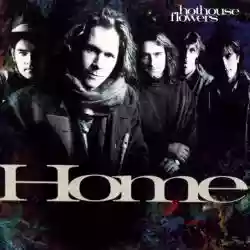
Everything that left me puzzled while listening to their debut now, with this follow-up, makes me want to applaud them. On the second try, Hothouse Flowers manage to perfectly blend the pale-reddish hue (from freckles) of Irish skin with the black of the coloreds in America.
To avoid any misunderstandings, I repeat that the move in question wasn't the most original, as many artists, English but also Scottish and Irish, tried (and each in their own way succeeded) to find their own way to combine the music that was in the air and in their DNA with the music that was inside their dreams, tastes, and ambitions.
The Hothouse Flowers, far from associating themselves with extremely pompous stuff like some U2 tracks (stuff like "I Still Haven't Found What I'm Looking For" and "Desire"), while not benefiting from any Prince-like ballads or from any other colored artist, experiment in 1990 with their personal recipe.
In just one episode, gospel is tied to traditional folk, and it's safe to say this is not a folk-based work. Incidentally, the other folk track doesn't even head west but favors the east of Buddhist temples. As for the rest, for pop, here there's total abundance: ranging from the spiritual-rock of "Hardstone City" to the very slow blues of "Sweet Marie," where the song of the slaves becomes a lullaby. In a couple of pieces, "Give It Up" and "Giving It All Away," there is the perfect marriage between epic-Celtic torment and the all Afro-American panic of finding oneself in the complete glory of God. In "Christchurch Bells," the same solution applies to a placid ballad: the old soul extinguishes among a thousand fumes the animistic anxiety of someone who has always had the wind in their hair.
The Hothouse Flowers' recipe seems universal and suits even the famous "I Can See Clearly Now" by Johnny Nash; it even works in "Movies," a more danceable piece with an instrumental space for funky bass, exotic percussion, and... harmonica (!). In a continuous escalation, in "Shut Up And Listen," it seems as if the poor Africans were not deported to the USA but to Ireland, to work and reside there: here, Ó Maonlaí is the first bluesman on the face of the earth to tackle an Irish traditional. And what if the first song in history wasn't a tribal chant but a Gaelic prayer?
In the end, it's possible that this could be a valid interpretation: for as much as it's revamped, keeping up with the times, African or Irish as it may be, the music of the Hothouse Flowers, in the religious quest for truth, seems (knowingly?) to aspire to be the echo of a millennial voice.
Pagan rock.
Loading comments slowly
Summary by Bot
Hothouse Flowers' second album 'Home' successfully combines Irish musical heritage with African American gospel influences, creating a unique and heartfelt sound. The band avoids grandiosity, opting instead for a personal and authentic exploration of spiritual themes across various genres, from folk and blues to spiritual rock. Their experimental blend highlights deep cultural connections and offers a universal musical experience.Tracklist Lyrics Videos
Hothouse Flowers
Hothouse Flowers are an Irish rock band from Dublin, formed in 1985 by Liam Ó Maonlaí and Fiachna Ó Braonáin. They blend rock with Irish folk, soul, blues and gospel, led by Ó Maonlaí’s expressive vocals and piano. Their debut People introduced a spirited fusion that continued through Home, Songs from the Rain, Born, and Into Your Heart.05 Reviews
