
 •
Rating:
•
Rating:
THE REVIEW
1. Herman Melville writes the story in 1852/1853, as the failures of Moby Dick and Pierre foreshadow the decline of his publishing fortune.
2. In the 19th century, Wall Street is a melting pot of immense wills for power.
Produce, consume, die. Hustle, get high, die [CCCP, Die, in Affinities-divergences between comrade Togliatti and us. On reaching adulthood, 1985].
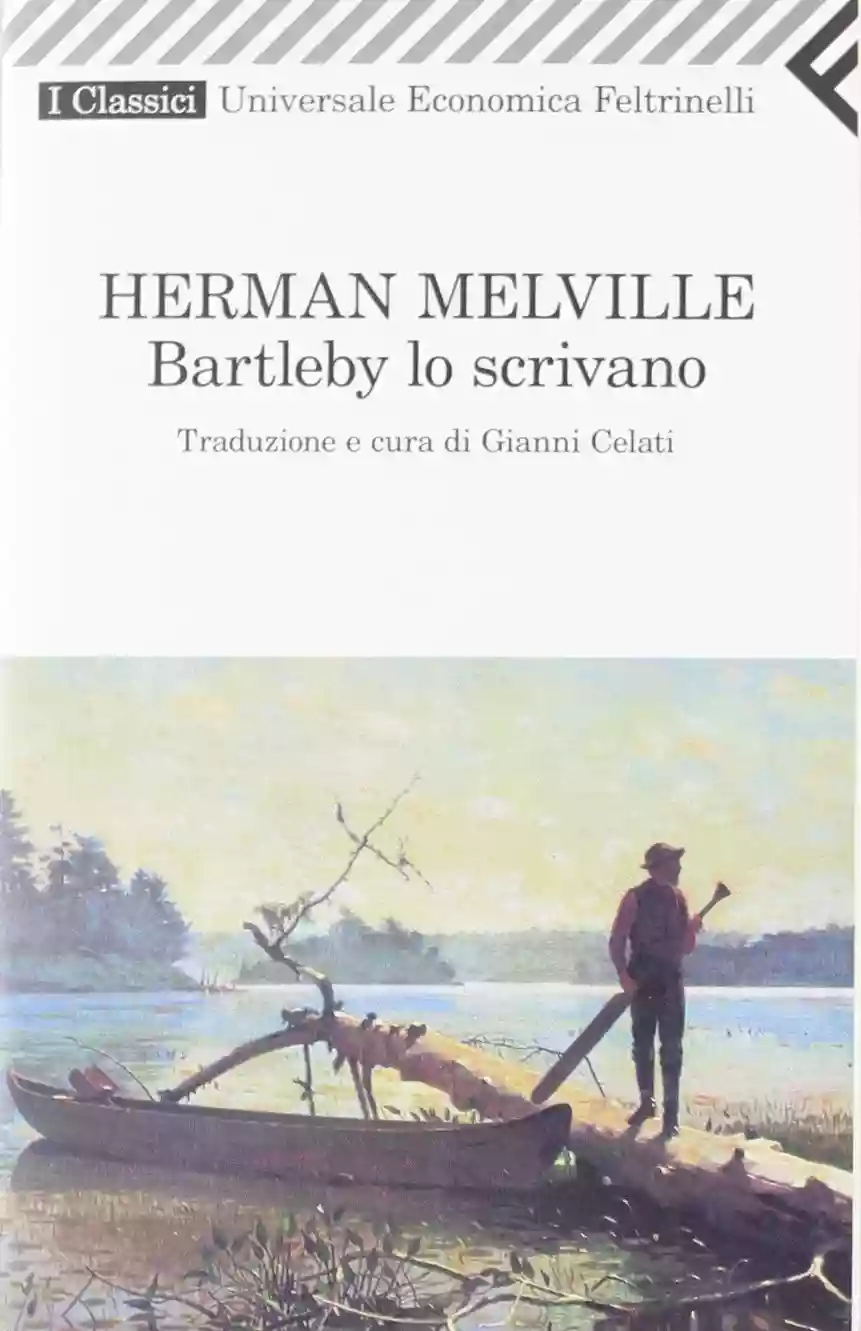
Bartleby is the scrivener of a wealthy lawyer – the narrator of this story – who refuses to write and remains motionless, deaf to any reasonable persuasion, contemplating the ruins; B. counters the wicked laws of the cosmos with his I would prefer not to.
Would you be a little reasonable? I would prefer not to be a little reasonable [H. Melville, Bartleby the Scrivener, Feltrinelli, 2009, p. 26; original ed. Bartleby the scrivener, 1853].
3. Ah, happiness courts the light, therefore we believe the world to be cheerful; but misery hides from afar, therefore we believe misery does not exist [H. Melville, Bartleby the Scrivener, op. cit., p. 10].
We navigate without a compass in the sea of Imbrium of madness. We endure the toil of the oars. We watch the living beings gnawing on the deck. We partake in the banquet. We survive by means of white muscles. One, two, three, four, five...
Contrarily, Bartleby is a rebel: he opposes his own will to the supposed norms of humans and nature. B. no longer drafts legal documents. B. does not obey the contractions of the heart. I would prefer not to. Against reason, against capital, against God.
Beliefs are shaken by Bartleby. The shining of the free man rattles the bourgeois who devours the prey. Stay hungry. Stay foolish. I would prefer not to.
The warning of B. echoes, you are and not must be.
He sleeps, with kings and counselors of the earth, who build in devastated places. Ah, Bartleby! Ah, humanity! [H. Melville, Bartleby the Scrivener, op. cit., pp. 47 and 48].
Loading comments slowly
Summary by Bot
This review highlights Herman Melville's 'Bartleby the Scrivener' as a powerful narrative of quiet rebellion against societal and cosmic norms. Set in 19th century Wall Street, Bartleby's refusal to conform challenges beliefs about reason, capitalism, and human nature. The story is praised for its enduring philosophical impact and Melville's insightful prose. It reflects on themes of misery, power, and individual will with profound seriousness.
Herman Melville
Herman Melville (1819–1891) was an American novelist, short story writer, and poet of the American Renaissance, best known for Moby-Dick (1851) and Bartleby, the Scrivener (1853). His work was underappreciated during his lifetime and underwent a major critical revival in the early 20th century.05 Reviews
Other reviews
By dado
Bartleby’s behaviors ended up repeating and taking root, disturbing the peace the lawyer had defended at all costs.
Alienation and solitude are sprinkled with a touch of mystery, of absurdity, of no-sense.
