
 •
Rating:
•
Rating:
THE REVIEW
Balance.
This single word might be the one that best defines the true strength of this album. An absolutely versatile album, which could bring together lovers of classical music and extreme metal enthusiasts in a whirlwind of indescribable emotions. There is growl, as there are female soprano voices, there are powerful guitars as there are violins, there is the drum as there are the timpani. Singing in German as in English, in Latin as in Italian. There is as much Metal as classical music. A certain folk peeks here and there, fading before music that seems to emerge from a 17th-century court. There are many elements, seemingly contrasting, that meet and intersect here, without ever overlapping, without any element overshadowing the others: and there is the Balance.
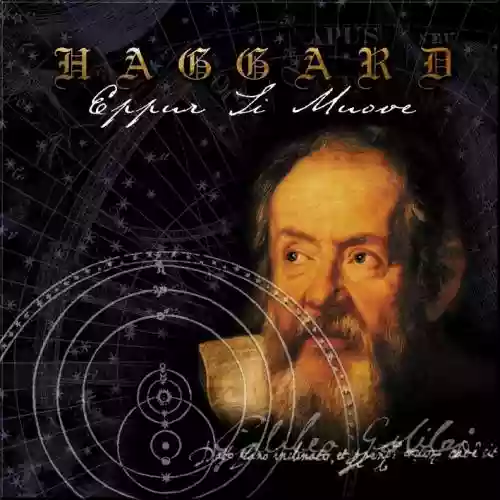
From this incredibly original Band, composed of no less than eighteen members, including guitarists, growlers, sopranos, violinists, tenors, pianists, organists, cellists, flutists, clarinetists, and drummers, led by the mighty Asis Nasserij, singer, guitarist, and main composer, "Eppur Si Muove" is born, an incredible concept album centered on the figure of the brilliant Galileo Galilei, who with his discoveries challenged and ultimately destroyed the ecclesiastical Aristotelian doctrine, which saw the earth at the center of the Universe; "Eppur Si Muove!", the famous exclamation of Galilei, referring to our planet, which would cost him dear: the Inquisition, which after years of torture forced him to recant in exchange for his life. Right from the opener "All'inizio è la morte", one enters an incredibly evocative atmosphere, and if the powerful initial choruses are followed by a narration in German, it's the soprano's vocalizations that precede the entrance of the guitars and finally Nasserij's violent Growl, and then the speed increases and the violins, alongside the guitars, overwhelm and leave one stunned, only to slow down, and start again, and again the sweetness of the soprano alternates with the brutality of the growl, and there the song ends, and a baroque interlude leads to "Per Aspera Ad Astra", seemingly more aggressive than the previous; but it is in the central break that one is enchanted by the almost folkish rhythms, accompanied by the crashing of the waves, and from a solitary violin come the guitars, and magically one reconnects with the compelling central riff.
And thus, through medieval-like rhythms, opens first cheerily, then melancholically, "Of Might Divine", destined to turn into a fury at the limits of Death Metal, just to underline the unpredictability of the songwriting of these Haggard. "Herr Mannelig", placed after the Vivaldi interlude "Gavotta In Si-Minore", is perhaps the least successful track of the album, maybe a bit too simple, and truly unrepresentative of the sound of the work, which still has to show its best, and it does so with "The Observer" and "Eppur Si Muove", the first one fast, the second one more paced, where, besides an incredible soprano choir, a Growl break in Dante's language stands out, one of the most exciting moments of the album. To close it all, the melancholic piano of "Largetto/Epilogo Adagio".
In conclusion, "Eppur Si Muove" is a masterpiece of songwriting, which for its versatility goes beyond any type of categorization, and for its balance can manage to satisfy multiple palates. Recommended.
Loading comments slowly
Summary by Bot
Haggard's "Eppur Si Muove" is a remarkable concept album blending extreme metal with classical, folk, and baroque influences. The album showcases a perfect balance of growls, soprano vocals, and diverse instrumentation, centered on Galileo Galilei's story. With an ensemble of eighteen members, it offers dynamic songwriting and emotive contrasts that transcend musical categories. Despite one less successful track, the album impresses with its originality and emotional depth.Tracklist Lyrics Videos
Haggard
Haggard is a German symphonic/medieval metal ensemble founded by Asis Nasseri in 1989. The group blends classical instrumentation and choral writing with extreme metal elements and multilingual lyrics across concept-driven releases.03 Reviews
