
 •
Rating:
•
Rating:
THE REVIEW
In September 1973, a certain Peter Hall, director of the National Theatre in London, entrusted the Gryphon with composing the music for the play "The Tempest" by Shakespeare. Following the proposal, the group recruited bassist Philip Nestor, thus adding the first electronic instrument to the ensemble; this situation brought the band closer to the more common and sophisticated Prog Rock of the '70s, but without ever abandoning Medieval and Renaissance atmospheres.
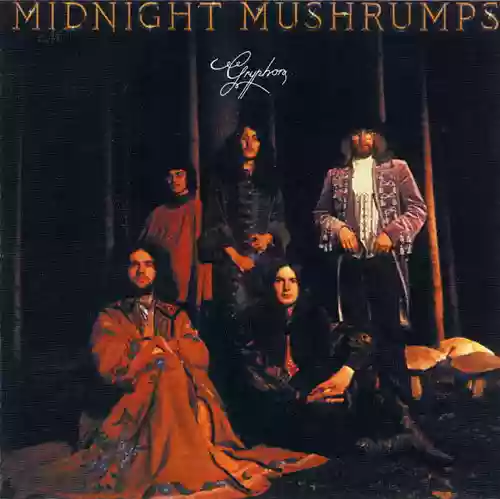
The early months of 1974: with this addition to the lineup, "Midnight Mushrumps" was released, the second Album by Gryphon, which begins and exalts with the 19-minute title Suite, never pompous and cloying as is usually thought of the latter (a point certainly not marginal in Prog, the Suites, as we all already know). Furthermore, this Suite is strongly inspired by the previous theatrical experience of Shakespeare's "The Tempest" as suggested by the title itself. Someone in the previous review of the eponymous Album by Gryphon pointed out to me the flaw of the frequent highs and lows in volume, which stand out especially in this long piece. However, in my opinion, this fact does not penalize the product; on the contrary, it gives greater depth to the atmosphere, adding an even stronger aroma to our sense of hearing.
Overall, the album appears more thoughtful and more on a Progressive line, while maintaining the typical instrumentation of the debut, even if its use is less redundant. The absolute gem of this second discographic chapter is "The Ploughboy's Dream," a piece of minimal duration (perhaps because it is preceded by the initial suite), but which in such a short time manages to offer (to those who are sensitive to pure Medieval sounds!) indescribable shivers and emotions. You have to listen to it to understand what I'm saying! The remaining pieces are all instrumental, finding extreme strengths in the blend of Medieval/Renaissance traditional instruments and the only (for the moment) electric instrument, namely the bass mentioned earlier. This excellent feature hints at what will be the worthy follow-up to "Midnight Mushrumps." Among the instrumental pieces to be highlighted are: "The Last Flash Of Gaberdine Tailor"—there doesn't exist among modern musicians such a well-blended combination of Renaissance music and Prog—and "Ethelion," the last piece of the Album, but which is a skillful demonstration of what an electric instrument like the bass can do, alone and immersed among acoustic instruments!
Both "Gryphon" and "Midnight Mushrumps" have been reissued on CD by various labels; the most interesting is the "Castle Essential" reissue, which brings together the first two Albums in a single box, moreover with the addition of the lost track "Crossing The Stiles" in "Gryphon".
After "Midnight Mushrumps," the Gryphon is preparing to release what is justly considered their Masterpiece, which puts the Group into the Olympus of Prog Rock... namely "Red Queen To The Gryphon Three"!
Loading comments slowly
Summary by Bot
Gryphon's 1974 album 'Midnight Mushrumps' builds on their unique medieval and renaissance music style with a progressive rock influence, enhanced by the addition of electric bass. The title suite inspired by Shakespeare's 'The Tempest' stands out as an epic, dynamic piece. Shorter tracks like 'The Ploughboy's Dream' deepen the medieval atmosphere. The album blends acoustic and electric instruments skillfully and remains a key step toward their acclaimed prog rock masterpiece 'Red Queen to Gryphon Three.'Tracklist Lyrics Videos
Gryphon
English progressive rock group formed by Royal College of Music alumni Richard Harvey and Brian Gulland, later joined by Graeme Taylor and Dave Oberlé. Known for fusing crumhorns, bassoon and other early instruments with rock, they achieved acclaim with Red Queen to Gryphon Three (1974), shifted toward pop on Treason (1977), and returned in the 2010s with new albums.04 Reviews
