
 •
Rating:
•
Rating:
THE REVIEW
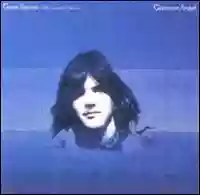
A true great innovator of American music, Gram Parsons recorded his last album, Grievous Angel, in the summer of 1973, which was released posthumously in January 1974. His music is a refined blend of devastating beauty made up of country, rock, and soul. The originality of this formula, previously experimented with the Byrds and the Flying Burrito Brothers, perfected in his first solo album “GP” the previous year, was completed in this work, to which the excellent vocal harmonies of Emmylou Harris (Parsons' partner at the time), the electric guitar of James Burton (Elvis Presley's guitarist), and the acoustic guitar and dobro of Bernie Leadon (the never praised enough multi-instrumentalist of the Eagles) made significant contributions.
The desolation of the territory, of certain immense spaces, in these compositions is brought close to the inconsolability of certain states of mind, as if some loneliness were truly unfillable, boundless like a desert. The strength of this despair, the depth of its call, is the connective tissue of Parsons' music. His vehicles of expression are country, with which he wonderfully paints the echo of certain boundless spaces, rock, which infuses dynamism and communicative immediacy into the material, and soul, which animates everything with the purest passion, at times blinding. Found dead at 27 in a hacienda in the desert near Joshua Tree, he had already written unforgettable pages like “Hickory Wind”, in “Sweetheart of Rodeo” by the Byrds (1968), or “Sin City”, in “The Gilded Palace of Sin” by the Flying Burrito Brothers (1969), and again “She”, in GP, a splendid ballad dedicated to Emmylou Harris. But it is Grievous Angel that is Parsons' most formidable album, the perfect compendium of what he called “Cosmic American Music”, a spark created from the visionary reflection that the night sky over the Mojave Desert gave him, where he ventured with Keith Richards to take trips (the Stones' Wild Horses is from that dazzling period).
Here at times Parsons' songwriting is lava flow that solidifies, stops, and shapes the complexity of a story (“$1000 Wedding”), at other times it shines with meditations of love (“Brass Buttons”), brightens on the folds of memories (“Hickory Wind”, live) or manifests as a lacerating introspection, with the complicity of the wonderful score by Boudleaux Bryant (“Love Hurts”).
An excellent and restless musical spirit, a tattered and suffering soul, in the last piece he implored “In my hour of darkness / In my time of need / Oh Lord grant me vision / Oh Lord grant me speed” (“In My Hour Of Darkness”).
Was there something prophetic? Yes, if it referred to his music: today it is more relevant than ever.
Loading comments slowly
Summary by Bot
Gram Parsons' posthumous album Grievous Angel is a masterpiece that refined his blend of country, rock, and soul into what he termed Cosmic American Music. Featuring Emmylou Harris and notable musicians like James Burton and Bernie Leadon, the album conveys themes of desolation, love, and introspection. Parsons' songwriting captures boundless emotional landscapes inspired by the Mojave Desert. Grievous Angel remains his most powerful and relevant work.Tracklist Lyrics Videos
Gram Parsons
Gram Parsons (born Ingram Cecil Connor III, 1946–1973) was an American singer-songwriter who helped invent country rock and popularize what he called "Cosmic American Music." He worked with the International Submarine Band, the Byrds, the Flying Burrito Brothers and recorded the solo albums GP and Grievous Angel with Emmylou Harris.02 Reviews
