
 •
Rating:
•
Rating:
THE REVIEW
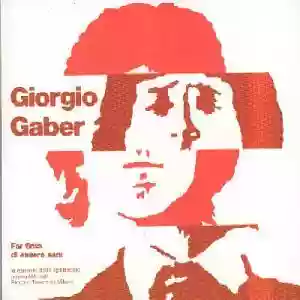
I noticed with a little disappointment that among the 5300 de-reviews on this site, there is only one about Giorgio Gaber. To remedy this gap, I will immediately insert one myself, apologizing in advance to those who love this unique artist (and in this case, the overused adjective is entirely appropriate) if I fail to adequately speak about an album that is unattainable for its depth of meaning and intensity of interpretation. In any case, I am convinced that if I manage to awaken (or awaken for the first time) the attention of readers and the curiosity of those who do not yet know Gaber, my effort will not have been in vain. Furthermore, I hope that someone with better means decides to review other Giorgio Gaber albums.
After this long premise, let's get to the album.
We are in the 73/74 theatrical season, Gaber brings this show to the stage, entirely written by him and Sandro Luporini. The album is a faithful reproduction of that show. Therefore, it is a live album, but the audience is very discreet, and the performance is so perfect that it might as well be a studio album. Although not exactly a concept album, it still somehow presents a central theme, a kind of thread that connects most of the tracks. It is an album that deals, from various points of view, with the crisis of the modern individual, who finds himself living within a complex and chaotic society, prey to stress, alienation, dissatisfaction, and the difficulty of perceiving himself in his own individuality. It starts with the title song, which somehow encapsulates the overall meaning of the work. In current society, man is forced to wear a mask of perpetual satisfaction, to always pretend in relationships with others, to cultivate ever-new interests and entertainments, in order to manage to hide from himself and others the oppressive sense of his own uselessness, his inability to fully integrate into the cycle of life. This sense of bewilderment and crisis, which is somewhat the key to understanding the entire album, is analyzed in the various tracks from different perspectives. We have tracks of acute and profound self-analysis, questioning the causes of the crisis ("Cerco un gesto, un gesto naturale", "L'elastico"), others endowed with surreal and corrosive irony ("Quello che perde i pezzi"), while some tracks place the individual's crisis within the social context, such as "La comune", where the utopia of an ideal life, all together, typical of the movements of those years, reveals all its inconsistency and hypocrisy, or the amusing but at the same time bitter "La marcia dei colitici". Another key song of the album is "Dall'altra parte del cancello", where in a comparison between a madman and us "who have the luck of being sane", in the end, Gaber lets it slip that in the end, all this difference then is hard to find. These are just some of the pieces, those where the theme of the album is more evident, but within the album we can find many other amazing songs, including some of Gaber's classics, such as "Lo shampoo", "La libertà", "Chiedo scusa se parlo di Maria".
In short, a timeless album, of extraordinary beauty and depth. Recommended to all who have not yet had the chance to know this artist.
Trust me, it's really worth it.
Loading comments slowly
Summary by Bot
This review highlights Giorgio Gaber's 1973-74 live album 'Far finta di essere sani,' a theatrical performance captured flawlessly on record. The album explores the crisis of modern man facing alienation, societal pressure, and the mask of false contentment. Its mix of profound self-analysis and sharp social commentary makes it timeless. The reviewer highly recommends the album to new listeners, praising its depth and artistic intensity.Tracklist Lyrics Videos
Giorgio Gaber
Italian singer-songwriter and theatre author, pioneer of teatro-canzone, active from the 1950s until 2003.28 Reviews
Other reviews
By RingoStarfish
"Irony transforms one of the greatest existential laments that Italian music remembers into a gigantic anecdotal fable."
"He explains our dilemmas to us, not limiting himself to singing them, but starting to recite them, like a sweet bitter comedy created based on our lives."
