
 •
Rating:
•
Rating:
THE REVIEW
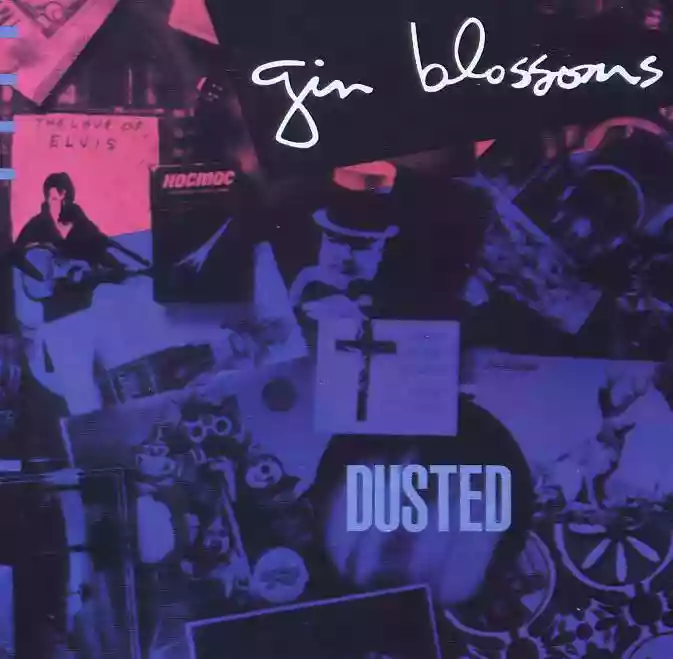
The first album by the Gin Blossoms, like what happened with many bands, especially in the nineties, is a work that initially went completely unnoticed and was re-released later by the major labels. Self-produced and under-produced, circulating almost exclusively around Tempe, Arizona, it confirms the insights gained from listening to "New Miserable Experience." Here we are three years earlier, the lineup is always the same, but the trademark is not yet there. This makes this album less blatantly pre-packaged for heavy rotation, but also of slightly lower quality (not only in sound).
If "Lost Horizons," "Found Out About You," and "Hey Jealousy" travel at twice the speed compared to their versions on "New Miserable Experience" (the latter two will be quite successful singles), the unmarked melody of "Found Out About You" loses a lot here, sacrificed on the altar of rhythm, and the execution style of all three tracks is decidedly inferior: they pay high dues to the Byrds in those endless arpeggios and various jingle jangles.
If in "New Miserable Experience" solos were felt more intensely, here the guitar parts multiply, the solos duplicate, not to mention this continuous ringing of guitars! If there were drum parts that weren't typical of the musical genre, here it's all a drum roll. The bass, then, travels at double the volume, number of notes, and execution speed.
The solos, then, in not exactly unpredictable tracks like "Something Wrong," "Idiot Summer," or "Slave Dealers Daughter," are undeniably the best part of the song.
The lack of production sees "Cajun Song" lose the accordions and gain the usual Rickenbacker, transforming the fair into an anonymous and sloppy evening for drunks inside a country-western bar. It's fine when it speeds up a bit more than usual ("Keli Richards"); less fine when it slows down more than usual to indulge in certain root candies, as in "Slave Dealers Daughter," although the usual saving solo arrives.
The form, in all the tracks, is more or less the same: verses almost always catchier than the choruses, lyrics that exhaust quickly, wide instrumental spaces, traditional sounds that mix with alternative tastes: a punk version of the Byrds, simultaneously outside the intellectual-collegial canons of Athens, and rather inside the worker and streetwise ones of Minneapolis.
The production in full major style of the next album increased the accessibility of the tracks but caused them to lose a lot of their original shine; it depowered the sounds of what would have been Loolapalooza root-rock but freed us from the nightmare of arpeggios and guitar jingling: after the first listen of "Dusted," I was called from the left and turned to the right.
Therefore, it is not recommended to listen to it while driving or under elections.
Loading comments slowly
Summary by Bot
Gin Blossoms' debut album Dusted offers a raw and less polished version of their later mainstream success. Though it lacks the production polish of New Miserable Experience, it showcases the band's youthful energy and Byrds-inspired sound. The album contains faster tempos and noisier guitars, with compelling solos but weaker vocal melodies. It is notable for its indie roots but may not appeal to casual listeners seeking radio-ready tracks.
Gin Blossoms
Gin Blossoms are an American rock band formed in Tempe, Arizona, in 1987. They broke through with New Miserable Experience (1992) and hits like Hey Jealousy, Found Out About You, Til I Hear It From You, and Follow You Down. Co-founder Doug Hopkins was dismissed during the NME era and died in 1993. The band split in 1997, reunited in 2001, and later released Major Lodge Victory, No Chocolate Cake, and Mixed Reality.05 Reviews
