
 •
Rating:
•
Rating:
THE REVIEW
1972 is the year of Gilberto Gil's return to his homeland after three years of forced exile in England. It's also the time to start anew, to reassess everything and put himself back in the game by processing the new influences absorbed in London.
Let's imagine what it meant to live through those years, immersed in that musical and cultural ferment, for a great artist like Gil along with his excellent tropicalist companion Caetano Veloso, the two of them who had already paved the way for Brazilian musical contamination. They breathe deeply the air of London clubs, witness the protests in the streets, and probably open the doors to new perceptions thanks to new synthetic substances.
"Expresso 2222" is the name of a train, the one that, as a boy, brought him back to Salvador after many years spent away from his city.
"Expresso 2222" is the name of a song that tells of a lysergic journey through time, on shimmering tracks towards infinity, starting from a land of wind, fire, water, and salt, up to the sky where Christ is seen ascending in a veil of bright cloud.
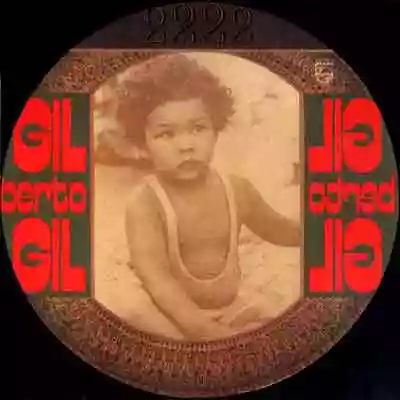
"Expresso 2222" is the name of this excellent album where Gil manages to win the challenge of summarizing all his musical, cultural, and personal experiences. He completes what tropicalismo set out to achieve in music. Freed now from the heavy burden of political protest against the dictatorship, which finds its new spokesperson in Chico Buarque, Gil manages to nullify, with his new wealth of experiences, the distances between the United Kingdom and Bahia, he builds a temporal bridge between the new and the past, the latter referring to the bossanova heritage and northeastern musical tradition.
"Pipoca moderna" opens the album with the sound of Indian flutes; it wants to be an embrace to his beloved land, and then "Back to Bahia" a funk-rock that exorcises all that nostalgia suffered during the exile. "O canto da ema" and "Chiclete com banana", are two pieces made successful at the end of the fifties by the good Jackson do Pandeiro, I would dare say two "standards" of Brazilian music, magnificently rearranged, the first in a rock style and the second in bossa-nova. And then "Oriente" to immerse us in spiritualist reflections and the beautiful "Sai do sereno", and so on, continuing the journey on this express, through a listen that lets itself be absorbed with ease, rich in ideas, well produced and even better played, a work that, for the aforementioned influences, could be a good start to approach Brazilian music.
Thank you, Gil.
Loading comments slowly
Summary by Bot
Expresso 2222 marks Gilberto Gil’s triumphant return to Brazil after exile, capturing his wide-ranging musical influences and personal growth. The album bridges tropicalismo, traditional Brazilian sounds, and modern experimentation. It’s a rich and accessible work, showcasing superb production and a cultural journey. This 1972 classic stands as a significant milestone in Brazilian music history.Tracklist Lyrics
01 Pipoca moderna (feat. Banda de Pífaros de Caruaru) (01:59)
02 Back In Bahia (04:37)
03 O canto da ema (06:23)
05 Ele e eu (02:20)
06 Sai do sereno (03:21)
08 O sonho acabou (03:33)
09 Oriente (06:01)
10 Cada macaco no seu galho (feat. Caetano Veloso) (04:25)
11 Vamos passear no astral (02:55)
12 Está na cara, está na cura (02:38)
Gilberto Gil
Gilberto Gil is a Brazilian singer, guitarist, and songwriter from Salvador, Bahia. A leading figure of Tropicália and MPB, he fused Afro‑Brazilian rhythms with rock, reggae, and pop across a career spanning from the 1960s to today.02 Reviews
