
 •
Rating:
•
Rating:
THE REVIEW
The shift imposed on Gang of Four post-Solid Gold wasn't the same, fortunate one that led bands like Talk Talk or, more generally in the mainstream realm, Tears for Fears in the '80s to successfully reinvent themselves (just think of the refined jazz pop of Spirit of Eden and the Brit-soul of The Seeds of Love).
With the departure of a key element of that brilliant post-punk from the late '70s, namely bassist Dave Allen, something breaks. The Gang of Four of '82, despite relying on three equally strong personalities: John King on words, Andy Gill on guitar, and Hugo Burnham on drums, can no longer replicate the glories of Entertainment and Solid Gold. Not that Sara Lee, who takes over on bass for this Songs of the Free, was just a newcomer.
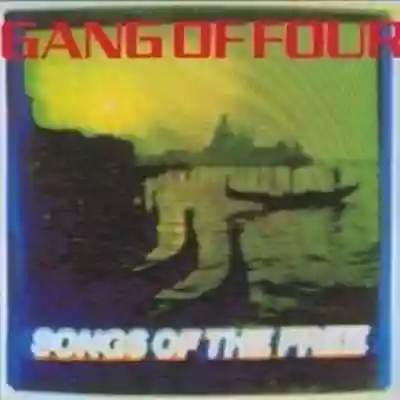
The third chapter of the most politically engaged band from Leeds is a strange experiment that, on the one hand, tries to maintain the rough and argumentative atmospheres of its predecessors, while on the other hand, it offers surprising roundness and lightness, especially in terms of sounds and vocal arrangements.
Already in the opener "Call me up," one is confronted with a more settled and predictable idea of a song that has nothing to do with the erratic glitches of the debut: regular bass, panoramic backing vocals, extremely stretched guitar. In short, compared to the diptych, there's less drive.
By the second track, you already know that the loyal fans of the first two albums have moved on to something else and that perhaps the GOF can engage with a new audience. Indeed, I Love a Man in Uniform is a stunning track: uptempo, danceable, singable. A disco track you wouldn't expect from those who wrote post-punk masterpieces like "To Hell with Poverty" and "Damaged Goods".
If for a moment you think that the GOF wanted to throw everything to the wind, you also hope, at the very least, that everything remains at the levels of Man in Uniform. And fortunately, Songs of the Free contains other good tracks. Like I Will Be a Good Boy, for example, with melodica and Gill's voice in the foreground, the more upbeat "We Live as We Dream, Alone," and the echoes à la Frankie Goes to Hollywood of the final "Of the Instant." We are, however, already in the new-wave realm.
In conclusion: not an epochal album like the first two but a nice prelude to the upcoming new wave (which will be confirmed by the subsequent "Hard"). The proof of dealing with some bright minds is still there. Simply put, as I said before, something has broken. And trying to repair it doesn't completely eliminate the cracks.
Loading comments slowly
Summary by Bot
Songs of the Free marks a transitional album for Gang of Four, blending post-punk roots with new wave and dance elements. The departure of bassist Dave Allen changes the dynamic, but newcomer Sara Lee brings fresh energy. Though it doesn't match the impact of earlier albums, it offers strong tracks like 'I Love a Man in Uniform' and shows the band's continued political edge. This album serves as a prelude to their future new wave direction.Tracklist Lyrics Videos
Gang of Four
Gang of Four are a British post-punk band formed in Leeds in 1976 by Jon King and Andy Gill with Hugo Burnham and Dave Allen. Known for Marxist-leaning, politically charged lyrics, angular guitar, and funk-driven rhythms, they released the acclaimed debut Entertainment! (1979) and influential follow-ups including Solid Gold (1981) and Songs of the Free (1982).08 Reviews
