
 •
Rating:
•
Rating:
THE REVIEW
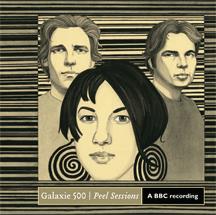
On a certain day in 1989, three somewhat unkempt young individuals showed up at Mr. John Peel's studio in BBC Radio 1, London. They wore crumpled clothes (unpressed), had long and dirty hair, and absent looks. Not even a Harvard degree could shake off their apathy: "everything has already happened; everything has already been written and listened to; and if there was something, we missed it." They are Galaxie 500: Naomi Yang, Damon Krukowski, and Dean Wareham; three young people from Boston.
Their music is the melancholic realization of having missed something; of not being in the right place at the right time; of not having done what they should have. If notes were letters, their sounds would be a 19th-century novel of regret: regret for someone not coming home, for a relationship gone wrong, for the Eighties in general, with their optimism and their naiveté. When these three Boston kids showed up to see Mr. John Peel, after being rejected by every American label, revolutions were breaking out elsewhere: in Russia, in Eastern European countries. While in Germany, the Berlin Wall was being torn down and sold as souvenirs, they were recording two live sessions; and then they signed a contract with Rough Trade US, which, after a few years, went bankrupt. Of those two recordings, only a few snippets remain; flashbacks that can't quite remember how they still recall.
See all the wonders that you leave behind
Enshrined in some great hourglass
John asked them, "Do you know Submission, by the Pistols?" and they, after exchanging a look, searching for confirmation in each other's eyes, began playing something that is the antithesis to the punk-rock anthem they were asked for.
John realized it wasn't the right night; that this band didn't follow trends, that this band wouldn't clean up at the box office. However, he intuited something fundamental: they knew how to express melancholy like no other, they knew how to describe nostalgia as only the big names like Leonard Cohen and Nick Drake could do. The wonders they had missed, they were able to recreate in music.
Staring at the kitchen sink
Feeling a plastic mood
Feel like things have gotta change
Their songs represent the philosophy of loss and regret, and perfectly describe the arc of their musical lives: swelling only toward the end, when the song is about to end, when someone has already hit the fast forward button on the tape player. They are a psychedelic déjà vu of atmospheres and moments they haven't lived: an homage to the Velvet Underground ("When Will You Come Home"), four excellent covers ("Submission" by the Pistols, "Final Day" by Young Marble Giants, "Moonshot" by Buffy Saint Marie and "Don't Let Our Youth Go To Waste" by Jonathan Richman); infinite inspiration for all shoegazers to come ("Blue Thunder", "Flowers" and "Decomposing Trees").
In 1990, Galaxie 500 disbanded; in the same year, the first pieces of the Soviet dictatorship started to fall, and millions of people gained freedom; but, as usual, they were somewhere else.
Loading comments slowly
Summary by Bot
This review reflects on Galaxie 500’s 1989 Peel Sessions, highlighting their unique melancholic sound and outsider status in the late '80s music scene. Despite early label rejection, their music captures regret and nostalgia with poetic depth. Their live sessions showcase a contrast with punk trends and anticipate shoegaze influences. Ultimately, their fleeting moment in the spotlight leaves a lasting emotional impact.
Galaxie 500
Galaxie 500 were an American indie rock trio from Boston—Dean Wareham, Damon Krukowski, and Naomi Yang—active from 1987 to 1991. Their sparse, dreamy records Today, On Fire, and This Is Our Music helped shape slowcore and dream pop.06 Reviews
