
 •
Rating:
•
Rating:
THE REVIEW
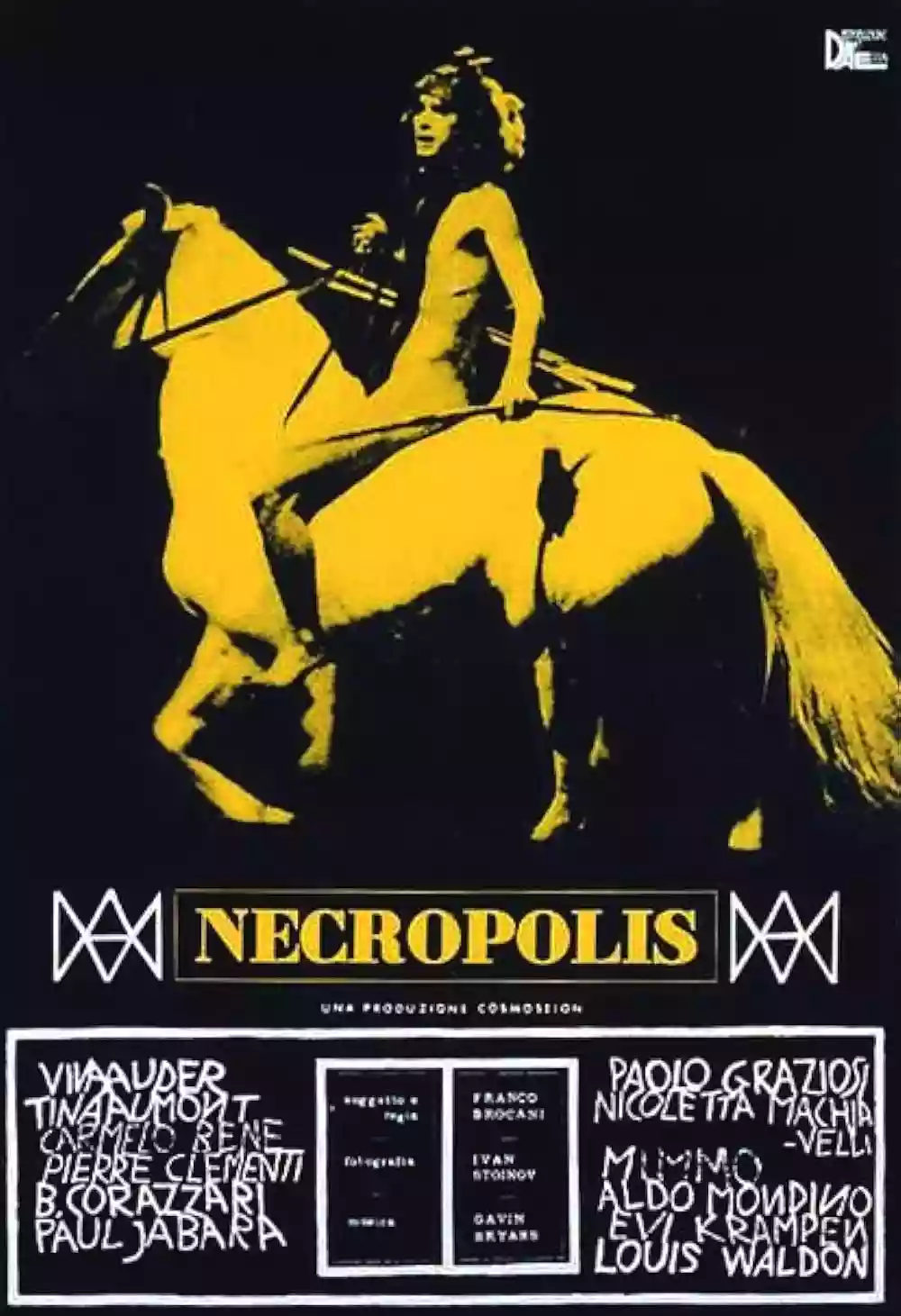
Once again, the "astonishment" in front of the passage of centuries... Brocani also tries to break his head in observing something with that idling member that is cinema... The beauty is that, in synthetic asepticity, he even succeeds.
The obvious, suddenly irritating strainings confuse the consumers by throwing them excess morsels, where, however, all this rigmarole of inconclusive baroque is the key to enter a room of eternity that knows the joke of becoming infatuated with itself, in order to preserve the purity of a boredom of an apparent immobility.
In reality, the analysis of a disregard for free will turns out to be whirling, where a maieutic is brought to communicate to ourselves the non-reflection in mirroring.
And here clinging to the shadows of epic figures of a past that remains still in the immediate, suggests that one of the many "eternal returns" are just particles, colors, fragments of impersonal sediments that stain our soul so that it can be briefly captured by the camera.
The momentary ghost pinched in its inertia lets us steal moments of infinity that slip through our fingers, resetting the concept of sacred.
And the existential revisionism proposed by Brocani without too much angst, is ruthless in its transcendent accumulation, where the mystical holds the value of anything else, where we manage to answer Carroll's question of the "raven-writing desk."
The sensationalism of protagonists who intervene to highlight the farce of life in which we are immersed, is a childish trick to trigger the litmus test of our animic lightness compared to the prestige of the characters.
The blue blood emerges from the millennial bastardness accumulated, in spite of any displayed heraldry. The gums hide with their archaic cobalt blue pigment the true nobility of conscience.
The red blood of Frankenstein's set design dilutes the possession of the ego, helped by "Snow White-like" litanies that immobilize the mechanization of the "want to do" with an infinite parlor. There is the freshness of the ephemeral memory of past triumphs which is immediately frozen by an absolute zero of atemporal stateless winds.
And by reluctantly flaunting found suspensions, one can frequent the absence of whiny drifts where the traitor memory yields no gains: remember that you must LIVE! Living is acting, and little devil Carmelo (Bene) tells us plain and simple that we are convenient moralists if we continue to play "living" his game.
The accompaniment to the erasure even of the moment of catharsis tosses us into unexpected zones dissolving us in the fair amount that befits us, finally. And the greatest gift is that with all this perpetual cemetery, the graves uncovered by the medium (Porto) Franco purge the horror vacui of death, fragmenting it into a lazy ridicule and reassuring us that "no matter what, it will be a success".
Any evolution passes through our decays. Not a little...
Loading comments slowly
Summary by Bot
Franco Brocani's Necropolis is a contemplative and poetic film exploring the passage of time and the interplay between memory, existence, and transcendence. Through a deliberate and minimalist approach, the film invites viewers to perceive eternity and the sacred in moments of stillness and decay. Brocani's work challenges conventional storytelling, offering a meditative experience on life, death, and the illusions of free will. The film's symbolic imagery and mystical undertones evoke a profound reflection on human consciousness and the ephemeral nature of being.
Franco Brocani
Italian filmmaker associated with experimental and avant-garde cinema; director of Necropolis.01 Reviews
