
 •
Rating:
•
Rating:
THE REVIEW
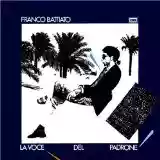
What I have been fighting for a long time, and for which I have decided to start writing here, is the breaking of the cliché, or better said, the lazy thinking, that mental self-analytical process that leads you to embrace an idea just because it is widely shared by the environment around you. Lazy thinking stems from common hearsay, market chatter, or sports bar talk, from the stereotype that, by recurring redundantly, ends up engraving itself on your consciousness and making you believe that the aforementioned thought is of your own formulation. In short, I don't care at all that "La Voce del Padrone" is deemed a masterpiece; I don't like it, I would comfortably give it a bèla stèla, but I'll put 3 so as not to shock the paying audience. That said, let's explain what is wrong with what we are talking about.
"La Voce del Padrone," like every respectable commercial product but with the necessary artistic pretensions, adapts the foreign to the Italian context. Battiato's synth-pop, devoid of the black existentialism of British origin, aimed to give the dance hall music of Romagna greater artistic dignity, while at the same time working to make the pill of experimental and avant-garde music not too hard to swallow for the average Italian public. The basic and generic philosophy permeated, and permeates, this LP throughout; where in Europe and America keyboard music was condensing with funk to generate an androgynous, cathartic, and revolutionary musical form (the 80's dance), on our side Battiato made everything frivolous and light, enjoyable, radio-friendly. Flat, harmless. Not to mention the cheap exoticism - with gypsy dancers, Jesuits, sentimiento nuevo - perfect for packaging a musical product suitable for the masses but that did not lose its character of "white work inspired by ethnic music," and therefore cultured.
Where European synth-music offered an innovative form of release for the desire for freedom loudly shouted by the marginalized, Battiato's only presented itself as its reactionary counterpart, consisting of a little poetry hinted at just enough to make the audience feel more cultured, a bit of black rhythm just to not miss out on the critical acclaim (which duly followed), and a somewhat cheeky androgyny, with melody and gay-friendly vocal settings that were rather fawning.
You don't fight the revolution with flat music. You can't deceive people with pop music made just for the sake of it. Or maybe you can. The fact is that this Battiato album broke sales records, and do you know how? By giving Italians exactly what they wanted: objectively clichéd music, but that sounded welcoming. One should forget any possible creative process here, because what matters is the result: a work that, whether you like it or not, has not withstood the inexorable passage of time and that, if at one time it could appear (to the less attentive) fresh and fun, if not "innovative," today it turns out to have aged rather poorly, as well as, in some respects, truly embarrassing.
Loading comments slowly
Summary by Bot
This review challenges the widespread acclaim of Franco Battiato's album La voce del padrone, calling it clichéd and lacking true artistic innovation. It highlights how the album adapted synth-pop to Italian culture in a superficial, commercial way, and argues that the music has not aged well. Despite its commercial success, the review finds the album flat and uninspired, questioning its revolutionary impact.Tracklist Lyrics Videos
Franco Battiato
Italian singer-songwriter and composer from Sicily, Battiato moved from 1970s electronic/progressive experimentation to chart-topping pop with La voce del padrone, and later to spiritual, orchestral and operatic works. He frequently collaborated with arranger Giusto Pio and philosopher Manlio Sgalambro.100 Reviews
Other reviews
By voiceface
A brilliant mix of pop, electronic, and symphonic music.
'La Voce Del Padrone' is a unique record in Battiato's career and, as such, can be praised or criticized, depending on the idea one has formed of the artist and his qualities.
By piergiorgio
Listening to him puts us in touch with a part of ourselves we didn’t know we had.
Every Battiato record is a window through which to look within oneself. Take a look, if you feel like it.
By STIPE
La Voce Del Padrone is an intense album, rich in meaning, that delivers great emotions.
Thanks to the language of pop-rock Battiato tells and brings to life moments of his personal life.
By Fiumani
With over a million copies sold, in 1981, Franco Battiato forcefully enters the homes of all Italians, creating a phenomenon of vast and unimaginable proportions.
Strangely and exceptionally, in Italy, everyone begins to hum about 'Jesuit Euclideans' and 'minima immoralia'...
By trout_mask
"The album remains coherent until the end without excesses or flaws."
"Battiato’s typical refinement, the richness and originality of the arrangements... remain intact."
