
 •
Rating:
•
Rating:
THE REVIEW
Yes, I know, there were already numerous reviews of this album, don’t hold it against me.
The fact is that it’s hard to hold back when analyzing and praising what the Maestro has done, especially on this record.
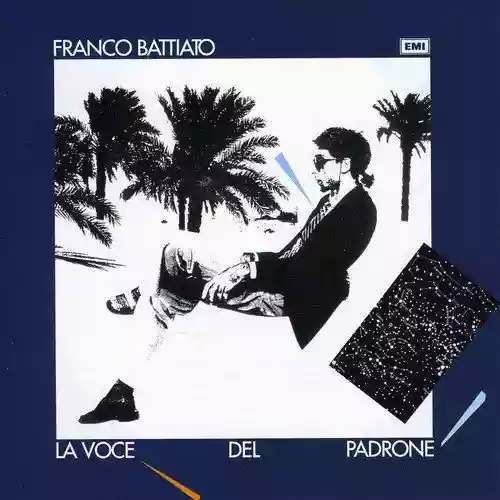
Battiato reached this work in 1981; he was no newcomer to music. He knew what it meant to make music, he knew what it meant to craft a song properly, and he knew how to break the rules. Yet on this album, in some ways, he outdoes himself: this doesn’t mean even remotely that his earlier, more experimental style should be considered second-rate, nor should we give in to the temptation of thinking that the true Battiato, deep down, is only this. But all things considered, I believe that with this album the singer-songwriter reaches one of his highest levels.
The musical component, for example, is a pop that rarely even grazes rock territories—except for certain aspects I’ll mention shortly—but for this very reason is far from cloying. There are frequent interesting rhythms, basslines far above the ordinary, synthesizers used wonderfully. The lyrics range from nonsense to irony, from filler to atmosphere. In short, after several albums that had crowned him one of the most eclectic artists in the prog/experimental scene, Battiato was opening up to the mainstream market, which would mark the imagination of 1980s Italy, establishing him as a pop icon of exquisite taste, a cut above everyone else.
"Summer on a Solitary Beach" features an inspired and very pleasant riff, the song unfolds with elegance and atmosphere. "Bandiera Bianca" has a more loaded lyric and you can easily perceive, not at all subtly, the more critical soul of the songwriter. Musically, even the second track doesn’t have particularly pressing rhythms, yet the way its pieces fit together shows the deep knowledge Battiato possessed of the various rock idioms. "Gli uccelli" is a more atmospheric piece, where our artist sharpens the characteristics that made him famous, including, of course, his vocal technique. "Cuccuruccuccù", extremely famous, recalls some echoes of classic punk rock with a very tight rhythm section and a track that pushes the BPM, yet still manages to offer catchy atmospheres. "Segnali di vita" is sometimes a bit overlooked, but I find it a very nice piece with good ideas, even if in truth it’s not up to the level of other tracks; "Centro di gravità permanente", another classic, continues the ironic and critical streak with a very muscular chorus. The beautiful "Sentimento Nuevo" closes the record.
The album is rather short, the songs don’t seek deep prog structures but know where to hit in terms of complexity. In this way, Battiato follows the lineage of a long tradition of Italian singer-songwriters from De André to Caparezza (and perhaps he is even the initiator of his own more modern turn) who, I like to say, are superior to those who do not understand them and are also superior to those who claim these are misunderstood artists.
Because Battiato’s mischievous smile, his shrewd irony, his carefully crafted (if not always profound) lyrics, his heavenly melodies, his melodic interweavings, are still a lesson today; Battiato continues to inspire generations, especially with this album. Crowds of young people still know this record, a real turning point in Italian culture. And so, I think, let’s listen to it again, in an attempt to go beyond all the trappings and truly understand this album.
"Mare, mare, mare, voglio annegare." Score: 94/100.
Loading comments slowly
Summary by Bot
MosMaiorum84's review highly praises Franco Battiato's 'La voce del padrone,' rating it 5 out of 5. The album is recognized for its profound influence on Italian pop music and innovative blend of styles. The review emphasizes the album's lasting cultural relevance. Battiato's creativity and lyrical depth are highlighted throughout. It's a recommended listen for anyone intrigued by influential music.Tracklist Lyrics Videos
Franco Battiato
Italian singer-songwriter and composer from Sicily, Battiato moved from 1970s electronic/progressive experimentation to chart-topping pop with La voce del padrone, and later to spiritual, orchestral and operatic works. He frequently collaborated with arranger Giusto Pio and philosopher Manlio Sgalambro.100 Reviews
Other reviews
By voiceface
A brilliant mix of pop, electronic, and symphonic music.
'La Voce Del Padrone' is a unique record in Battiato's career and, as such, can be praised or criticized, depending on the idea one has formed of the artist and his qualities.
By piergiorgio
Listening to him puts us in touch with a part of ourselves we didn’t know we had.
Every Battiato record is a window through which to look within oneself. Take a look, if you feel like it.
By STIPE
La Voce Del Padrone is an intense album, rich in meaning, that delivers great emotions.
Thanks to the language of pop-rock Battiato tells and brings to life moments of his personal life.
By Fiumani
With over a million copies sold, in 1981, Franco Battiato forcefully enters the homes of all Italians, creating a phenomenon of vast and unimaginable proportions.
Strangely and exceptionally, in Italy, everyone begins to hum about 'Jesuit Euclideans' and 'minima immoralia'...
By trout_mask
"The album remains coherent until the end without excesses or flaws."
"Battiato’s typical refinement, the richness and originality of the arrangements... remain intact."
