
 •
Rating:
•
Rating:
THE REVIEW
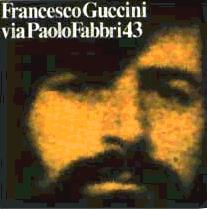
It was back in 1976 when Guccini released this album, which came to light after a couple of years of gestation, as the writing of the first tracks dates back to '74. A varied record that, unlike the latest productions, does not follow a guiding thread that binds the pieces together.
It starts with "Piccola storia ignobile", a song about abortion, dark, sad, steeped in suffering, where the indifference that public opinion often reserves for these tragic "everyday life stories" is clearly apparent. A song that, by the author's own admission, proved difficult to write, given the delicacy of the subject. It narrates a story that represents the synthesis of many stories on the topic with which Guccini came into contact.
The second track, "Canzone di notte n.2", is a song that smells of the night, a vivid depiction of the typical Guccinian night-time vices; wine, friends, songs, ... But not only revelry in his words, but also reflections on existence, thought, politics, reflections that nevertheless and inevitably will be forgotten "...that then, in the end, we will all have two meters of land."
Then comes "L'avvelenata", a piece that will become one of the singer-songwriter's strong points, mainly due to the revolutionary atmospheres against the stereotypes that the lyrics evoke. A manifesto of protest against the era and against those who wanted to see in Guccini a prophet, a dispenser of truth, sung, almost shouted, by someone who instead considers himself just a storyteller from taverns.
Then the atmosphere becomes more playful, less serious, perhaps more carefree and childlike. "Via Paolo Fabbri 43" is a dragging blues that smacks of mockery, laughter, a joke, a tease. It is irony about what the author could do or could be, or maybe a list of excuses to avoid doing or being.
The fifth song is my favorite. "Canzone quasi d'amore" is a piece of touching sweetness. Not a love dedication to some imaginary woman, but a message, an attempt to explain the reason behind certain choices, certain attitudes assumed as alternatives to others, which will forever condition our lives. It's the search to clothe the illusions that everyone builds for themselves with concreteness when after all "...living is meeting, being sleepy, hungry, having children, eating, drinking, reading, loving, scratching". Normality...
The conclusion of the album is in the hands of "Il pensionato", a lucid glimpse into the everyday life of an elderly person who faces the twilight. A splendid and poetic portrait of the life of a character among the many dear to Guccini, an outsider, marginalized, not by choice, but by social circumstances. Different not as such, but because a remnant of a culture that is inexorably disappearing. And as often happens in songs of this kind, the author sees himself in the character and sees a piece of himself.
An album that, in its diversity of intentions, is complete; the cycle manages to close anyway. Musically perhaps not exciting, though with some good ideas, also given the contributions of the musicians accompanying Guccini (above all the eternal Bandini, Tavolazzi, and Tempera).
In any case, the "literary quality" of the content supports the entire work on its own, which besides being listened to, somehow needs to be read and interpreted.
Loading comments slowly
Summary by Bot
Via Paolo Fabbri 43, released by Francesco Guccini in 1976, is a lyrically rich and diverse album that explores heavy and reflective themes such as abortion, social protests, and existence. Despite a less unified musical style, its literary quality and storytelling shine vividly. Key tracks include the protest anthem 'L'avvelenata' and the touching 'Canzone quasi d'amore.' The album offers poetic portraits of marginalized individuals and invites thoughtful interpretation.Tracklist Lyrics Videos
Francesco Guccini
Francesco Guccini (born 1940) is an Italian singer-songwriter and author, active since the 1960s and known for poetic, narrative lyrics and a long career as one of Italy's major cantautori.48 Reviews
Other reviews
By Carlo V.
"This is what I want to hear! not the complaining laced with swear words of 'L'avvelenata'."
"An admirable record for being almost anonymous nonetheless."
