
 •
Rating:
•
Rating:
THE REVIEW
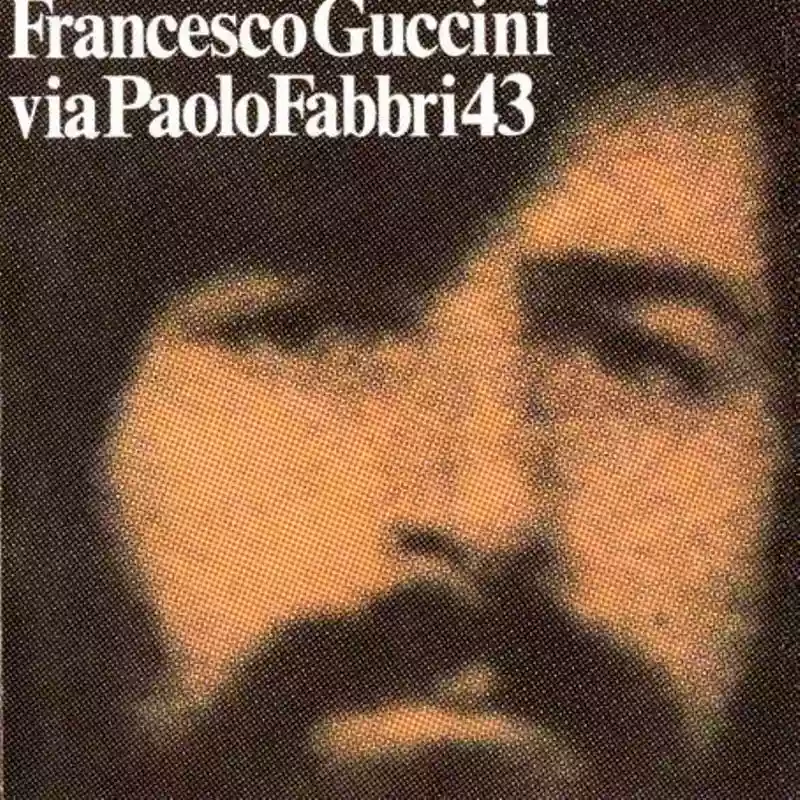
Highly renowned album, released between 'Stanze di vita quotidiana' and 'Amerigo', in those 10-15 years when Guccini was turning everything he touched with pen, voice, and guitar into gold. Everything is already known about this LP, it is perhaps the most famous, carried by songs that have become 'manifestos' like 'L'avvelenata' or 'Canzone di notte n.2'.
I propose a re-listening, and a new idea of this album, which for some, after the stumble of 'Stanze di vita quotidiana', brings the 'Maestrone' back to the poetry and commitment of 'Radici'. For me, this idea requires a lot of imagination, I consider 'Radici' to be significantly superior to this LP, which instead holds its own both with the ambiguous and much-condemned (even by Guccini himself) previous episode, and also with the interesting subsequent episode.
If the story of 'Piccola storia ignobile' is interesting and original, where a new idea of song also corresponds to an excellent realization through word choice, if in 'Canzone di notte N.2' there is the Guccinian piece of the album, it is also true that we have two distinctly minor pieces: 'L'avvelenata', little more than an invective, honestly, not very convincing for those like me who prefer a dark and reflective Guccini to one who is self-assured, angry, and shouting; and then 'Via Paolo Fabbri 43', where a bit of introspection is discernible behind the jokes and comic tricks or even the jabs at colleagues (summit for popular singing). These two tracks are justifiable, but let's not forget that we are talking about an album of only six songs, if we sacrifice two to make listening more fun and light we risk irreparably mutilating the record.
In short, I have promoted the first two tracks, although personally, for different reasons, I consider them anything but 'immortal'. The last two remain: the fifth is a dark and Guccinian piece already from the title 'Canzone quasi d'amore', by far the best track of the album, the extraordinary metric construction covers a perhaps too prolix and slow track, but in which we find, in the final verse, one of the best moments of all his seventies:
"I pretend to have understood
that living is meeting
being sleepy, having an appetite
having children, eating
drinking, reading, loving
...scratching!"
this is what I want to hear! not the complaining laced with swear words of 'L'avvelenata', nor, alas, do I feel like promoting 'Il pensionato', which closes an album that remains among the best moments in Italian songwriting but lacks the brilliant intuition, the pearl. The opposite of the previous/subsequent albums, where alongside less inspired tracks we find in the first 'Canzone per Piero', in the other 'Amerigo', monumental tracks, such as are not here.
In fact, the last track is 'Il pensionato', a static portrait as we have already seen in 'Il frate', 'Ophelia', and as we will see in 'Signora Bovary' and even further in the album entitled 'Ritratti', which not coincidentally is one of the worst of his production. Guccini does not have Vecchioni's chameleon-like intuition in putting himself in others' shoes, to capture and rhyme their spirit, portraits come out worse for him. This is no exception.
I understand that you will take it out on me as usual for having failed your favorite record, but seriously, tell me in this record where are the Guccinian poetry, the desperate existentialism, and the other things that made me fall in love with it?
An admirable record for being almost anonymous nonetheless.
Loading comments slowly
Summary by Bot
This review revisits Francesco Guccini's iconic album Via Paolo Fabbri 43, acknowledging its place in Italian songwriting while highlighting some uneven tracks. The reviewer appreciates the poetic craftsmanship of songs like 'Canzone quasi d’amore' but finds others less compelling, especially 'L'avvelenata.' Although the album stands among Guccini's important works, it lacks the brilliance found in his surrounding albums. Overall, the record is recognized as admirable yet somewhat anonymous in its impact.Tracklist Lyrics Videos
Francesco Guccini
Francesco Guccini (born 1940) is an Italian singer-songwriter and author, active since the 1960s and known for poetic, narrative lyrics and a long career as one of Italy's major cantautori.48 Reviews
Other reviews
By Gale
It narrates a story that represents the synthesis of many stories on the topic with which Guccini came into contact.
The 'literary quality' of the content supports the entire work on its own, which besides being listened to, somehow needs to be read and interpreted.
