
 •
Rating:
•
Rating:
THE REVIEW
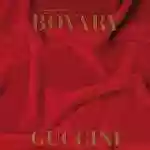
Luxury packaging: amidst that red velvet and the golden inscriptions, practically unreadable on the CD, it feels like opening a box of chocolates.
And the inside does not disappoint: finally, and precisely with this album, the now mature Guccini definitively proves that one can be both a “puppeteer of words” (his self-definition) and a decent musician. I say definitively because musically successful songs have been present since the first albums, but here the care of the arrangements and the refinement of certain solutions are striking.
Great credit also goes to the now tight-knit group that has accompanied him almost from the start: people like Ares Tavolazzi, Ellade Bandini, Vince Tempera, and others sooner or later make their presence felt, with all due respect to the "naive" 70s arrangements of that rambunctious Pier Farri. The historic core is joined here by the excellent saxophonist Antonio Marangolo, but it is Juan Carlos "Flaco" Biondini who stands out, not only as a great guitarist but also as a co-author in "Scirocco," a splendid tango with an undeniably Piazzolla-like flavor, complete with a prominently featured bandoneon, all enhancing the beautiful lyrics, guccinianly aimed at uncovering what lies "behind the worn face of things, in the dark labyrinths of houses, inside the secret mirror of every face, inside ourselves."
The same eternal question, long a thorn in Guccini's side, is obsessively repeated in "Signora Bovary" : "But what is there... right at the very bottom, when, for better or worse, we take stock...". The answer, of course, remains elusive, and perhaps is in the wind, as someone else said.
"Van Loon" is so touching that Guccini has said he cannot sing it in concerts, as it is dedicated to and about his father, one of those modest and cultured men from a bygone era, with few means but a great thirst for knowledge, which at the time could be satisfied through the scientific popularization books of this Dutch author, whom the singer himself describes as "a kind of Piero Angela of his times." For listening, one or more handkerchiefs are recommended, but it is beautiful.
The same applies to "Keaton," written together with Claudio Lolli, and that alone guarantees you won't laugh. A full 11 minutes for a double song: the "first" Keaton is the story of a jazz musician friend, "passionate and pure," and therefore a loser, destined first to disappear and then to slip into other worlds ("there are words, times, and rhythms even inside a hospital"); the music makes a little nod to jazz, but chills are lurking, and they attack us in the "second" Keaton, almost a flash, an apparition of the real Keaton, glimpsed already destroyed by alcohol during the filming of a movie by Franchi and Ingrassia ("the usual face, without joy").
It is advised to take up the already wet handkerchiefs from "Van Loon," in the meantime dried out thanks to "Culodritto," a look towards the future, seen through his daughter's eyes, so called for her typical way of walking upright, but also a look back at Guccini's childhood memories, so indelible and vivid that they practically occupy his entire first novel, "Croniche Epafàniche." Things his daughter will never experience, like the "earthy fights in fields, courtyards, or streets" or "the taste of grapes stolen from a vine".
Memories abound in "Le piogge d'aprile," those that "in a moment washed away a soul or a street" and are now eagerly awaited "like a sudden slap" to start living more truly again.
Of "Canzone di notte n° 3" (the last of the series, at least for now), it's enough to quote the beginning: "Existence that lingers here by smuggling", which is symptomatic of everything else. Like the other two, it arises from Guccini's proverbial "reflective binges."
And so, leaving us in this alcoholic yet clear anguish, closes what for me remains the masterpiece of Guccini's maturity.
Loading comments slowly
Summary by Bot
Signora Bovary is Francesco Guccini's mature and refined album, showcasing both intricate musicianship and profound poetic lyrics. The arrangements are sophisticated, supported by a tight group of seasoned musicians. The album deeply explores themes of memory, introspection, and family, highlighted by emotionally powerful songs like "Van Loon" and "Keaton." It is considered a masterpiece in Guccini's later career.Tracklist Lyrics Videos
Francesco Guccini
Francesco Guccini (born 1940) is an Italian singer-songwriter and author, active since the 1960s and known for poetic, narrative lyrics and a long career as one of Italy's major cantautori.48 Reviews
Other reviews
By Carlo V.
The slight decline begins precisely with 'Signora Bovary' from 1987, the first album... which cannot be called a masterpiece.
If this LP deserves not to leave you indifferent, it is almost only for a single song... which I consider, perhaps the most beautiful text Guccini has ever written in his career.
