
 •
Rating:
•
Rating:
THE REVIEW
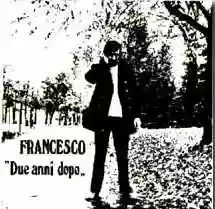
Like someone who receives a Sign and goes to the seminary, in 1970 Guccini converted to “serious” songwriting. Verbose lyrics over sparse music, and whoever wants to hear me can hear me. Precisely two years later – even the title of his second work is a sign of this transition – his recording debut (Folk Beat n.1 hadn’t exactly made a deep impression on the ears of the national audience), the poet of Pavana embarks on the path leading to Via Paolo Fabbri 43: the sparkle of the pearls in that album ("Piccola storia ignobile", "L’avvelenata", "Il pensionato", "Canzone quasi d’amore") is still distant, but the wordsmith ability of this grumpy and irascible Emiliano is already apparent. Beyond, of course, his trademarks: minimalist tales of the province ("Il compleanno", "Lui e lei"), melancholic pictures of daily life ("Per quando è tardi", "La verità", the evocative "Giorno d’estate"), full-bodied biographical sketches ("L’ubriaco", for which we recommend the remarkable live version included in Quasi come Dumas). And obviously the political polemic, here reduced to a single example ("Primavera di Praga") and not yet painted with irony and sarcasm, but on the contrary direct, bitter, without mincing words, as every good ‘68-er teaches.
Irony, if anything, is found in the ultimatum disguised as a benign piece of advice that, in “Vedi cara”, the narrating I offers to a negligent lover ("Vedi cara" it's difficult to explain, it's difficult to understand if you haven't understood already).
All things considered, still a somewhat immature work, but – and this is noticeable – already carefully crafted and, in the author's intentions, ambitious: Guccini demands from the public the attention an intellectual like him deserves, and in proof of this, the last track of the album ("Al trist") is intentionally in Modenese dialect.
The explicit dedication to those who listen to American music on the radio without understanding a thing (verbatim, still from “Quasi come Dumas”, in the introduction of the piece) at least hints that Guccini is not sung, he is listened to. Possibly, even necessarily, focused on what he says. Because what he says is more important than what is heard.
Loading comments slowly
Summary by Bot
Francesco Guccini's 1970 album 'Due Anni Dopo' marks his transition into serious, intellectual songwriting. Featuring sparse music and verbose, poetic lyrics, it showcases his emerging trademarks: melancholic daily life, political commentary, and biographical sketches. Although somewhat immature, the album is carefully crafted and ambitious, demanding attentive listening. Notable tracks like 'Piccola storia ignobile' and 'Primavera di Praga' illustrate his growing wordsmith ability.Tracklist Lyrics Videos
Francesco Guccini
Francesco Guccini (born 1940) is an Italian singer-songwriter and author, active since the 1960s and known for poetic, narrative lyrics and a long career as one of Italy's major cantautori.48 Reviews
Other reviews
By enbar77
Those who think they can have fun with Guccini have probably only listened to "Opera buffa."
Guccini never wanted to yield to the blackmail of the Almighty Dollar, writing syrupy nonsense just to sell a few more copies.
