
 •
Rating:
•
Rating:
THE REVIEW
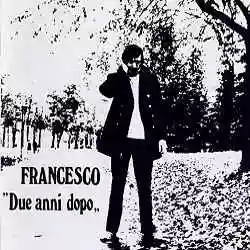
The second, at least chronologically, album of that Guccini despised by the innocent ears of the youngsters who only enjoy pop or dancehall music. That Guccini never went commercial (thankfully), extremely realistic in describing glimpses of daily life (later, the rooms will come), often yielding to melancholy, thus to the darker facet of the subject. Francesco Guccini, just like Fabrizio De Andrè, Francesco De Gregori, Paolo Conte, Giorgio Gaber, is for many but not for everyone. Guccini, like the artists mentioned a few lines ago, requires careful listening to grasp the meaning he hides in every song. With this, I don't want to place myself above any human being since I believe I am sufficiently below average. The point is about being able to catch, after many, repeated and never listless listens, what a genius of this kind wants to convey. Paraphrasing "L'avvelenata", I imagine that the gentle giant from Pavana doesn't give a damn about what people might write about him, and Bertoncelli (an esteemed music critic) knows something about it. My thoughts only want to contribute to the growth of a positive evaluation of these works. Often, they are judged without having listened to a single note, and so I imagine what might come out of it.
Guccini, in this work (equally to "L'isola non trovata" and a notch higher than "Amerigo" or "D'amore, di morte e di altre sciocchezze"), delivers a stripped-down and essential interpretation in a formidable way. The sadness, the anxiety that often pervades the songs of this work (and not only), in my opinion, fortunately, do not manage to spill over into the pessimism that would make them terribly tedious. Without a doubt, the descriptions leave little room for hope; consider the money spent on an inconclusive birthday party, the trivial peculiarity that characterizes the actions of a poor drunk, the vain desire to be able to change over the course of life. Despite being imbued with potential pessimism, after careful analysis of the lyrics and music, they are counted among the realities we face daily, perhaps even without realizing it.
Therefore, it is important to know how to listen well, with passion, with interest, to songs of this kind. The reflection that emerges is evergreen, renewable, perhaps to be tackled with other means but still existing. Those who think they can have fun with Guccini have probably only listened to "Opera buffa". And even there, between a smile and a hearty laugh, there is food for thought. Luckily, Guccini never wanted to yield to the blackmail of the Almighty Dollar, writing syrupy nonsense just to sell a few more copies (whether I sell or not isn't one of my risks, don't buy my records and spit on me)...
Loading comments slowly
Summary by Bot
This review praises Francesco Guccini's 'Due Anni Dopo' as a profoundly realistic and melancholic album that avoids commercialism. It emphasizes the necessity of attentive listening to grasp Guccini’s genius, comparing him with major Italian artists like Fabrizio De André. Despite the sadness in his lyrics, the album remains thought-provoking rather than pessimistic. The reviewer highlights Guccini’s success in portraying everyday life's realities with poetic depth.Tracklist Lyrics Videos
Francesco Guccini
Francesco Guccini (born 1940) is an Italian singer-songwriter and author, active since the 1960s and known for poetic, narrative lyrics and a long career as one of Italy's major cantautori.48 Reviews
Other reviews
By Testaverde
"Guccini demands from the public the attention an intellectual like him deserves."
"What he says is more important than what is heard."
