
 •
Versione 2
Rating:
•
Versione 2
Rating:
THE REVIEW
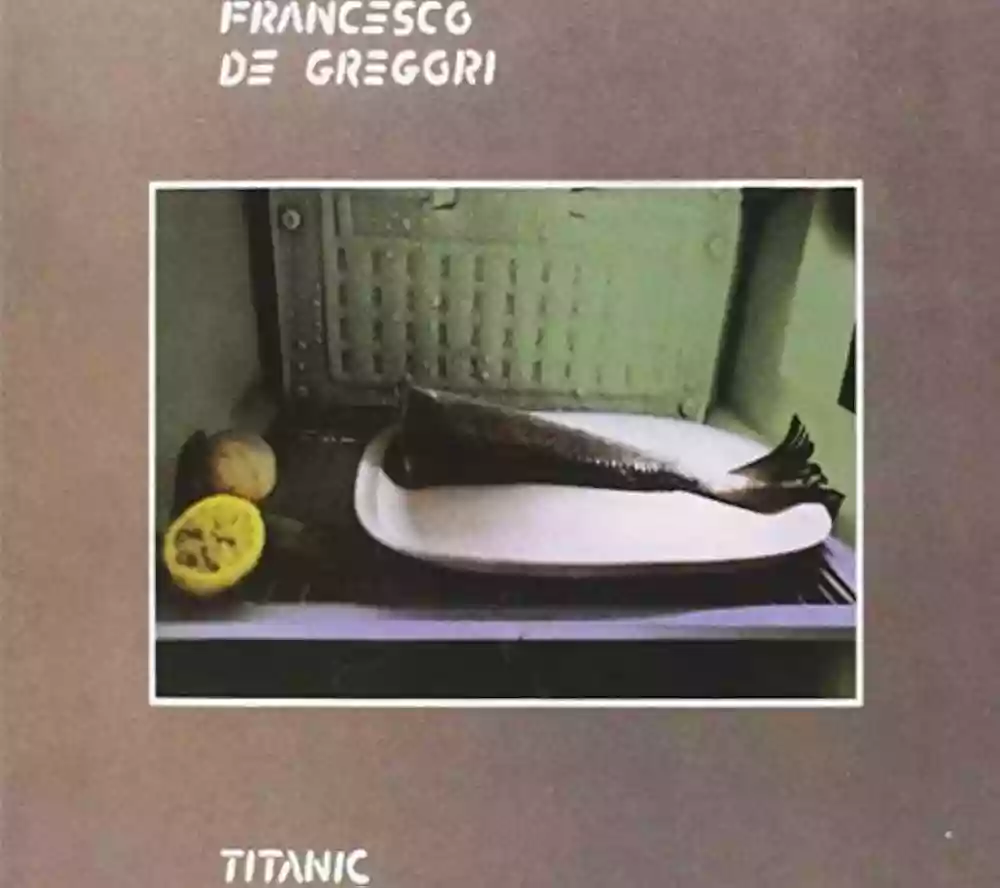
TITANIC 9.5/10
At a time when new musical forms were emerging (new wave in particular) and songwriting seemed to be on the verge of succumbing (over there, in the States, even Dylan was starting to sell much less), De Gregori released, at the beginning of June 1982 (a month before Italy's victory at the Mùndial), an incredibly brave album, songwriterish to the core and delightfully "old-fashioned": in my opinion, his best work ever. Why? Because it embodies everything about him, and above all, it "dissects" multiple musical genres (from folk to rock, from jazz to pure songwriting) and does so almost seamlessly, musically speaking. Because, at a conceptual level, there absolutely is continuity: it is nostalgia (sometimes just memory, not necessarily nostalgic, quite the opposite...) for a time gone by, for old radio shows, neighborhood football pitches, people met and then lost, and a past era (be it the early twentieth century, the immediate postwar period, or even the Fascist era): it is an album that does everything (and succeeds) to be as un-modern as possible, and that is its greatest strength, along with a truly prodigious lexical variety (here you'll find some of the most beautiful lyrics ever penned by De Gregori). And featured are some great "De Gregori regulars": above all, Mimmo Locasciulli.
What is most surprising are the musical choices. The title track basically recounts the tragedy of the ocean liner with its fierce class distinctions (the rich in first class thinking about cocktails and French hats, the poor in third class even if "…this berth feels like a double bed/it's better than being in hospital"; in first class, girls are going to America to get married, in third class, the poor go to America to "…not die") and is arranged with a distinctly South American, lively, and cheerful rhythm. The contrast works wonderfully (and in live performances, especially in the Nineties, this aspect is enhanced with long, endless solos) and "links" perfectly to the next song: "I muscoli del capitano." The Titanic, again, this time it's the boatswain and captain who speak. What amazes here is the unmistakably "Marinetti-esque" literary component: we are in the era when the myth of speed (Futurism) rises, is born, and is fueled, and the vocabulary of the Roman singer-songwriter perfectly reflects speed and rhythm ("…the ship is lightning, torpedo, fuse/sparkling beauty, phosphorus, and imagination/molecules of steel, piston, anger/blitzkrieg and poetry") not to mention a little piano gem that grows into "…this ship does two thousand knots, amid tropical ice/and has a one-million-horsepower engine whose hooves are wings"). In a state of absolute grace.
Then, there is his most beautiful song, the masterpiece. "La leva calcistica della classe '68." He wrote it two years earlier, 1980, and it's a true story, that of a 12-year-old boy who tried out for a football team. It includes at least 2-3 phrases that have gone down in history and have become part of regular usage, like "…Nino don't be afraid to miss a penalty/it's not by these details that a player is judged," which is a bit like Battisti’s "Lo scopriremo solo vivendo," now a common saying. Does it remind you of an old Elton John song? Sure, but who cares, the final "Battistian" quote from "Vento nel vento" alone is worth the ticket price. "…A song Paolo Conte could have written, but instead it was De Gregori, making the young Nino and his penalty immortal in the crowded world of football literature…" (Luca Sofri). Folk vibrates through "L'abbigliamento del fuochista" (in a duet with Giovanna Marini), which would get a sort of sequel the following year with the track "La ragazza e la miniera", while the harmonica, unmistakably "Dylan-esque" in inspiration, forms the basis of "Caterina," dedicated to Caterina Bueno, the Florentine singer-songwriter with whom De Gregori shared a tour at the start of his career, in 1971. The passage "…per poteri conquistare," after Bueno’s passing, was changed by De Gregori himself to "…per poterti ricordare." Not to mention the memory of valve radios and the program "Il Discobolo" in the effervescent "Rollo & His Jets," and the final, purely piano-driven piece recalling the Pope's (Pius XII) arrival among the crowd in the San Lorenzo neighborhood in Rome after the German bombing ("…he really looked like an angel with glasses").
Loading comments slowly
Summary by Bot
Francesco De Gregori’s 'Titanic' stands out as a significant work in Italian music. The review highly praises the album's artistry and timeless quality. Themes of poetic storytelling and depth are emphasized. It's regarded as essential listening for fans of singer-songwriters. The review offers a clear endorsement of the album’s craft.Tracklist Lyrics Videos
Francesco De Gregori
Francesco De Gregori (born 1951, Rome) is an Italian singer-songwriter known for poetic, often hermetic lyrics and a pivotal role in modern Italian canzone. His catalogue spans intimate ballads, historical narratives and politically charged pieces.68 Reviews
Other reviews
By nathan
"The first class costs a thousand lire, the second a hundred, the third is pain and fear!!"
"The captain is never afraid standing on the deck smoking a pipe, in this fresh and dark dawn that resembles life a bit."
By pana
"The ship is lightning, torpedo, fuse, dazzling beauty, phosphorus and fantasy; molecules of steel, pistons, horses, rage, and rapid war and poetry..."
"But who said that traveling in third class is bad? This bunk looks like a double bed, we are better off here than in a hospital."
