
 •
Rating:
•
Rating:
THE REVIEW
"Everything passes, the rest goes."
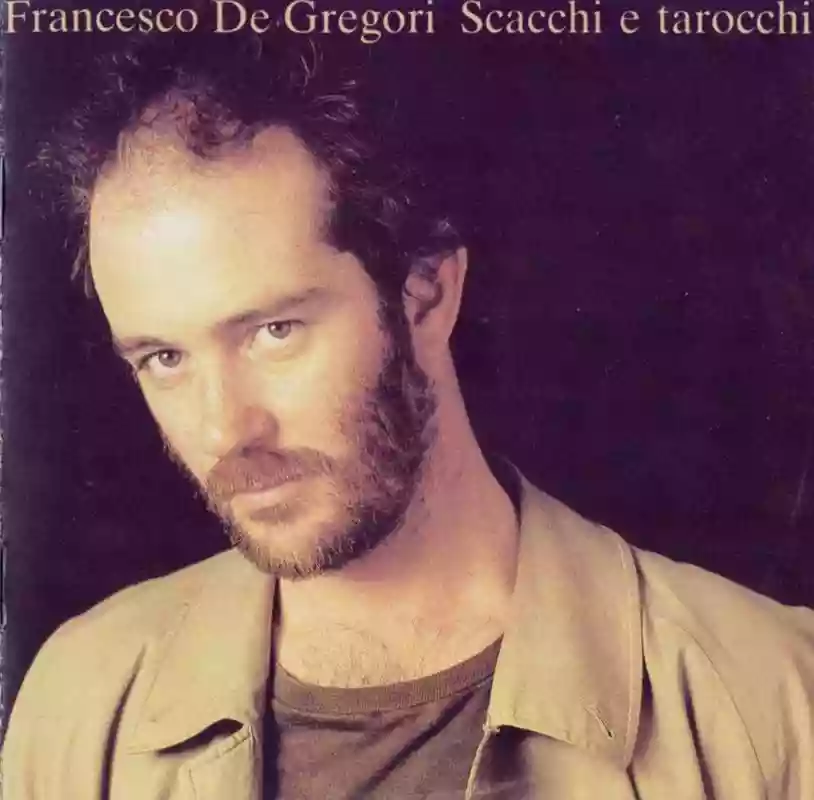
"Scacchi e Tarocchi," in the vast discography of Francesco De Gregori, is a gem, without ifs and buts. A work that should be listened to again properly, to evaluate it in the right way and give it the meaning it deserves.
It was the '80s, not the best period for the Prince, but certainly worthy of high consideration. This is the last album for RCA before the split, and he entrusted the production to another noteworthy singer-songwriter, namely Ivano Fossati, who was also part of the studio line-up, no laughing matter (trusted Guido Guglielminetti, Elio Rivagli, Massimo Buzzi are some of them), so much so that they returned in the last tours of the aforementioned to replay such songs.
"We are the history, no one should feel offended
We are this meadow of needles under the sky.
We are the history, beware, no one should feel excluded.
We are the history, we are these waves in the sea,
This noise that breaks the silence,
this silence so hard to chew."
Only these words, expressed in less than three minutes, would be enough to make this record enter history. Yes, "La Storia." The history of everyone. Of all those who have truly contributed something to this world. And then a dedication to Pier Paolo Pasolini ("A Pà"), the influences of Fossati himself (the very "Scacchi e Tarocchi": "They came from afar, they had eyes and dogs, they had little stars, and fear."), the desire to say goodbye to someone who may not be seen again soon ("Ciao Ciao"), or to have fun cutting verbs ("Sotto Le Stelle Del Messico A Trapanàr"),
There are also other intense compositions like "Miracolo A Venezia" or "Poeti Per L'Estate", a funny divertissement like "Tutti Salvi" ("Sorry, but I still have to talk to you about the Titanic, and the things that remained afloat in the bluish sea"), or mirrors of life, like "I Cowboys" and "Piccoli Dolori" ("My leg hurts, my back is a wreck, I have a beast in my throat, that walks and does not pass.").
"Scacchi e Tarocchi" for some was (is?) the beginning of the end. For others, the Prince was already finished. For those like me, "Scacchi e Tarocchi" is a confirmation that those like De Gregori are capable of remaining themselves without being monotonous or charlatans, and even today they manage to pull valid works out of the hat. Maybe not masterpieces, but simply valid works.
And this is not an easy thing today.
Therefore, long live De Gregori.
"And I want to live like the lilies of the field
and like the birds in the sky live
and I want to live like the lilies in the field
and above the lilies in the field fly."
Loading comments slowly
Summary by Bot
Scacchi e Tarocchi stands as a valuable album in Francesco De Gregori's career, produced during a challenging era but marked by strong collaboration with Ivano Fossati. The album contains poetic and reflective songs that confirm De Gregori's lasting authenticity. It includes tributes, playful moments, and life reflections, showing his ability to produce relevant work beyond his prime. This album is well worth revisiting for fans and lovers of Italian singer-songwriter tradition.Tracklist Lyrics Videos
Francesco De Gregori
Francesco De Gregori (born 1951, Rome) is an Italian singer-songwriter known for poetic, often hermetic lyrics and a pivotal role in modern Italian canzone. His catalogue spans intimate ballads, historical narratives and politically charged pieces.68 Reviews
Other reviews
By Viva Lì
"De Gregori makes an effort, increases the rock charge, attempts to distance himself from poetic and traditional Italian songwriting... but the attempt fails miserably."
"For those who... loved and esteemed the committed and courageous De Gregori of the mid-Seventies, 'Scacchi e tarocchi' will represent the end, and thus the death, of a different and unconventional idol."
