
 •
Rating:
•
Rating:
THE REVIEW
Second album by De Gregori after the debut with Venditti!!
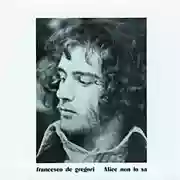
Alice non lo sa, the year 1973, a very young De Gregori enchants with songs like "Alice" (which will remain a symbol of his artistic youth), "1940" which speaks of France occupied by Nazi troops in the Second World War, "Le strade di lei" an anguished and enigmatic story of abandonments, the sweet and ingenious "Suonatori di flauto" with a lullaby melody, "Buonanotte fratello" a classic tormented piece in the style of De Gregori, the strange and perhaps less beautiful piece of this album "Sono tuo" (with references to a drunken Rodolfo Valentino) up to the musicians that echo the flute players, like "irene" to "Alice", (although here it speaks of a sad suicide); "La casa di Hilde" a beautiful track that narrates a fairy tale journey of a father and son, to "Il ragazzo", a story of youthful malaise; "Marianna al bivio" a very enigmatic and personal song. The album closes with "Saigon", with a different rhythm De Gregori talks about the condition of women in war-torn Vietnam!!
All in all, a good album with some instrumental flaws typical of the era!!
Loading comments slowly
Summary by Bot
‘Alice non lo sa’ is Francesco De Gregori’s second album, released in 1973, showcasing his young artistry through evocative storytelling and a blend of folk-inspired melodies. Songs like 'Alice' and '1940' highlight themes of youth and war, while other tracks explore personal and enigmatic stories. Despite some instrumental imperfections typical of the era, the album remains a significant and charming work in De Gregori’s discography.
Francesco De Gregori
Francesco De Gregori (born 1951, Rome) is an Italian singer-songwriter known for poetic, often hermetic lyrics and a pivotal role in modern Italian canzone. His catalogue spans intimate ballads, historical narratives and politically charged pieces.68 Reviews
Other reviews
By Viva Lì
The first thing to do was to make himself comfortable. And carefully weigh the words he would have to say.
By alessioIRIDE
Put this record on and people go silent, listen as if they are weighing the words that De Gregori sings.
It is an escape, nothing else, it is my madeleine, leading to a past never left too aside.
By Olsen Olsen
I like to think of this album as a Linus blanket. An object you never want to part with...
'1940' is a stunning depiction of our nation’s entry into war, seen through the eyes of a mother.
By JpLoyRow
De Gregori's debut offers a gentle introduction to his poetic style.
‘Alice non lo sa’ isn't revolutionary, but it sets the tone for his later works.
