
 •
Rating:
•
Rating:
THE REVIEW
When I feel the urgency to hit myself with some blood-pumping, primary, basic hard rock, the kind that's still the first-born child of rock 'n' roll invented by Black musicians and enhanced by White musicians but without any additions, frills, or deviations other than much larger amplifiers and much more piercing guitars, then the second name that comes to mind to consider is Foghat.
Gritty and straightforward like no other band, they exude passion and sincerity at every turn, blessed with a killer bass and drum groove and an insanely wild lead guitar, especially slide. The voice might be a bit rough aesthetically, but its conviction, love, and fervor are palpable, indeed uncontrollable, generating limitless rock empathy, and thus, long live him, poor Dave Peverett, whom we have already missed for a quarter of a century.
Hardly anyone on this entire continent pays them any mind, also because being English, they had to immediately head to the USA since in Great Britain they were being ostracized by the malicious circle of record labels and managers, for having a falling out with the boss of the London band they were in, Savoy Brown. Good for them, America welcomed and rightly appreciated them, bad for Europe, which ignored them, let alone Italy. Fortunately for me, one of their albums was nestled on the shelves of a free radio station where I collaborated as a boy, and thus I discovered them in time to enjoy them young, both them and myself.
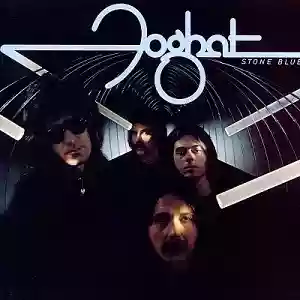
In this record, their seventh career album (1978), the moments to mark with a red circle are, first of all, the extensive, lyrical “Midnight Madness,” an almost seven-minute affair initially paced by a hypnotic, driving acoustic arpeggio, which occasionally succumbs to the noise of the electrics, manages to resurface at times but eventually drowns definitively in the vortex of crossed solos.
Also mark with a red circle the terrifying performance of mustachioed Price in the eponymous song of the album, a devastating slide vibrato showcase, leaving you speechless… watch on YouTube please. More than Duane, the stage comes down when towards the finale Rod starts scratching the strings right up to the pickups, making the guitar's high-pitched sounds bark like a space creature. Rod Price the ultimate slide destroyer to exist in this world, and only a handful of people around here know him. His heart betrayed him twenty years ago but because he had so much, too much. "The bottle" fans call him, for that clear Coricidin bottle slipped onto the middle finger, going up and down the fretboard to perform wonders.
I'm not pointing out anything else, the journey into Foghat must be a total immersion, not a spot hop from one track to another. Oh yes… the first name that comes to mind for my cyclical dose of hyper-amplified and pure rock 'n' roll, the only one before Foghat, is that of the usual unmatched Ac-Dc, still and always the perfect distillation of White rock 'n' roll without other intentions, outlets, developments, expansions, infiltrations, nuances.
Loading comments slowly
Summary by Bot
Foghat's Stone Blue is a quintessential hard rock album that embraces raw, straightforward rock ’n’ roll. Featuring passionate performances, especially by slide guitarist Rod Price, this 1978 release embodies pure, energetic riffs and heartfelt emotion. The review honors the band's legacy and encourages complete immersion in their music, highlighting their underappreciated status in Europe but deserved acclaim in the US.Tracklist
Foghat
Foghat are an English boogie/blues-rock band formed in London in 1971 by former Savoy Brown members Dave “Lonesome Dave” Peverett, Roger Earl, and Tony Stevens, with slide guitarist Rod Price joining soon after. They found major success in the U.S., propelled by the 1975 hit “Slow Ride” from Fool for the City and the bestselling concert set Foghat Live. The band has continued with lineup changes; Peverett died in 2000 and Price in 2005, with drummer Roger Earl carrying the torch.03 Reviews
