
 •
Versione 1
Rating:
•
Versione 1
Rating:
THE REVIEW
We're in the '70s. A horde of shameless long-haired musicians is transforming good old rock 'n' roll into an indecipherable magma. Psychedelia, jazz, folk, symphonic music, and aggressive baroque influences, hard guitars, moog, mellotron. In short, prog. Which takes root everywhere in the western world (and a bit beyond the so-called Iron Curtain), until it becomes mainstream.
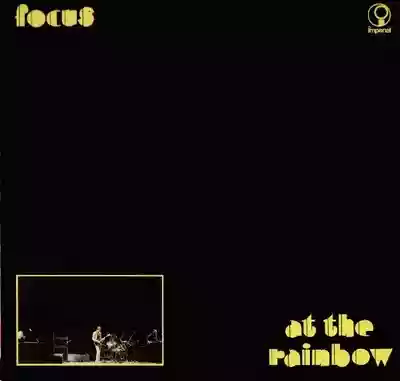
The Focus know something about it. They come from the Netherlands, the land of tulips, provos, Coffee Shops, and total football, and debut with “In and Out of Focus,” an album with little commercial success: neither more nor less than a flop. Things will get better in the future: first “Moving Waves,” released in 1971, the following year will see the release of “Focus 3.” Two albums of strong impact, which will allow the Focus to become one of the most loved bands of the moment. The quartet's recipe is simple: the physicality of Jan Akkerman's six-string, the robustness of the rhythm section, composed of bassist Bert Ruiter and drummer Pierre Van Der Linden, the voice and epileptic flute of Thijs Van Leer. An almost perfect mix, that doesn't disdain jazz and classical. And which will find its fulfillment with a live album: “Live at the Rainbow”: it’s 1973.
The Rainbow is a historic theater in London: the exam is rigorous but, for the Focus, convincing the British public will be child's play. The four draw from the already mentioned “Moving Waves” and “Focus 3,” the decision is not to overly distort the tracks in their respective studio versions. Welcome, then, the long and calm marathons of “Answers? Questions! Questions? Answers!” and “Eruption,” as well as the certainties of “Focus III” and “Focus II,” enriched by meowing riffs and the timid vocal interventions of Van Leer. The atmosphere becomes torrid with the captivating “Hocus Pocus,” reinforced by 26 consecutive seconds of yodeling brought together by a possessed Van Leer, and if “Sylvia” brings the mood back to a certain calmness, the reprise of a miniature “Hocus Pocus” (probably an encore) lifts the temperature gauge to rather hot levels.
“Live at the Rainbow” will be one of the highest points of the Focus discography, captured at their peak moment of form and fervor. The group, through many lineup changes, reunions, rebirths, and restarts, has reached our days: they still play in clubs and produce records, but that night at the Rainbow seems further away than it already is.
Loading comments slowly
Summary by Bot
This review highlights Focus' 1973 live album 'Live at the Rainbow' as a high point of the band's career and progressive rock. It discusses the blend of styles, the band members' talents, and the historic London venue. The album captures faithful but energized versions of key tracks, showcasing their peak musical form. The review reflects on the band's significant impact and lasting legacy.
Focus
Focus are a Dutch progressive rock group formed in 1969, led by keyboardist–flautist Thijs van Leer with guitarist Jan Akkerman in the classic 1970s lineup. They broke through with Hocus Pocus and the albums Moving Waves (Focus II), Focus 3, and Hamburger Concerto; the band disbanded in 1978 and was revived by Van Leer in 2002.09 Reviews
