
 •
Rating:
•
Rating:
THE REVIEW
In the history of music, many bands can be considered "ahead" of their time, the greatest ones always are. For Faust, being so out of the box was even a handicap. The criticism of the time, up until the current rediscovery of "Krautrock," ignored them; their name didn't appear in any major magazine listing the best rock bands of the past millennium. Aside from the complexity of their offering, Faust were always stingy with news; for years, the lineup wasn't known, nor were the places where recordings took place, or the techniques used. Until the most complete reevaluation, their magnificent records, also notable for the artwork, remained fascinating and unknown objects.
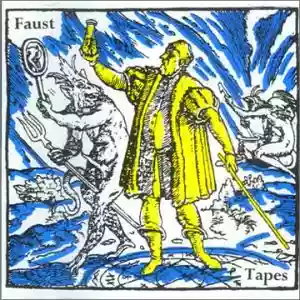
The third work of the group from Hamburg, dated 1973, is in some ways the most mysterious, being presented as a collection of rarities in 26 tracks, the most fragmented and heterogeneous album. But unpredictability is Faust, therefore, it is agreed that it was conceived in this way.
It's difficult to meticulously describe the pieces; Faust's music is a surprising mix of avant-garde, progressive rock, world music, Barrett-esque ballads, noise, Zappa-style dada scenes, and much more. The tracks, like the described genres, last seconds; it's a continuous chase. Rhythms and phrases sometimes repeat obsessively, deliberately annoying, offspring of chaos and neuroses. Noises from call centers, dishes, machines, break into the music, merge with it, and sometimes sweep it away. Faust isn't just music; it is a true language, and perhaps Julian Cope was right when he defined them as "The greatest of all time." They certainly deserve a place among the groups capable of anticipating and influencing, by thirty years, the alternative rock that thrived in the '90s (Tortoise, This Heat, Stereolab). And perhaps even the rock of the 3000s…
Unreachable.
Loading comments slowly
Summary by Bot
Faust's 1973 album 'The Faust Tapes' stands as a mysterious and fragmented gem in Krautrock history. Its avant-garde mix includes progressive rock, noise, and dadaist elements. Though initially ignored, the album has gained recognition as an influential Pioneer for alternative rock decades later. The review highlights its complexity, unpredictability, and lasting impact.Tracklist
01 [untitled] ()
02 [untitled] ()
03 [untitled] ()
04 [untitled] ()
05 [untitled] ()
06 [untitled] ()
07 [untitled] ()
08 [untitled] ()
09 [untitled] ()
10 [untitled] ()
11 [untitled] ()
12 [untitled] ()
13 [untitled] ()
14 [untitled] ()
15 [untitled] ()
16 [untitled] ()
17 [untitled] ()
18 [untitled] ()
19 [untitled] ()
20 [untitled] ()
21 [untitled] ()
22 [untitled] ()
23 [untitled] ()
24 [untitled] ()
25 [untitled] ()
26 [untitled] ()
Faust
Faust are a German experimental rock/krautrock collective formed around 1970, associated with the “Wümme years” and noted for collage-like compositions, noise/electronics, improvisation, and Dada/cabaret theatricality. Their early run includes the albums Faust (1971), So Far (1972), The Faust Tapes (1973), and Faust IV (1974).19 Reviews
