
 •
Rating:
•
Rating:
THE REVIEW
"I never slept with a photo of the Bolland brothers under my pillow!"
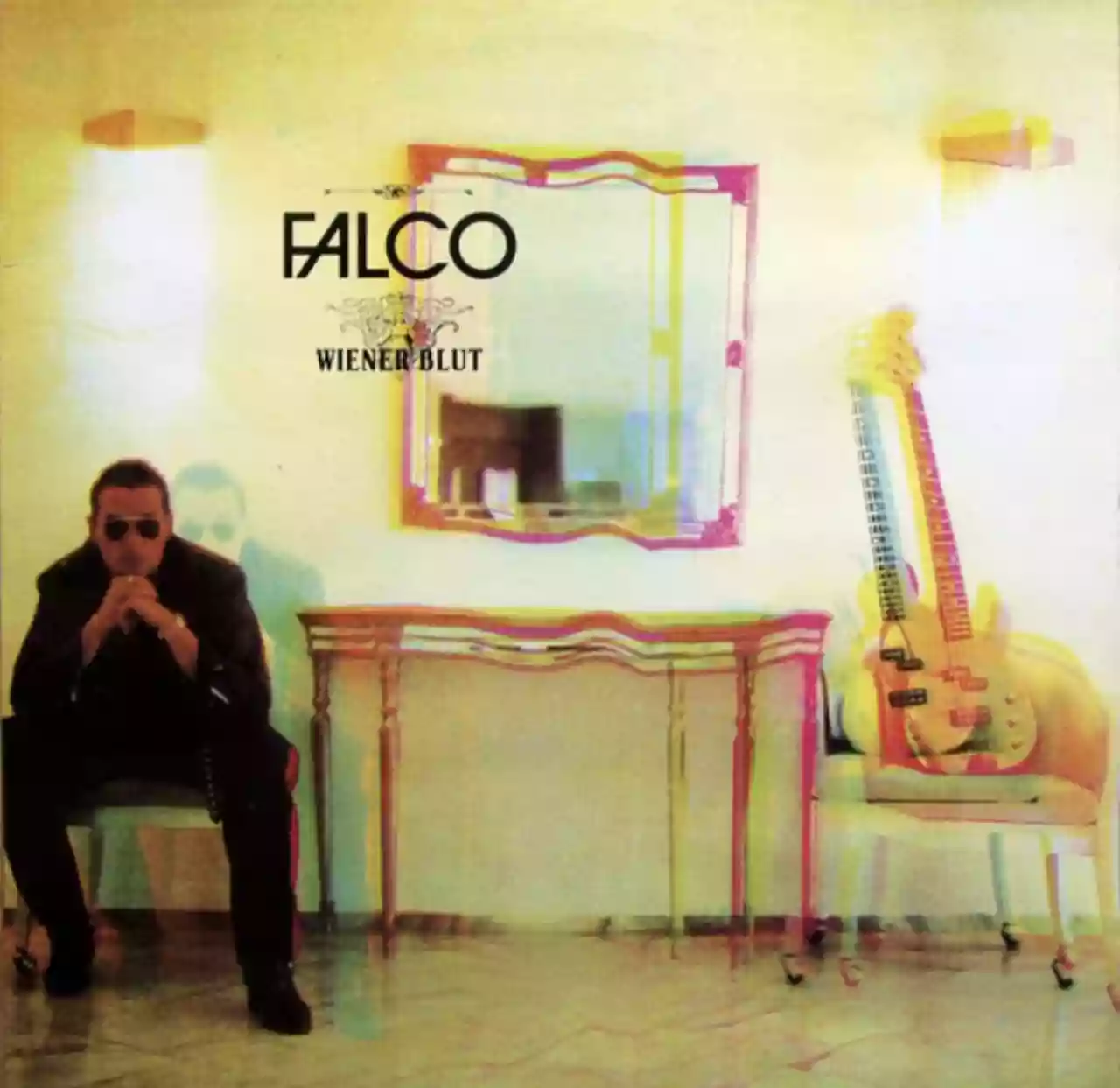
With these words, a disgruntled and embittered Falco explained to the press the end of his successful collaboration with the Dutch duo who had characterized the first stage of work on the fifth album "Wiener Blut," released after a couple of years of substantial recording hiatus.
A period of "break" only in relative terms, which brought the Austrian more problems than benefits.
The constant pressure from a Major dissatisfied with the lack of global success in the "post-Amadeus" era, the stress from twenty-four months (spring 1985 – spring 1987) spent at breakneck speed promoting the two previous records, and a superstar status often flaunted with excessive conceit all had negative consequences on his reputation as well.
"Falco is arrogant", "Falco has let success go to his head": these were the rumors circulating within the industry for some time.
To make matters worse were his already well-known but steadily increasing problems with alcohol and drugs. To ultimately ruin things, there was the disastrous family situation that arose with his wife (whom Falco initially described as "my ideal woman: beautiful, blonde, and with tuberculosis"), which culminated in an expensive divorce settlement only a few months after a crazy whirlwind wedding in Las Vegas.
The first recordings for the new LP "Wiener Blut" took place at the end of 1987 in Germany, in the studio of a new production duo (Gunther Mende and Candy de Rouge) chosen to mark a stylistic turn more focused on melody and vocals.
The sessions, however, were not particularly satisfying: the record label rejected all proposed material and demanded a "return to order."
Not fully convinced but with no alternative, Falco thus agreed to return to collaborating with the Bolland brothers, with whom relations had not ended on good terms due to his repeated unpredictable and unruly behavior during the recording of the previous LP "Emotional."
Thus, "Wiener Blut" was released with a tracklist divided into two distinct parts: the first once again marked by the Falco/Bolland partnership, punchier and more energetic as probably kindly requested by Warner. The second much more refined and less impactful, with a handful of songs hastily salvaged from the criticized sessions with Mende and DeRouge.
Despite the complicated premises, the record still holds more than one little gem: the opening title track is among them. Chosen as the first single – despite a Viennese slang lyric truly difficult to understand even just outside the capital's districts – it nonetheless crashed against only modest sales at home and in nearby Germany, and ruthless results across Europe.
Other tracks of undeniable relevance are the melodic and epic "Garbo," the super groovy "Tricks," the ballad "Walls of Silence," and a "Satellite to Satellite" launched as a second single towards the end of 1988 (to general disinterest) by a WEA on the verge of despair.
There was also a rather bland Steely Dan cover included, "Do it Again," an indulgence Falco allowed himself without caring much about the artistic result.
The Long Playing sold far less than expected: even the market of the "big German brothers" no longer responded as it had a few years earlier.
In fact, in Germany there was a steadily growing resentment and irritation towards the "cocky Austrian," to the point that the tour scheduled to hit several German cities was actually canceled due to the lack of public interest.
Plummeting popularity, every sort of excess, a family that was no longer there.
Falco collapsed, both as a Popstar and as a man.
Loading comments slowly
Summary by Bot
The review explores Falco's album 'Wiener Blut', emphasizing its strong pop elements and the artist's unique style. The album secures a favorable rating, recognized for its energetic production and distinctive flair. Listeners are encouraged to discover what sets this album apart in Falco's discography.Tracklist Lyrics Videos
Falco
Falco (Johann “Hans” Hölzel) was an Austrian singer and rapper associated with the Neue Deutsche Welle. He achieved worldwide fame with Rock Me Amadeus—topping the US Billboard Hot 100—and hits like Der Kommissar, Vienna Calling, and Jeanny. He died in a car accident in the Dominican Republic in 1998.11 Reviews
Other reviews
By Danny The Kid
An anti-star disguised as a star, able to express ‘underground’ concepts using blatantly mainstream language.
No man can guess in cold blood what he might do in passion, but the things that he deplores today are tomorrow’s latest fashion.
