
 •
Rating:
•
Rating:
THE REVIEW
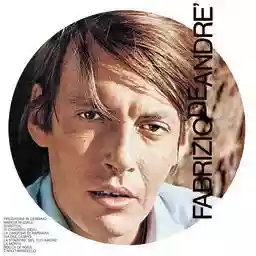
On January 27, 1967, Luigi Tenco committed suicide. That very night, the young Faber penned the verses that would become "Preghiera in gennaio", the first song on the album: there could be no stronger start. De André's first attempt at an LP after cutting ties with his previous record label Karim, which had released his early singles, begins with a touching prayer to God: surely, in His mercy, He will have welcomed a man like Tenco more kindly than thousands of ridiculous holy men, despite the whole Church and bourgeois moralists, because 'there is no hell in the world of the good God'.
Already in the first song, one can feel the seeds of what De André would become in the following years: a man violently anti-bourgeois and religious in his own way, a man who knows how to deal with controversial topics for the time, but also about love and other frivolities.
I would be mistaken to say that the five stars are justified only by the first moving track, because the album also contains pieces universally known even by those who do not love the great singer-songwriter: "Via del campo" and "Bocca di rosa". Since they are known by (almost) everyone, I would focus more on the other tracks. Throughout his career, Faber also dedicated himself to translating the works of his illustrious colleagues, and this album includes two songs from the repertoire of Brassens, his first great love from Genoa, which are "Marcia nuziale" and "La morte": the first, with a simple and catchy melody, tells the story of the marriage between two elderly lovers from their son's perspective; the second, with a martial and fairy-tale-like progression thanks to the drum and flute at the beginning and end of the song, delves into a theme De André would never abandon: death. The story is ancient and well-known: death strikes everyone without distinction of wealth, fame, or glory.
Nestled among these tracks are also two love songs, "Barbara" and "La stagione del tuo amore" (the latter replaced "Caro amore" which used the melody from Joaquín Rodrigo's Concierto de Aranjuez, and for this, the composer was quite upset), also sung with the usual warm and baritone voice, which has the power to both reassure and simultaneously unsettle you, with that calm way of singing in contrast to the strong words spoken.
There is another theme that De André would later expand upon: religion. "Spiritual" is a unique gospel song complete with organ and choir counterpointing De André's fast singing, where he says that God needs to come looking for him, not the other way around. But at track number four, there is another masterpiece: "Si chiamava Gesù", opened by powerful acoustic guitar chords (most of the songs on the album are recorded with voice and guitar, with the minimal addition of other instruments), followed by a voice full of pathos recounting Jesus from an absolutely human perspective: before being a great saint, Jesus was a great man, and we must consider him as such. It's curious that Rai (as always) censored the song, and the first broadcaster to air it was incredibly Radio Vaticano, but it seems the Holy See was more open-minded...
The last song stirred quite a bit of controversy at the time: "Carlo Martello ritorna dalla battaglia di Poitiers" tells the story of this famous king satisfying his sexual thirst with a poor girl from the people, and she takes advantage of him by demanding compensation, but he flees without paying. The "epic" deeds are celebrated with trumpet, trombone, exalted voice, and archaic words, almost to underline the grotesque situation. A trial for pornography was brought against Faber, but in the end, he was acquitted.
I conclude this humble review by emphasizing that all the seeds that would later develop De André's poetic style are found here, and despite the musical rawness of the pieces and the minimal instrumental participation, Faber's voice comfortably replaces the instruments, creating songs full of suspense, emotion, and, if you will, even embarrassment, because his words hit you directly inside, at your heart. Alas! These futile praises of mine will never be enough to celebrate what is irretrievably lost!
Loading comments slowly
Summary by Bot
Fabrizio De Andrè's Vol. 1 marks his first full-length album, rich with poetic lyrics and bold social commentary. Inspired by Luigi Tenco's suicide, it tackles themes like religion, death, and love with a raw musical approach. The album blends original songs and covers of Brassens, showcasing Faber's unique voice and style. Tracks like 'Preghiera in gennaio,' 'Via del Campo,' and 'Carlo Martello ritorna dalla battaglia di Poitiers' highlight his provocative storytelling and emotional depth.Tracklist Lyrics Videos
Fabrizio De André
Italian singer-songwriter (cantautore) Fabrizio De André (18 Feb 1940 – 11 Jan 1999) is known for poetic lyrics, narrative songs about marginalized people, and landmark albums including Creuza de mä and La buona novella.92 Reviews
