
 •
Rating:
•
Rating:
THE REVIEW
The last few years will surely be remembered as the years of the comeback of thrash metal. Undeniably. What initially might have seemed like a flash in the pan, linked at most to a couple of successful reunions, has turned out to be one of the most interesting phenomena of recent times, at least when it comes to "heavy" music. A genre that practically disappeared in the nineties, ousted by grunge on one side (as was much of the mainstream heavy scene) and by nu-metal and alternative on the other, until a few years ago talking about thrash metal meant talking about the eighties. Excluding underground realities known only to a dedicated audience, the various "big names" had over time lost their way: to realize it, just see what had become of the prominent names of the US scene.
Among the Big Four (a definition, which I find debatable) Metallica, Megadeth, and Anthrax had now shifted to other sounds, and only Slayer remained true to the old sound. The same fate had befallen Testament, Exodus, or Forbidden, disbanded or far from the glory of their early days. A similar destiny was shared by prominent European bands, like the German triumvirate Sodom/Kreator/Destruction, now far from the spotlight. Was the genre dead then? By the late nineties, something began to stir, Testament and Destruction, to speak of the already mentioned bands, made a grand return with successful albums and tours, partially revitalizing a seemingly dying scene.
The definitive "boom" occurred only a few years ago, with big names like Anthrax and Testament making a stable comeback in their classic formation, Death Angel, and Exodus, accompanied by a proliferation of young talents (I think of Municipal Waste and Gama Bomb), eager to pay their tribute to the metal of the past. But why? How is it possible that an entire movement, once wiped out in just a couple of years, has come back so forcefully, without, moreover, the support of mass media or particularly powerful labels? Staying within a purely metal scope, it's noticeable how the reassertion of thrash coincides with the decline of a subgenre that dominated the nineties: power metal.
If until about ten years ago a festival featuring names like Angra, Stratovarius, and Gamma Ray would have sparked a scramble for tickets, today many of these bands no longer enjoy the popularity they once did. Is it possible that over time a type of music, sometimes too pompous, was preferred to a more straightforward and easily accessible one? Hardcore riffs trumping neoclassical keyboards? Possible. Just as another reason could be traced to the grim times we live in. The thrash of the eighties had among its themes impending disaster, nuclear annihilation, a Cold War that could end in the worst way. Thrash was the scream of a generation that saw its world on the edge of the abyss.
After a decade, the nineties, which were all in all "calm," the 2000s begin with September 11, the war on terrorism, growing concerns for environmental preservation, and conclude beautifully with a devastating economic crisis. Does history repeat itself? Do Bush Jr. and Bin Laden take the place once held by Reagan and Gorbachev? New fears creep in, and "high" genres like progressive and a certain type of power, perhaps too tied to fairy-tale and dreamy worlds, evidently no longer seem as attractive as they once were, no longer a valid means of escape. Here comes the return to that dear old thrash which had so effectively exorcised the fears of a generation years before. And in all this chaos, as explained before, the old glories can only resurface, thirsty for a second chance.
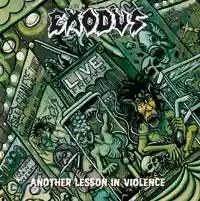
And among these, of course, are Exodus, the legendary Frisco band too often remembered only as "the band Kirk Hammett was in before joining Metallica”. But if the 2000s reunion was a resounding success with the five members, deservedly enjoying a second youth, not many must remember the rather ephemeral one of the nineties. With the revived Paul Baloff again behind the microphone, Gary Holt and his companions embarked on a tour that would culminate in the live album in question, “Another Lesson In Violence.” One must honestly wonder what the interest could have been at the time for such an operation. Seeing Exodus on stage in 1997 shouldn't be any different from attending a new tour today of some "war relic" from the grunge era: initial disorientation followed by a successful "nostalgia operation."
The band imploded once more at the end of the tour, but it must be recognized that the album released on that occasion is a little gem. A gem of sonic violence, of course. Andy Sneap, known as the guitarist of the English band Sabbat as well as a sought-after producer, manages to perfectly capture the "stage atmosphere" thanks to a powerful and clear sound that, however, never sounds "overproduced." The five members, as a result, give their best, aided by a setlist that focuses only on pieces that featured the good Paul on vocals. Baloff croaks with a possessed demeanor, the “H Team” Gary Holt/Rick Hunolt/Tom Hunting offers a technical and gritty performance, and the new recruit Jack Gibson makes sure no one misses his predecessors.
As already mentioned, all the early classics are here: the debut “Bonded By Blood” is played almost in its entirety, and it is joined by the trio “Brain Dead,” “Pleasures Of The Flesh,” and “Seeds Of Hate,” songs that would end up on the second album, that “Pleasures Of The Flesh” from 1987 which already had Steve “Zetro” Souza on vocals but were written when Baloff was still in the lineup. The cherry on top is the now-historic “Impaler,” never officially released on any record, and written when Kirk Hammett was still on guitar. So, what was the reason for the flop at the time? On one hand, the band was dissatisfied with the promotion carried out by Century Media, and on the other hand, Exodus at that moment must have really appeared like fish out of water, relics of an era that interested no one anymore. To fully reclaim the throne that belonged to them, they would have to wait many more years, but once again, this was proof that, sometimes, perseverance pays off. As long as the world is on the brink of the abyss, thrash metal will be alive and well.
Line-up:
Paul Baloff: vocals
Gary Holt: guitar
Rick Hunolt: guitar
Jack Gibson: bass
Tom Hunting: drums
Setlist:
Bonded By Blood
Exodus
Pleasures Of The Flesh
And Then There Were None
Piranha
Seeds Of Hate
Deliver Us To Devil
Brain Dead
No Love
A Lesson In Violence
Impaler
Strike Of The Beast
Loading comments slowly
Summary by Bot
This review highlights the significance of Exodus' live album 'Another Lesson in Violence' as part of the thrash metal resurgence. It acknowledges the album's powerful sound and authentic capture of the band's early classics with Paul Baloff on vocals. The reviewer contextualizes the thrash revival amid changes in metal trends and historical background. Despite the band's struggles in the 90s, this album remains a testament to the enduring spirit of thrash metal.Tracklist Lyrics
Exodus
Exodus are an American thrash metal band from the San Francisco Bay Area, formed in 1980. They are widely associated with the early Bay Area thrash scene and are often noted for the presence of Kirk Hammett in their early lineup before he joined Metallica.18 Reviews
Other reviews
By CUNTGRINDER
"Reign In Blood seems almost vulnerable compared to this 'Another Lesson In Violence'."
"It’s one of the most brutal albums I have ever bought."
