
 •
Rating:
•
Rating:
THE REVIEW
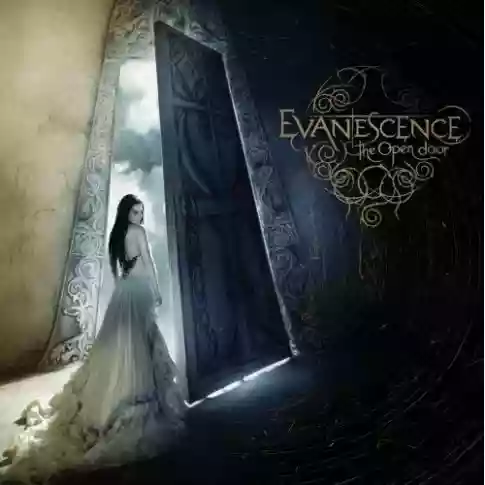
Incredible to say. Reviewing an album like this, destined not only for dark music lovers like me but also for a segment of the audience accustomed to the trash circulating on MTV or other similar garbage bins, has proven more difficult than expected. Four months after the release and my immediate purchase of "The Open Door", giving a judgment on Evanescence and their latest effort remains truly challenging for me, perhaps due to the desire to thoroughly assimilate the album before criticizing it freely as many gossiping voices in the music press enjoyed doing upon encountering a product that can be appealing to the masses and that doesn't bear the Iron Maiden signature (mind you, it's impossible to criticize a historic band!). Evanescence have written some of my favorite songs; I could never have deprived myself of listening to their new album, especially considering that among the countless and almost all similar gothic metal bands discovered in recent years, there are few songs that boast reaching emotional peaks comparable to those of "Breathe No More," "Understanding," or "Hello."
I truly didn't know what to expect when I put the disc into the player. If Amy, on the microphones, had long promised us a breath of fresh air, all the new things the band had offered after "Fallen" (the single "Call Me When You're Sober") were imbued with unhealthy air. The listening began, therefore, with some doubts. However, the promises were not denied: the new tracks remain with little or nothing of what we heard in "Fallen".
The changes are noticeable right from the opener "Sweet Sacrifice": the guitars become direct and heavy, bordering on nu-metal. Orchestrations are not in the foreground, they only serve as a complement to the guitars, but this song is destined to remain an isolated episode in the whole. Even regarding the lyrics, we notice a revolution. No more existential dramas, but much more self-confidence: Amy's voice states "fear is only in our minds." And if "Call Me When You're Sober" presents the more "pop" side of the band, the lyrics of this song offer us a splendid depiction of how frustrating a romantic relationship can be at the end of its possibilities for existence. From the third track "Weight of the World", the tones rise; here too, the guitars follow the same scheme as the initial track, but we can find heavy parts followed by calm and reflective sections where we find piano notes reminiscent of a music box sound and an acoustic guitar.
Analogous to what was proposed in "Fallen," one of the highlights is the fourth track. "Lithium" is not, however, a mournful and slow ballad like "My Immortal," but a desperate cry translated into rock music adorned with an elegant dark vein in the elegiac notes of the piano and strings, as well as in Amy's voice, which has improved to scary levels in range and expressiveness. The singer indeed offers operatic hints in parts never excessive and always well dosed in every song of the platter. "Cloud Nine" presents electronic parts and an affected voice, then leads to a truly beautiful chorus and offers us a bridge where piano and guitars duet in syncopated rhythms. "Snow White Queen" is the transposition of Bjork in Evanescence's style. With "Lacrymosa" the passion for operatic choirs and classical music goes beyond the ordinary, even daring to disturb Mozart and his "Requiem," causing shivers down the spine throughout the entire track until the intense final explosion that would even make bands jealous that are much more familiar with classical music (like Nightwish, for example). "Like You" is a beautiful ballad with a romantic flavor imbued with death in which reigns a dark fairy tale atmosphere both in the music and lyrics. "Lose Control" perhaps narrates lost innocence and is irresistibly hypnotic both in the verses where the piano takes the center stage, in the powerful chorus, and in the bridge, until the notes slowly fade away in the closure.
"The Only One" is an invitation not to give up, pain is seen as a common feeling ("we're all suffering, lost and hurt") and, once again, it's Amy's magical piano that gives that extra touch and introduces us to the beautiful "Your Star", yet another perfect synthesis of how far, compared to their past, the band has managed to push themselves, especially concerning lyrical choruses and orchestrations. "All That I'm Living For", with that melancholic string background, its reflective lyrics, and the guitar arpeggio in the verses, would be a perfect song for a soundtrack. In the opening of "Good Enough", played entirely on the piano with the prestigious accompaniment of strings, we perceive a yearning melancholy, which, however, gives room to a wave of deserved optimism with the arrival of Amy's voice creating a real duet with her own instrument, offering us melodies that manage to be as sweet as a dream, like a long-awaited rain gently touching the skin.
Now, I face a realization that, due to the feelings that tied me to "Fallen," I might have forced myself to repress. "The Open Door" is the best among Evanescence's albums. Ben Moody has been defeated, as have the ghosts of the past, namely the excessive but sometimes pointless catchiness, the electronics that never managed to find its ideal placement, the piano unjustly relegated to the background, the sometimes trite and adolescent lyrics, and the static nature of the voice. They may not have a great technical portfolio and construct simple songs from an execution standpoint, but between the rigidity, coldness, and stereotyping of bands where depressed faces marked by tears and romantic feelings steeped in black sometimes purely artificially abounds, Evanescence, with their emotional sincerity, are one of the few groups worthy of success and the right heralds for this genre, which makes strong emotions its own focus.
Loading comments slowly
Summary by Bot
The review praises Evanescence's The Open Door as an emotionally powerful and musically evolved album. It highlights Amy Lee's improved vocals, heavier guitars, and deeper lyrics beyond their debut Fallen. The reviewer appreciates the album's orchestration and diversity, noting it as the band’s best work to date. Dark themes blend with self-confidence and sophisticated musical arrangements.Tracklist Lyrics Videos
Evanescence
Evanescence are an American rock band centered around vocalist/pianist Amy Lee, known for blending heavy guitars with piano/strings and gothic-leaning atmospheres. They broke worldwide in 2003 with Fallen and later shifted styles across The Open Door (2006) and the self-titled Evanescence (2011), with notable lineup changes discussed heavily by reviewers.15 Reviews
Other reviews
By Matt7
"The Open Door is the perfect continuation of Fallen, and it almost results in a qualitative copy."
"Amy Lee’s voice sounds great on this album, it will be seen live if she will maintain certain vocalizations...!"
By Il Grande Hallel
The album immediately showcases the band’s unique characteristics right from the first listen: heavy guitar riffs in pure rock/metal style interspersed with keyboards, acoustic pieces, and piano, creating a very gothic atmosphere.
The 13 songs that make up the album are true poems, beautifully sung by the angelic voice of vocalist Amy Lee, who seems to have even improved her style and power compared to the last album.
By cinciu
The element that stands out the most is the musical exploration.
'Call Me When You’re Sober' is now known to everyone, and even if it doesn’t repeat the success of 'Bring Me To Life,' it still achieves considerable success.
By Ophitae
Evanescence is no longer the (fake) dark ones of the past, they are... refined, if I can say so.
'Call Me When You're Sober'... has become too commercial. They could have directly eliminated it from the album.
