
 •
Rating:
•
Rating:
THE REVIEW
Let's play a nice game of parallels: it's 1984, Etienne Daho releases "La notte, la notte", Falco "Junge Roemer", for both artists it's their second LP, both artists are dark-haired, super cool, and certified sex symbols, Danny The Kid adores both and the first song of each album (and also the leading single in both cases) evokes the now completely faded imagery of the Roman dolce vita, complete with spoken inserts in Italian. Well, we may not be at the level of the infamous Lincoln-Kennedy similarities, but these are definitely curious and amusing affinities that were worth mentioning; now, however, let's leave Falco aside, as he doesn't really fit in, and focus on Etienne. I've already talked about him, but with a recent album, "Les chansons de L'innocence retrouvée", let's see instead what he was like in his early career; a decidedly interesting comparison given we are dealing with an artist who, without ever getting too ruffled, has always managed to evolve, offering something different album after album.Even though he was born and emerged in the eighties, Etienne Daho has given his best from the '90s onwards in my opinion, he's one of those who gets better with age. In fact, his '80s production almost always gives the impression of being limited by something, the debut "Mythomane" is still very raw, "Pop Satori" sounds too standardized on the international trends in vogue at that moment, and "Pour nous vies martiennes" alternates excellent flashes and blank passages; "La notte, la notte" is somewhat the exception, here Etienne gets almost everything right, creating an engaging, classy album with great personality. Completely forget the noir ambitions of his more recent album, here we have a laid-back and sly sound, with synth pop as a starting point but also some blue-eyed soul suggestions; "La notte, la notte" thus offers classic sounds for those years, always with an elegant approach, always with finesse, with that slight hint of glamour typical of Etienne Daho. A light, well-structured album, enjoyable in every situation and aged very well, just like its author.
So, "Week-end a Rome", or the art of creating the right single by combining the dominant sound of the moment (a minimal, highly captivating synth base) with refinements and vintage suggestions, Etienne's velvet, utterly relaxed voice is ever so fitting for a dreamy and sensual piece but above all loaded with irresistible nonchalance. A winning alchemy, also reproduced in other strong tracks on the album, like "Le grand sommeil", with a dreamy atmosphere, a nice bass line, and enveloping electronics, very avant-garde for those times, all serving a fresh, pleasant and stylish melody, well punctuated by a sax solo at the end; or "Et si je m'en vais avant toi", an impeccable atmospheric slow, silky, gentle sound, candlelit, and a voice that expresses itself in the most ideal context possible, with echoes and nuances further enhancing its charm. Songs that satisfy, relax, and make you feel good; these are the first flashes of a high-class pop star who with this album defines his stylistic signature, and ideally also a "French way" of quality radio pop of those years.
And the positive notes do not end here, "La notte, la notte" also boasts a surprisingly wide stylistic range, evident from two tracks that share a 100% synth sound, whose expressive potential ED has fully exploited, ranging from the languid, almost minimalist atmosphere of an oriental "Signé Kiko" to the cheerful and cabaret-like brilliance of "Poppy Gene Tierney", where Etienne's always fascinating voice is accompanied by a female counterpoint. This particular trademark is repeated in two true gentlemanly ballads, the very romantic "Promesses" and "Laisse tomber le jaloux", whispered with incredible charm. "Saint-Lunaire, dimanche matin" concludes in style, whispering once again, Etienne knows how to whisper divinely; and still dreaming, a slow, almost surreal waltz, with again creative and brilliant use of synths. Beautiful.
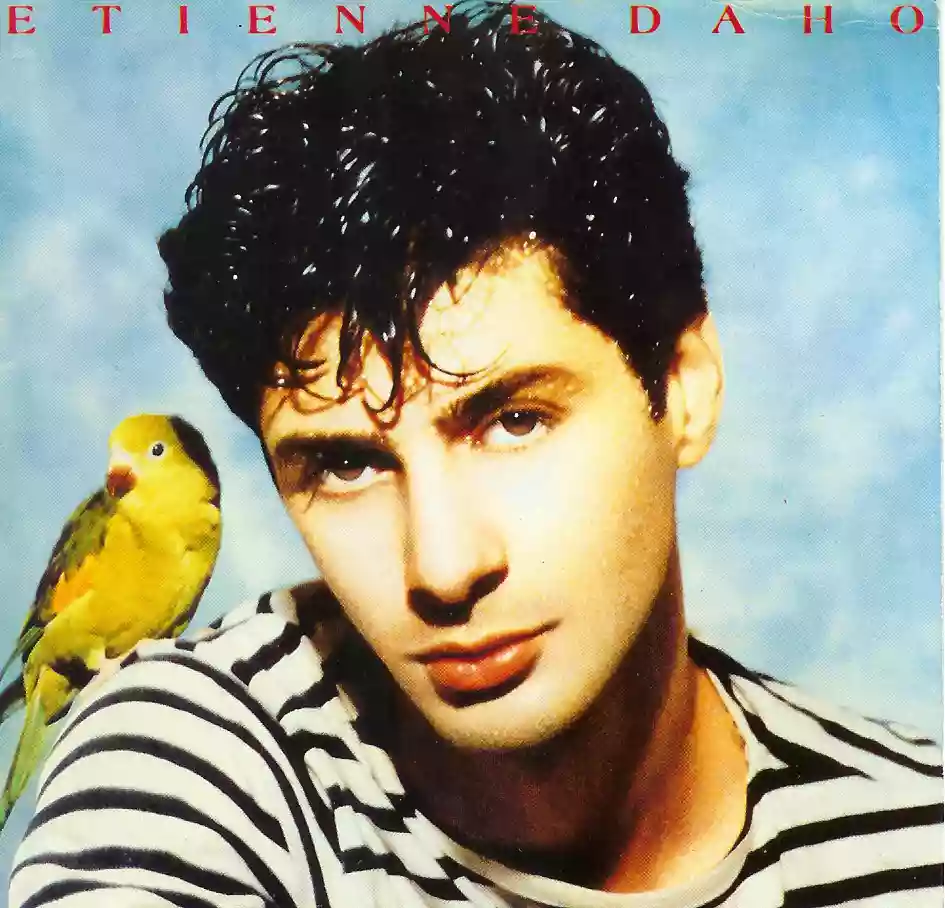
What more to say, well, I'd say a fine très charmant perfectly sums it all up. An almost impeccable album, sound, songs, voice, personality, cover, nothing is missing. It will take a few years to hear an Etienne Daho as inspired again; the subsequent "Pop Satori", though not a lousy record in absolute terms, will be very disappointing in comparison, especially in terms of originality and richness of sound. No big deal, over time, class will fully reemerge, and anyway "Il vento nei capelli, caro, accelera e alza la radio, mmmh, la notte, la notte, mmmmh, la notte la notte...", if you know what I mean. It's just a pity that an artist of his caliber has not gained, even temporarily, real notoriety outside the French borders. He absolutely deserved it, he's a great, brilliant, modern, and stylish chansonnier, a true number one.
Loading comments slowly
Summary by Bot
ÉTienne Daho's 1984 album La Notte, la Notte stands out as a refined synth pop record with elegant, laid-back vibes. The album showcases Daho’s early artistry and rich stylistic range, featuring memorable tracks like 'Week-end à Rome.' Despite lesser international recognition, this work remains a high-class example of French pop from the era, displaying maturity that would only grow in his later career.Tracklist
01 Week-end à Rome (04:12)
02 Signé Kiko (04:00)
03 Le Grand Sommeil (04:03)
04 Promesses (03:54)
05 Poppy Gene Tierney (03:42)
06 Sortir ce soir (04:06)
07 Et si je m'en vais avant toi (03:29)
08 Laisse tomber les jaloux (04:19)
09 Jack, tu n'est pas un ange (03:28)
10 Saint-Lunaire, dimanche matin (03:56)
Étienne Daho
Étienne Daho (born 14 January 1956) is a French singer, songwriter and producer, a key figure of French pop since the 1980s, known for blending chanson, new wave and electronic pop. He collaborated with Saint Etienne in 1995, explored trip‑hop‑tinged textures on Eden (1996), and earned broad acclaim with Les chansons de l’innocence retrouvée (2013).04 Reviews
