
 •
Rating:
•
Rating:
THE REVIEW
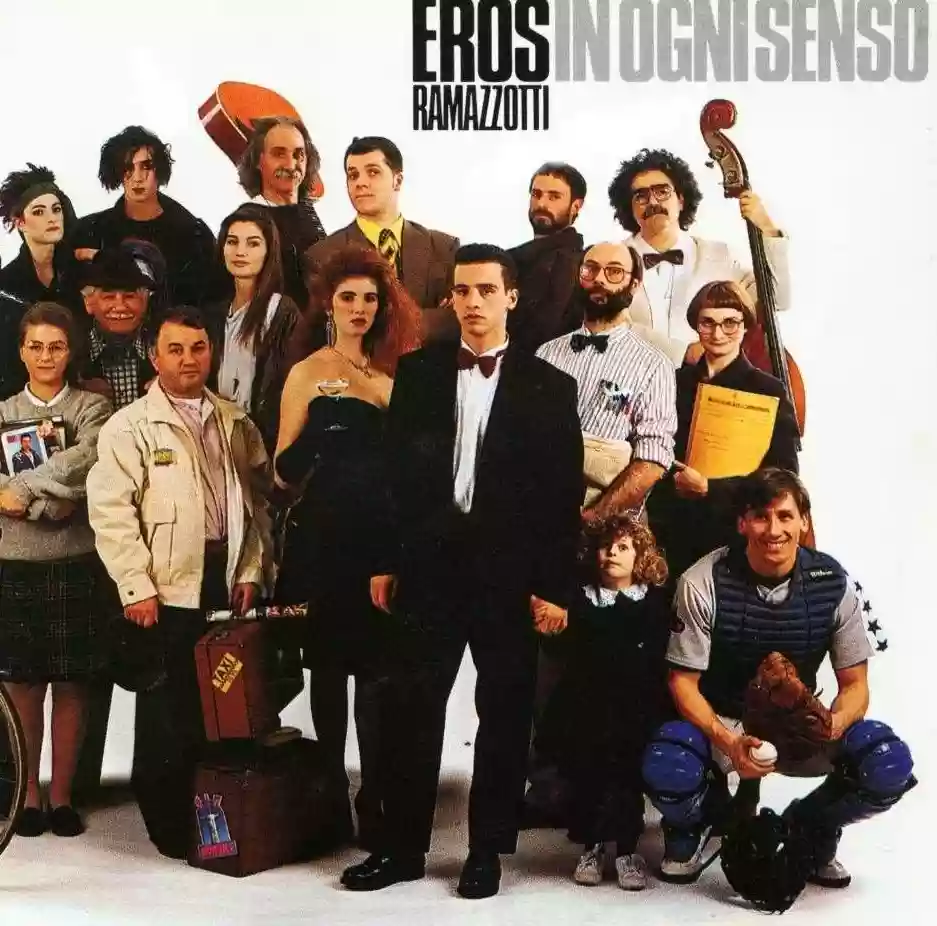
Musically, this is not Ramazzotti's best album, but it is the one that features his most meaningful lyrics. This is evident from the fact that there are only two love songs: "Amarti è l'immenso" (an excellent piano-ballad, albeit with a somewhat overly sentimental lyric) and "Dammi la luna" (frankly a secondary launch single).
The song lyrics do not reach the class of a De Gregori, but the underlying ideas are truly very good: "Se bastasse una canzone" (with a beautiful guitar solo at the end, and lyrics about dreamers who often use music to escape from the selfish world surrounding them); "Canzoni lontane" (the bittersweetness of nostalgia); "Amore contro" (lyrics that encourage not responding to evil with evil); "Strada per il Paradiso" (which describes those who, by refusing to adapt to societal changes, have become alienated); "Dolce Barbara" (a prayer dedicated to a young fan of the Roman singer, who died of multiple sclerosis); "Andare in ogni senso" (a jazz piece with Ramazzotti dueting with Piero Cassano, in a sort of father-son dialogue, with the father telling the son that his idea of America is only in his head); "Cara prof." (very pleasant musically, with lyrics stating that not all dreams made in school come true, and when they do, they might "swallow us up" - a veiled reference to the negative sides of his worldwide success); "Taxi Story" (an apparent filler telling the story of Guido, a taxi driver from Rio, who, by contract, has to do what others ask of him, another veiled reference to his "prison life" as a star crushed by the album-tour routine, the prison life the singer will also talk about in "Silver e Missie", three years later, in "Tutte Storie").
And finally, the splendid "Cantico". This delicate piano-ballad (with a beautiful mix of sacred choir and electric guitar at the end) is probably the best song ever written by Ramazzotti, with lyrics expressing the impossibility of being like Saint Francis in a world like today's – which despises life and nature. Here, the term masterpiece is not out of place.
This album could have also included "Musica è", an 11-minute piece published in a homonymous EP in June 1988. This song celebrates music not as a mere art, but as part of creation itself ("because a world without music cannot even be imagined, because every heart, even the smallest, is a heartbeat of life and love, what music is"). Despite some lengthy sections and 80s keyboard parts that haven't aged well, this suite, with its magnificent arrangement, remains one of the best pieces in Italian music, with a truly stunning sax end.
Also remarkable is the sound clarity in almost all the tracks, the result of Abbey Road's recording studios.
Loading comments slowly
Summary by Bot
Though not Eros Ramazzotti's best musically, 'In ogni senso' features his most meaningful lyrics addressing themes of nostalgia, societal alienation, and hope. Highlights include powerful songs like 'Cantico' and 'Se bastasse una canzone.' The album's sound clarity benefits from Abbey Road Studios' recording. Overall, a thoughtful, lyrically rich work that stands out in his career.Tracklist Lyrics Videos
02 C'è una strada in cielo (04:23)
03 Amore contro (04:25)
04 Dammi la luna (03:52)
07 Amarti è l'immenso per me (04:26)
08 Canzoni lontane (04:50)
09 Cara prof (04:00)
11 Oggi che giorno è (04:37)
12 Andare… in ogni senso (02:22)
13 La luce buona delle stelle (04:16)
16 Una storia importante (04:07)
Eros Ramazzotti
Italian singer-songwriter born 28 October 1963 in Rome, known for melodic pop and pop-rock hits since the mid-1980s and sustained international success.27 Reviews
Other reviews
By senior86
Probably "In ogni senso" encapsulates all the styles and nuances that Italian music has brought out over the span of fifty years.
Personally, I believe this is Eros’ best work or perhaps the most complete one.
