
 •
Rating:
•
Rating:
THE REVIEW
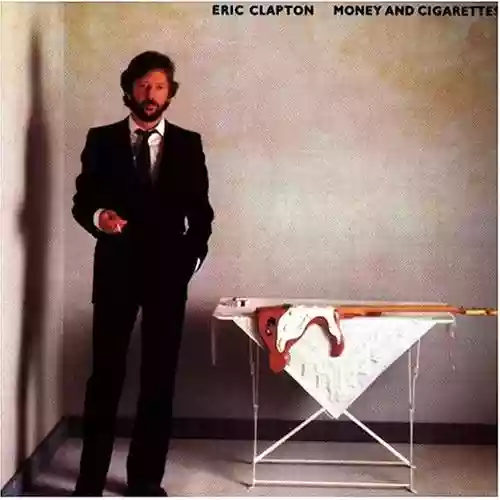
Two years after "Another Ticket," a very good album but certainly not memorable, it's time for changes for Slowhand: away from RSO, the new studio work comes to light for the newly formed Duck Records, a personal label of a bluesman who appears—at least temporarily—cleansed from past excesses and abuses. And above all, he's leading a backing band of very short duration but that—even for just one album—was destined to leave a mark: Albert Lee is the only survivor from the previous album, otherwise Eric fires everyone and secures the performances of Ry Cooder and a rhythm section—of enormous class—with Donald "Duck" Dunn (need an introduction...? I really don't think so) and, behind the drums, Roger Hawkins, legend of the Muscle Shoals Rhythm Section.
Inevitable, therefore, that with such premises, a masterpiece would escape; so much so that "Money & Cigarettes," almost 30 years later, can rightly be considered the only great Clapton work of the Eighties, before Our Man sank into the commercial darkness (and lack of ideas) of the two subsequent albums, for a period that everyone remembers as the lowest of his career. Of course, even the disastrous production of Phil Collins will do much, with the fact that Clapton has never seemed a truly finished artist as he did between '85 and the early '90s.
But the album of '83 is quite another thing, here we can still appreciate those "guitar hero" feats, those indescribably lustful evolutions of the Stratocaster for which "Clapton Is God," and for which He remains, despite many other things, the greatest guitarist to emerge from the Bluesbreakers: more consistent and regular than Peter Green, more incisive and edgy than Mick Taylor, who was mired in the sluggishness of his poor solo production after his tenure with the Stones had hinted at much more. And in general, many guitarists would sell their soul to the devil to record an album like "Money & Cigarettes"; power, expressiveness, elegance, sweetness, "feeling" and intensity to spare, and above all: the unique pleasure of hearing two phenomena dialoguing, the impeccable perfect blending of Eric's guitar with the unmistakable slide of Ry Cooder. "The Shape You're In" is the clear demonstration, moreover with an at least brilliant text that speaks, with cutting irony typical of a bluesman, about alcohol dependency: a masterful duet, nothing to say. And it should not be forgotten that most of the repertoire consists of originals; like "Ain't Going Down," a whirlwind and frenetic Rock built on the same chord sequence as "All Along The Watchtower" and accelerated by the enormous drumming of Hawkins: here we still hear the Clapton of the Derek & The Dominos era, the instrument cuts and roars with a violence and vehemence increasingly rare in the future (apart from live performances, of course); like "Man In Love," canonical 12 bars but of great taste in melodic lines, with Albert Lee also venturing—exceptionally—on the piano; like "Slow Down Linda," a tense R'n'R that seems signed Jagger/Richards; like "Man Overboard" and "Pretty Girl," two apparently "light" and minor parentheses, actually agile interpretations of consolidated Soul and Rhythm & Blues stylings; beautiful the acoustic lines of the latter, a classic Claptonian ballad totally devoted to the slow.
But there remains to say (and what to say!) about the covers, an aspect not insignificant in evaluating any respectable Eric album: Sleepy John Estes returns with the well-known "Everybody Oughta Make A Change" (I must say I prefer it to the excellent rendition by Taj Mahal on his eponymous debut), Troy Seals returns with the intimate and engaging whisper of "I've Got A Rock'n'Roll Heart." Enter the classic "Crosscut Saw," written by R.G. Ford but made famous by Albert King's '66 version, and Johnny Otis with "Crazy Country Hop" (recently deceased, by the way: I would like to remember him here): interpreted as it would be by a rural Southern band of the '50s, thus capturing in full the spirit and meaning (essentially "playful," spontaneous) of the piece as it was conceived.
Five. Even if many will disagree, even if many will bring out the usual story of Clapton "dead after Layla" and so on... But it is hard to deny the greatness of this record.
Loading comments slowly
Summary by Bot
Eric Clapton's 1983 album 'Money And Cigarettes' is hailed as his best work of the 1980s, showcasing his guitar virtuosity and authentic blues feel. Featuring a stellar backing band including Ry Cooder and Donald 'Duck' Dunn, the album blends original songs and covers with intensity and elegance. Despite the later decline in Clapton's 80s output, this record stands out for its power, emotion, and uncompromised style. Tracks like 'The Shape You're In' and 'Ain't Going Down' highlight Clapton's compelling blues-rock mastery.Tracklist Lyrics Videos
Eric Clapton
Eric Clapton (born 30 March 1945) is an English guitarist, singer and songwriter, influential in blues and rock. He rose to prominence with the Yardbirds, Cream, Blind Faith and Derek and the Dominos and has had a long solo career.31 Reviews
Other reviews
By JimMorrison
Money And Cigarettes (1983) is a perfect example of a transitional album, which I would define as atypical when compared to Clapton’s more classic blues patterns.
A desire to play that emerges in every single track. A desire to change. A desire to listen that increases.
