
 •
Rating:
•
Rating:
THE REVIEW
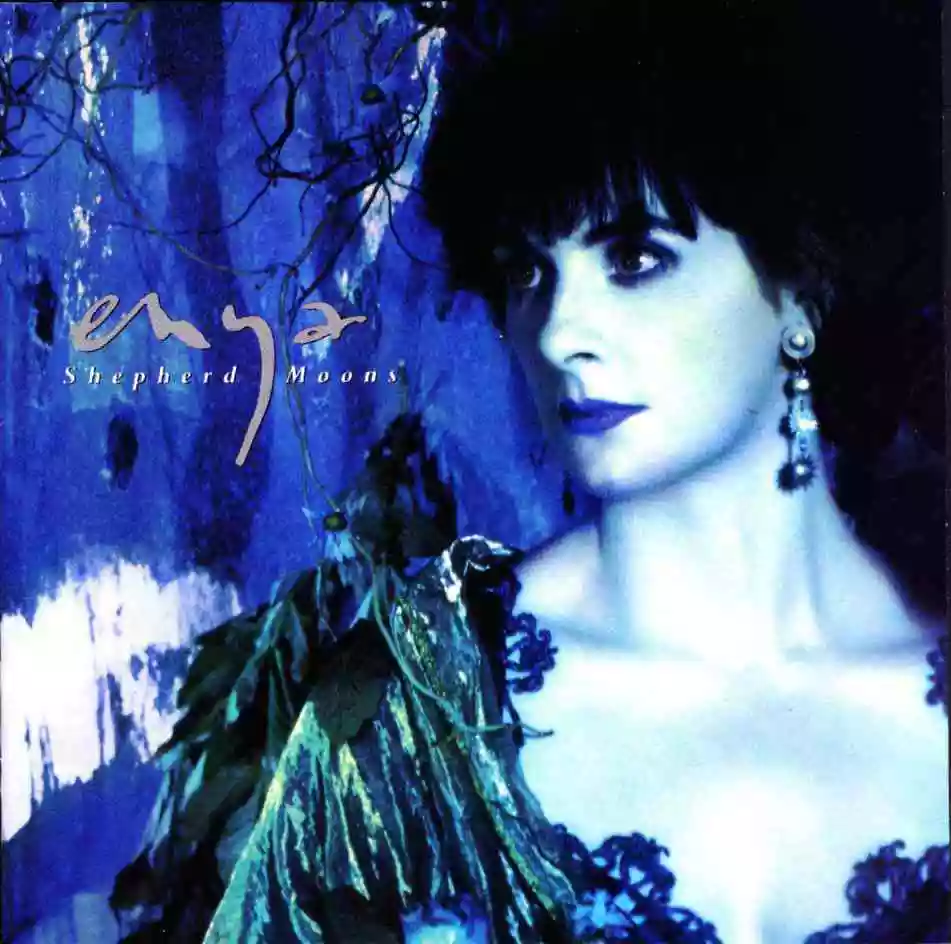
One of the aspects that make music the most fascinating among the arts is the frequency with which it knows how to offer us not only isolated miracles but also encores of miracles, and sometimes even chain miracles. There are countless examples of apparently valuable "clones" scattered across every genre. "Shepherd Moons" by Enya is a particularly striking case. Based on a sound virtually identical to its predecessor "Watermark", it manages to fully replicate the perfect balance between mysterious Celtic charm and refined new age grace, all without traces or almost of copying the sublime motifs contained in its model.
It begins with a magical immersion in pastoral atmospheres, "Shepherd Moons" indeed, which goes far beyond the suggestion of the title: in this fantastic instrumental piece, the texture of piano and harp sounds responds to the echo of solemn sacred music choirs, which, however, never weigh down the idyllic picture created by this music, which, as far as I'm concerned, is that of the enchanted calm of a moonlit night in a wooded valley, perhaps with a slight mist. The sheep and the shepherd are optional: those who wish can imagine them.
"Caribbean Blue" has a misleading title, suggesting Caribbean sound influences. Nothing could be further from it: it is instead a slow and majestic waltz, supported by the bass, the only rhythmic base that miraculously manages to harmoniously bind together the sounds of strings, metallic keyboards in perfect harpsichord style, divine baroque mass choirs, and finally Enya’s angelic voice—a sum of voices that, treated with less mastery, could produce a grand pandemonium. For me, along with "Shepherd Moons", it is the pinnacle of the album, and strangely it was also its flagship piece (in this album there wasn't a nursery rhyme made especially for radio play like "Orinoco Flow").
"How Can I Keep From Singing?": the title speaks for itself, and in fact few songs know how to highlight the purity of Enya's voice like this one. This is thanks to deliberately understated orchestration and an irresistibly singable theme, following the model of "On Your Shore", but without plagiarism. "Ebudae" is a short traditional song supported by a refined rhythm, one of the few non-memorable episodes, but it is still pleasant.
"Angeles" is another splendid example of a delicate intertwining of solo voice and sweet choirs, again with soft, velvety instrumentation. "No Holly For Miss Quinn" is nothing more than a revisitation of "Angeles" in a sober and clean version for solo piano, very classical. It's evident that the model is "Watermark" from the first album, but even here not a single note is copied. A slightly more sustained rhythm and a simpler, more catchy motif in "Book Of Days", where real percussion surfaces (a rarity in Enya), which, in competition with the sharp keyboards, enliven this song from the beginning.
"Evacuee" is another sweet composition that seems made to showcase Enya's vocal skills in all their clarity, while "Lothlorien", a magical Celtic music box of keyboards and harp, despite stubbornly repeating the usual (but highly inspired) motif, is one of the most evocative moments of the album, certainly the closest to the mysterious world of the Celts.
"Marble Halls", taken from a traditional theme, offers, on a carpet of soft basses and celestial choirs, a demonstration of the Irish singer’s vocal setup, which here truly reaches operatic music levels, and I'm not exaggerating. Just a bit below perfection is the ending: "Afer Ventus" attempts to recreate the absolute ecstasy of the previous "The Long Ships", but has a slightly more ordinary theme, and finally "Smaointe", further confirming the parallelism with "Watermark", harks back to the last Gaelic song from this album, without reaching its arcane charm. Trifles, anyway, which can only be caught by those accustomed to splitting hairs, and certainly not enough to deny the title of masterpiece to this splendid "copy."
Loading comments slowly
Summary by Bot
Enya's Shepherd Moons is praised for perfectly continuing the magic of her previous album Watermark. The album blends Celtic mystique with refined new age sounds through enchanting instrumentation and angelic vocals. Standout tracks include the majestic 'Caribbean Blue' and the soothing 'Shepherd Moons.' Minor flaws are noted but do not detract from its overall masterpiece status.Tracklist Lyrics Videos
Enya
Enya is an Irish singer, composer and musician known for multi-tracked vocals, lush synthesizer textures and Celtic-influenced melodies. After early work with Clannad, she launched a solo career with Enya/The Celts and broke through worldwide with Watermark (1988) and the hit Orinoco Flow. She has since released best-selling albums and the song May It Be for The Lord of the Rings.08 Reviews
