
 •
Rating:
•
Rating:
THE REVIEW
"They ask me why I write so little. I replied: If a writer is prolific, take a look at his wife. She is almost always ugly. And what do you expect the poor guy to do? Write!"
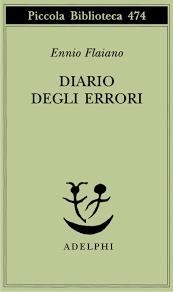
Notes, aphorisms, jokes, quotes, ideas. One hundred and seventy very smooth pages, achieved by putting together notes from numerous trips made both on Italian soil and far beyond national borders. Always balancing between lucid observation and a burst of wit, with the good taste to never take itself too seriously even when the topic at hand is beyond any reasonable doubt.
Screenwriter for (among others) Fellini, Monicelli, and Antonioni, one of the first to recognize the revolution brought to theater by Carmelo Bene, who would boast about his reviews until his death, Flaiano was above all an attentive witness of his time. Using satire more as a magnifying glass than as a weapon to wound, his strong critical sense certainly could not exempt him from highlighting the contradictions and limits he recognized first in himself. From numerous metaliterary reflections, a strong dissatisfaction with his own work emerges.
This collection of brief writings can sometimes seem chaotic. At certain points, it isn't easy to understand whether one is faced with a stream of consciousness, the presumably jocular outline for a story or screenplay, or the impromptu impressions sparked by visiting some improbable place. The only existing order is chronological: from 1950 to 1972, the year of the author's passing.
The world of cinema and print media, which he frequented and knew very well, are often the objects of mockery. Sometimes irreverent to the point of ferocity, he had no fear of desecrating the most celebrated idols of the period, pulling them down from the pedestals on which critical or popular fortune had placed them and reducing them to a tavern joke.
An intricate love-hate relationship tied him to the customs and traditions of his (but also our) Country. By his own admission "indecisive to everything," he spent his life trying to remain equidistant from the ambitions of a people dazzled by the desire for social advancement generated by the economic boom, but also from the artificial, ostentatious, and myopic intellectualism of so-called "intelligentsia."
Perhaps not a fundamental work in Flaiano’s nevertheless considerable legacy, also due to its fragmentary nature, "Diary of Errors", has the not negligible merit of being a good read both to broaden one's views and to pass the time on the toilet. Particularly relevant, as well as representative of the author's mindset, is the passage titled "Philosophy of Refusal." A scarce page and a half carrying the invitation not to fall into any classification, not to put any label on oneself, to steer clear of any collective effort. "Refuse, but without specifying the reason for your refusal, because even this would be distorted, annexed, used. [...] A NO must rise from the depths and frighten those who say YES. They will wonder what is not appreciated in their optimism."
Loading comments slowly
Summary by Bot
Ennio Flaiano's Diario degli errori compiles a lively mix of notes, jokes, and reflections spanning from 1950 to 1972. Flaiano's sharp wit and critical eye dissect Italian culture, media, and his own contradictions with humor and satire. Though occasionally chaotic and fragmentary, the work offers valuable insights into cinema, literature, and social observation. The notable 'Philosophy of Refusal' encourages independence from labels and collective thinking. Overall, it is an entertaining and thoughtful read.
Ennio Flaiano
Italian screenwriter, novelist, journalist and essayist, noted for wit, aphorisms and satire; collaborated with filmmakers such as Fellini, Monicelli and Antonioni.01 Reviews
