
 •
Rating:
•
Rating:
THE REVIEW
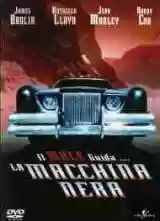
Among the classic films of the late '70s, which were repeatedly shown on private networks in the '80s, "La macchina nera" (The Car) by Elliot Silverstein holds a special place, not for the intrinsic qualities of the feature film, a genre film that emulates works of much higher caliber like Spielberg's "Duel" and "Jaws" (but which may have perhaps provided some inspiration to King for "Christine"), but for the unease it managed to instill in the naive viewers who, as children or teenagers, saw it programmed at regular intervals on the cathode tube.
Indeed, while browsing here and there on the internet, I noticed that several former kids still recall with panic the dark silhouette of the car emerging on the quiet and sunny streets of New Mexico, mowing down students, musicians, policemen, and more for no apparent reason, driven by an undefined entity, which for convenience could be termed as "evil."
Some, I still remember my cousin Giuseppe as a proponent of the theory, highlight how, at the end of the film, in the blazing landscape (those who have seen it know), a stylized Beelzebub appears... similarly to what some would have seen emerging, twenty-four years after the film's release, from the dust of the World Trade Center.
And indeed, the interesting aspect of the film (which incidentally tells the story of a car that kills without reason in rural America) is precisely this: assuming no one is driving the car (unlike in "Duel," much more rational in its concept), that this time nature has nothing to do with it (as opposed to in "Jaws" and the precursor Melville's "Moby Dick"), who could want the death of those run over by the black car? The film seems to suggest a religious perspective, in line with American traditionalism (and indeed the car doesn't enter the cemetery and doesn't violate consecrated ground, regardless of the aforementioned Beelzebub), but the hypothesis cannot be entirely peaceful if one admits that even the personification of evil, or its embodiment in a mere car, can only be tools to render the intervention of an entity intelligible to man by giving it a form so that it might be recognized.
I don't know why, but in my opinion, the black car seems more like the twin of the black monolith in Kubrick's 2001, a pure form that masks a totipotent content, the stem cell of fear that, in that 1977, materialized in a car in this modest film with James Brolin, but that always accompanies us, in and out of the cinema.
Somewhat like the logic of "Vincent Price" by Faust'O: we can scare ourselves, but it's much more useful to transfer our anxieties onto an object. The car, precisely.
Loading comments slowly
Summary by Bot
La Macchina Nera (The Car) by Elliot Silverstein is a cult 1970s horror film remembered for its unsettling impact on young viewers. Though not as refined as Spielberg’s Duel or Jaws, it stands out for portraying a seemingly driverless, evil car that terrorizes rural America. The film carries religious symbolism and evokes deep fears by personifying evil in a mysterious black car. This modest movie with James Brolin has left a lasting impression on those who saw it during the 80s.
