
 •
Rating:
•
Rating:
THE REVIEW
There is a comforting certainty in a blank, unwritten page. Here lies the world of everyone, the totality of those colors that each one paints while living life. Then there is the word, or rather the distinctive mark of those who want their life to stand out above others. The presumption of the writer is to want to set boundaries to a world of everyone in order to "impose" their own so that their gaze becomes our gaze, their world becomes our world.
Elias Canetti (1905-1994), a Bulgarian-born writer but a European wanderer for life is, fortunately for me, my gaze, my world. In him, I perceive no presumption, no "visual" imposition because within his boundaries I see my boundaries, and what he sees is what I myself would like to see. This immense author whose fame never fully exploded neutralizes any desire for me to venture into vaporous pages, inconsistent dialogues: cages for the eyes, the mind, and the heart.
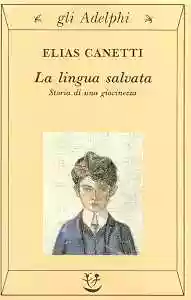
When you discover an author like this, and everyone has theirs, you realize that you are not alone and that your gaze, wherever it reaches, is enough for you and gives your world such relevance, making it perfect in your eyes: the only possible world. In this sense, the extraordinariness of a work like "The Tongue Set Free - Remembrance of a European Childhood" (1977), lies not so much in its marvelous prose but in the fact that it is an autobiography (the first of three volumes).
An autobiography in itself leaves little room for the writer for flights of fancy, meaning there is no way to impose necessarily thrilling situations on the reader. An autobiography captivates if the life lived captivates. And I find Canetti's life captivating in every line, moving in every spasm shared with me: in the description of the mother-son relationship, in the voracious reading at the bedside, in the respectful deference toward school authorities, in the discovery of unique and exclusive marital love, in the depiction of father-son conflicts.
Canetti wrote other things too, not much; his was a very measured work, to tell the truth. But that suits me just fine because in his words there is never more than I would like to hear or see, and these noble boundaries please me because they make each of my lived days a little nobler too.
Loading comments slowly
Summary by Bot
The review praises Elias Canetti's autobiography 'The Tongue Set Free' for its sincere and captivating portrayal of his life. It highlights how Canetti's careful and measured prose invites readers into his personal world without pretension. The intimate depictions of family ties and personal growth make the work relatable and deeply moving. The reviewer finds emotional resonance and nobility in the author's reflections.
Elias Canetti
Elias Canetti (1905–1994) was a Bulgarian-born, German-language author and Nobel Prize in Literature laureate (1981). Known for the novel Autodafé, the study Crowds and Power, and a celebrated memoir trilogy beginning with The Tongue Set Free, he lived across Europe and wrote with incisive wit about masses, power, and identity.02 Reviews
