
 •
Rating:
•
Rating:
THE REVIEW
If we want to exaggerate, we can say that the successful and rich career of the Electric Light Orchestra, spanning the seventies and eighties, was almost entirely based on the insights refined by John Lennon and Beatles producer George Martin in a couple of their masterpieces, "I Am the Walrus" and "Strawberry Fields Forever": pop music distinctly symphonized by string instruments.
Nonetheless, if in the collective memory the framing of this group reveals decidedly (and also cloyingly, at least in my view) commercial traits, not everyone knows, or remembers, that the beginnings were instead quite avant-garde: so much so that in the first two, maybe three published works, the Orchestra can rightfully be traced back to the progressive genre.
This is evidenced by the only five, all ample songs that make up this second album, the longest of which, the anti-militarist suite "Kuiama", exceeds eleven minutes in length, as the heartfelt basic songwriting (melodically inspired, without fear of contradiction, by the Lennon song "Don't Let Me Down") is stretched endlessly first by a lengthy and virtuosic violin solo, then by piano inserts equally refined in touch, demonstrating the almost concert-level musical preparation of several members of the team.
At the time, the Orchestra included a violinist and two cellists, alongside the classic quartet of guitar, keyboards, bass, and drums. The leadership, from this work onwards and throughout the career (in the first album there was another rooster in the henhouse, bassist cellist and singer Roy Wood), firmly lies in the hands of the composer, singer, and guitarist Jeff Lynne, Beatle-inspired to the core (on the John Lennon side, as already mentioned), hyperproductive in terms of songwriting but, by contrast, without instrumental ambitions either in arrangement or as a soloist, so much so that he always willingly leaves center stage to his classically-trained companions around him.
Not all the musicians come from the Conservatory, however: self-taught drummer Bev Bevan is quite the skilled and creative rock drummer (in his future resume even an album, and related tour, with Black Sabbath...) very pleasant to listen to.
The only track where Lynne's guitar is, and could not be otherwise, in full prominence, is the breathtaking cover of the well-known "Roll Over Beethoven" by master Chuck Berry: certainly the most intriguing and best reinterpretation, among the many collected from this famous rock'n'roll. Taking inspiration from the title, the first forty seconds introduce with the performance of the prologue of Beethoven's "Fifth", tackled with such meticulous skill that it really feels like you've put the wrong record on and are dealing with a Deutsche Grammophon product. However, amidst a full string frenzy, the immortal guitar break comes in, preluding the compact and compelling rock classic that more or less everyone knows. But violins and cellos persist, at each end chorus they interject pyrotechnic variations, overflowing solos, and callbacks to other famous passages of the supreme German genius... The whole piece ends up lasting over seven minutes, undoubtedly constituting the album's peak, the reason why it is ultimately worth owning.
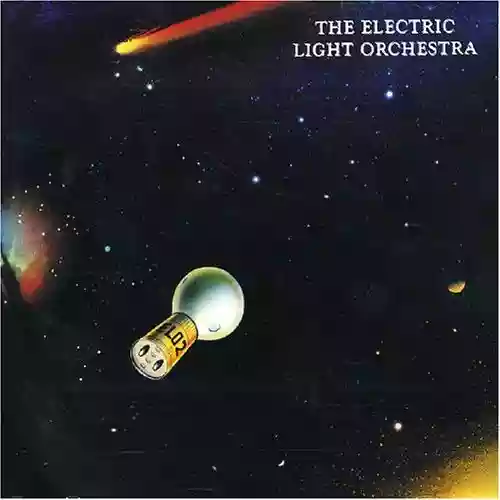
Curiosity: as with many other albums, the American cover and the European one (chosen for the review) differ, though not by much, while the tracklist remains unchanged in any case.
Loading comments slowly
Summary by Bot
Electric Light Orchestra's second album reveals a progressive and classical-infused side far from their commercial reputation. With lengthy compositions like the anti-war suite 'Kuiama' and virtuosic string work, the album reflects the band's early avant-garde roots. Jeff Lynne’s leadership balances songwriting with classically trained musicianship. The highlight is the innovative 7-minute cover of 'Roll Over Beethoven,' blending Beethoven’s Fifth Symphony with rock energy.Tracklist Lyrics Videos
Electric Light Orchestra
Electric Light Orchestra (ELO) are an English rock band known for blending rock with strings and orchestral arrangements, led primarily by songwriter-producer Jeff Lynne.14 Reviews
