
 •
Rating:
•
Rating:
THE REVIEW
Year of grace 1974, we find ourselves in a period of great flourishing concerning Rock music, and especially regarding concept albums: Peter Gabriel managed almost single-handedly to create a historic album, assisted by the other Genesis members, called The Lamb Lies Down On Broadway, while David Bowie delighted us with “his” rendition of 1984, found in Diamond Dogs; considering that in this period, masterpieces like Thick as a Brick, The Snow Goose, and the visionary trilogy of Radio Gnome by Gong were born, we can undoubtedly say it was a golden period for concept albums.
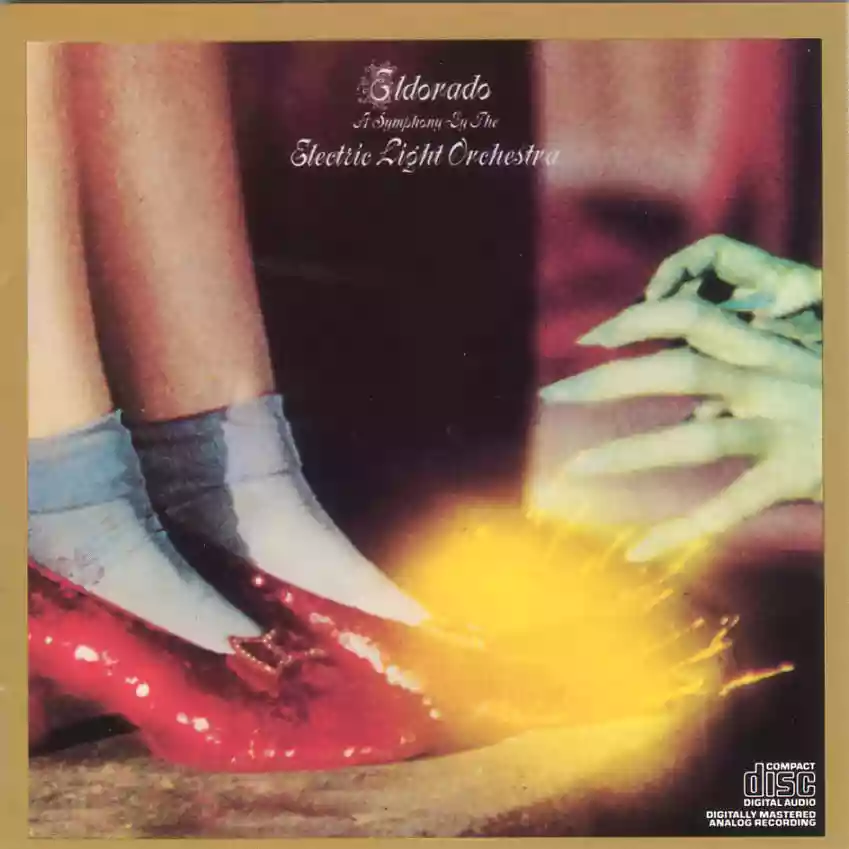
Among all these homogenous and fascinating frescoes, a group tried to coin its own meaning of Rock through simple melodies, but accompanied by classical instruments such as violins, violas, and strings. We are talking about the Electric Light Orchestra, led by Jeff Lynne, hailed by many as an absolute genius of Pop, but who tried, in the early years of the band's formation, to produce a sound markedly more avant-garde than what they later presented to us during the band's golden years. After the debut album with the fugitive and charismatic Roy Wood, the progressive experiment with ELO II, and the first attempt at a concept album with the transitional On A Third Day, Lynne decided to make a breakthrough: ELO also embarked on the fascinating, yet dangerous and arduous, attempt to produce a concept album, and from here, Eldorado was born.
Regarding the rhythmic and technical preparation of this album, ELO decided to concretely enhance the quality of the arrangements by hiring conductor and arranger Louis Clark, and the results were immediately audible: Eldorado has a grandiose and polished sound, far from the sparse arrangements of the previous three albums, and our Jeff molds his work on this very technical impeccability, presenting us his direct alter-ego (whose name we will not know) traveling to the hills of Eldorado, an imaginary destination in which the protagonist immerses himself to escape from everyday reality.
The intro is initiated by a narrating voice, introducing us to the protagonist's dreams, then launching into a massive dose of strings and violins, all in grand style, with the album's main theme, which will accompany us through the most intense moments. Before truly understanding what Eldorado is, Lynne offers us his usual chart-topping single, which, however, perfectly aligns with the album's themes: Can’t Get It Out Of My Head is the main gateway to this world, and the anthem to the impossibility of leaving it, yet without regret; it is a single with lulling rhythms, like watching a panorama by the seaside, and it could indeed be the song that you “can’t get out of your head.” From here on, we will face visions of various characters, whose stories and personalities match the musical atmosphere: Boy Blue sings the deeds of a great leader, introduced to the cheering crowd by triumphant trumpets, Laredo Tornado completely changes register bringing us to destruction and pessimism, accompanied by somber and rocking violins.
In Poor Boy (The Greenwood), the theme of Boy Blue is revisited, with significantly faster sounds, taking us, almost on horseback, through brief life frescoes of Greenwood, while in the next Mr. Kingdom, we return to slower, more melancholic sounds than previous songs, which guide us to the solitude of a war-ravaged city. From medieval lands, we quickly transition to more common temptations, represented by the “painted woman” in Nobody’s Child, symbol of lustful temptation, and in this case too, the musical rhythm matches perfectly with the themes of the piece, where sensuality identifies with a rhythm advancing at a woman's pace with saxophonist accompaniments in full 30s style. Then comes the tribute to rockabilly, so dear to our Lynne, with Illusions in G Major, where we find numerous associations between the illusions of Eldorado and real-life figures like Leonard Cohen or the Rolling Stones. The apology of delirium.
We have reached the epilogue, one of the highest points of ELO's entire discography, that is, the track aptly named Eldorado, where Lynne gives his best as a vocalist, leading us with a song spanning baritone tones and suffering sighs, towards the end of the album, the arrival at the destination, the farewell to reality, or simply reaching the end of a journey of completion, of an individual living free from the world.
“Then I will stay, I'll not be back, Eldorado.”
The journey closes with the reprise of the main theme, leading us to the abrupt end that brings us back to the album's opening phrase:
“The dreamer, the unwoken fool, High on a hill in Eldorado.”
Summarizing the album in pills, we are actually dealing with a “fake” concept, where the only conceptual link is identifiable in the protagonist's fantasies, and the detachment from reality; the tracks, taken individually, are normal songs with an average duration of four minutes, each with a completely different rhythm and musical theme, occasionally accompanied by a couple of recurring musical themes, making the LP heterogeneous yet compact at the same time. From a strictly musical point of view, Eldorado should not be considered exclusively as a Rock work, as it shares very little with true Rock: we are facing the pure sound of ELO, where guitar and drums meet classical instruments, and in this album, the sound is decidedly more unique and unmistakable than in their other works, making Eldorado an indistinguishable album in the music firmament of that era.
Despite not reaching the imagination of other visionary works like Radio Gong and The Lamb Lies Down On Broadway, despite lacking a moralist acceptance like in Tommy by The Who, Eldorado is certainly an album to discover and rediscover, as well as representing the highest point ever reached by ELO from a strictly compositional standpoint; from now on, the only concern of Jeff and company will solely be to release, almost annually, catchy albums without major pretensions.
Eldorado is a whole other story.
Loading comments slowly
Summary by Bot
Released in 1974, Eldorado is ELO's ambitious concept album highlighting orchestral arrangements led by Louis Clark. Jeff Lynne's creative vision melds rock with classical music, crafting a unique musical journey. While it may not rival some contemporaneous masterpieces, Eldorado stands as ELO's highest compositional achievement and an essential listen for fans of progressive and orchestral rock.
Electric Light Orchestra
Electric Light Orchestra (ELO) are an English rock band known for blending rock with strings and orchestral arrangements, led primarily by songwriter-producer Jeff Lynne.14 Reviews
