
 •
Rating:
•
Rating:
THE REVIEW
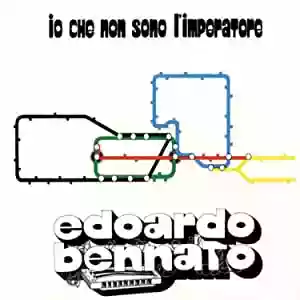
1975: Edoardo Bennato releases his third album, "Io che non sono l'imperatore." The cover represents a project for the Naples subway by Bennato himself, who would soon graduate in Architecture. Naturally, the project was rejected by the "insiders." The music in this case, as in the previous album "I buoni e i cattivi," could be defined, in my opinion, as blues-folk-rock, although it's a bit less "acoustic" and richer in arrangements; but perhaps also more "hard" and "edgy," and in some cases even "punk" (I think especially of "Affacciati affacciati"). To avoid any misunderstandings, I must say I love both "I buoni e i cattivi" and "Io che non sono l'imperatore" musically, despite their differences. The lyrics are more varied than those of the previous work, considering that the latter was a sort of concept album. In "Meno male che adesso non c'è Nerone," dedicated (it's said) to Amintore Fanfani (compared precisely to Nero), it is highlighted, on a very compelling rock rhythm, that Nero's times weren't so different from the 70s ("And at the parties he organized the beautiful world attended, and he also played, the others outside without protesting or else he increased the taxes to be paid," and again "But in the end, he knew how to do things, and to distract them from serious matters, every Sunday he sent them on vacation all to the stadium to make them have fun"). The title track, in my opinion, is a sort of resentment towards the mentioned "insiders" who had rejected his subway project, although "interpreted" in a sarcastic and allegorical way through a tongue twister; in some stanzas, unfortunately still current, I see the "corruption system" still present in many municipalities even today ("Disparities and private dealings, I am the first with my thumb down, but who tells me it's all a scene, and then it's me who cheats the most"). "Signor censore," as you can easily guess, is an attack on censorship, which, especially in the 70s, raged beautifully and cheerfully on anything: if even an author like Baglioni had to deal with it ("being naked" became "being alone" and "forbidden things" "wet shoes," from QPGA), an author like Bennato, given the topics addressed, would have had some more problematic. At least I think so, eh! "Feste di piazza" (with lyrics by Patrizio Trampetti) describes in a laconic and almost depressive manner the infamous party festivals, so numerous in the 70s, which Edo himself did not fail to attend in those years (ah, coherence, this unknown!). The piece closes with a sax solo by Robert Fix, and what a solo!!! "Affacciati affacciati," present directly in live version on the record, is a direct attack particularly on Pope Paul VI at the time, but generally on the entire Papacy ("After almost two thousand years you are watching: look out, don't get tired"). The other pieces deal with lighter themes: a woman had to get married or be condemned to remain a spinster for life (Ci sei riuscita); "Il professor Cono" is the pseudonym used by Bennato himself to sign surreal stories in the magazine "Ciao 2001": he is considered crazy probably because he was ahead of his time (modesty was probably not his strong suit); the grotesque "Io per te Margherita" is a mockery of cloying and heart-wrenching love songs; "Che ora è" is a near-punk with incomprehensible lyrics. The album closes with a sped-up version of the already fast-paced title track: fantastic!!! Ciao guagliò and see you next time
Loading comments slowly
Summary by Bot
The review explores Edoardo Bennato’s 1975 album 'Io che non sono l'imperatore', highlighting its mix of blues, folk, and rock with punk touches. It praises the rich arrangements and socially charged lyrics, addressing themes like censorship, political critique, and personal struggles. Bennato’s architectural background and rejected subway project provide unique context. The album balances serious messages with sarcasm and diverse musical experimentation.
Edoardo Bennato
Edoardo Bennato (Naples, 1946) is an Italian singer‑songwriter known for blending rock and blues with incisive satire and fairy‑tale concept albums. A charismatic live performer and early one‑man‑band on Italy’s big stages, he co‑wrote and performed the 1990 World Cup song “Un’estate italiana” with Gianna Nannini.43 Reviews
Other reviews
By Joe Perrillo
It’s an attack on censors, organized propriety, and the pretentiously cultured.
The only real flaw of this album is the music, which might seem too often harsh and not very catchy to some people.
