
 •
Rating:
•
Rating:
THE REVIEW
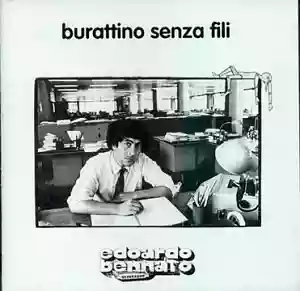
Sitting in an office in front of a desk, with a disenchanted air and a fixed gaze on the objective. This is how Edoardo Bennato appeared in the distant 1977 on the cover photo of one of the most beautiful concept albums in Italian music.
But that photo had a very precise meaning: man seen as a slave to work, progress, and ultimately, to himself. To narrate the social (and political) situation of the time, Bennato decided to reinterpret (in his own way) Collodi's fable of "Pinocchio," in a mix of Italian R'n'R and folk singer-songwriter style. All highlighted by a good dose of (self)irony and an incredible desire to shuffle the rules. Probably each of us has sung at least once in our lives the famous "Il gatto e la volpe", without fully appreciating the almost prophetic message of the song: "Noi scopriamo talenti e non sbagliamo mai, noi sapremo sfruttare le tue qualità. . . dacci solo quattro monete e ti iscriviamo al concorso per la celebrità.. !" And now? What do record companies do? Was it perhaps a premonition?!
But the whole album is pervaded by a great sense of revenge against everything and everyone, always using colorful and politically (in)correct tones but never offensive, as only Bennato could do.
Having addressed the album's themes, one cannot help but talk about the songs: besides the already mentioned and well-sold "Il Gatto e la Volpe", the immediacy of "È stata tua la colpa" stands out, which lays bare Pinocchio with his defeats and weaknesses through a text that is probably the most interesting of the album: "È stata tua la colpa e allora adesso che vuoi. . . Volevi diventare come uno di noi. . E come rimpiangi quei giorni che eri un burattino, ma senza fili. . E invece adesso i fili ce l'hai!" The whole album is pervaded by a dreamy yet melancholic atmosphere as in the sweet "La fata" (almost an invocation to the muse) and "Quando sarai grande." But Bennato learned well from the Rock 'n' Roll lesson and so he "shakes it" in "Mangiafuoco" and "In prigione, in prigione" with Ernesto Vitolo's roaring piano and Roberto Ciotti's blues guitars. There is even room for a classical music air in "Dotti, Medici e Sapienti" (with the relative "theme" as the album's tail), while "Tu, Grillo Parlante" is a pearl of wisdom that should be listened to multiple times.
This is and will remain the most successful album of the Neapolitan singer-songwriter, an album that will surpass a million copies in just a few weeks and will represent the true consecration of an artist who, until then, had produced album after album, always of excellent quality. Great musicians accompanying (including Tony Esposito on percussion) and great imagination do justice to one of the cornerstones of Italian music, a fascinating, lively, and delightful work.
The table is set: please take your seats...
Loading comments slowly
Summary by Bot
Edoardo Bennato's 1977 album 'Burattino senza fili' is a landmark in Italian music, blending rock and folk with sharp social commentary inspired by Pinocchio. Highlight tracks like 'Il gatto e la volpe' and 'È stata tua la colpa' showcase Bennato's wit and musical creativity. The album's rich mix of styles and profound messages secured Bennato's place as a major artist. This concept album remains one of his most successful and influential works.Tracklist Lyrics Videos
Edoardo Bennato
Edoardo Bennato (Naples, 1946) is an Italian singer‑songwriter known for blending rock and blues with incisive satire and fairy‑tale concept albums. A charismatic live performer and early one‑man‑band on Italy’s big stages, he co‑wrote and performed the 1990 World Cup song “Un’estate italiana” with Gianna Nannini.43 Reviews
Other reviews
By Guidino
"Personally judged by me as the best Italian album ever."
"The album ends with Quando Sarai Grande, where youth's fantasies collide with harsh reality."
By JpLoyRow2
A timeless classic that blends storytelling and rock with lasting impact.
The album's themes of freedom and control resonate through its inventive lyrics.
