 •
Rating:
•
Rating:
THE REVIEW
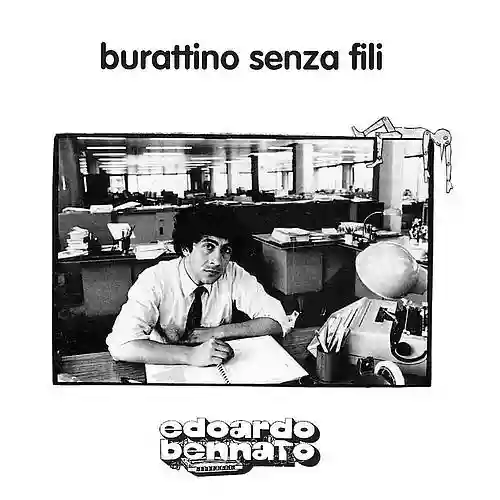
Telling the story of a historic album like "Burattino senza fili" is anything but simple; there is always the risk of falling into rhetoric and the habit of always looking at things from the past. It was the year 1977, and Bennato had released just a year earlier "La torre di Babele" another historic album, containing a mockery of the "singer-songwriter," a perfect and untouchable figure that was ironically dismantled.The new album is the first in a trilogy of musical fables (followed by Solo solo canzonette in 1980 and E' arrivato un bastimento in 1983) composed by Bennato, and the tale is that of Pinocchio and the characters surrounding him.
Bennato sets to music the various characters of the story, from Mangiafuoco who represents power, needing to have everything at hand and not tolerating those who refuse to have strings to be manipulated, to the Fata who represents the female universe eternally subjected to oppression by man, she who always pays more and if she truly seeks liberation risks being branded a witch, to the Grillo Parlante custodian of the "official culture" that kills fantasy, to the Gatto e la Volpe record producers (but not only) with no sense of morality ready to exploit the talent of the moment (you give us all the rights and we will make you a star on the Hit Parade!), to the Dotti, Medi e Sapienti professors who try to analyze the young "sick" person, each making their own pathetic moral judgment without giving a real reason for their sentences.
In "E' stata tua la colpa" the puppet Pinocchio has become a child by choice and now regrets the times when he was a wooden puppet, but free, while now he is a prisoner of the strings that inevitably wrap around him. Still very relevant is In Prigione In Prigione where Bennato speaks of a corrupt judiciary that imprisons even the innocent, guilty of rebelling against power itself.
The album ends with Quando Sarai Grande, another beautiful track, where the child, now grown-up, discovers that all the fantasies and hopes of youth collide with a life reality diametrically opposed.
An album both in terms of lyrics and musicality, absolutely impeccable and personally judged by me as the best Italian album ever, listen (for the few who do not know it), to believe.
Loading comments slowly
Summary by Bot
Burattino senza fili is a landmark 1977 album by Edoardo Bennato, the first of a trilogy of musical fables inspired by Pinocchio. The review highlights its allegorical characters symbolizing power, oppression, and cultural manipulation. Songs like 'In Prigione In Prigione' emphasize social issues such as corruption. Praised for its lyrical depth and musical composition, the album is celebrated as one of Italy's best.Tracklist Lyrics Videos
Edoardo Bennato
Edoardo Bennato (Naples, 1946) is an Italian singer‑songwriter known for blending rock and blues with incisive satire and fairy‑tale concept albums. A charismatic live performer and early one‑man‑band on Italy’s big stages, he co‑wrote and performed the 1990 World Cup song “Un’estate italiana” with Gianna Nannini.43 Reviews
Other reviews
By senior86
To narrate the social (and political) situation of the time, Bennato decided to reinterpret Collodi's fable of 'Pinocchio' in his own way.
The whole album is pervaded by a great sense of revenge against everything and everyone, always using colorful and politically (in)correct tones but never offensive.
By JpLoyRow2
A timeless classic that blends storytelling and rock with lasting impact.
The album's themes of freedom and control resonate through its inventive lyrics.
