
 •
Versione 1
Rating:
•
Versione 1
Rating:
THE REVIEW
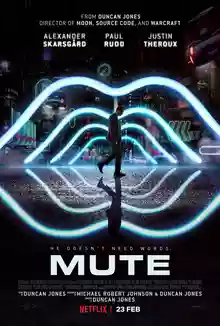
Considered conceptually as the second film in a trilogy that began with “Moon” (2009), “Mute” is a science fiction film directed by Duncan Jones, set in the city of Berlin in the year 2052. The story of the film (briefly) follows Leo (Alexander Skarsgard), a solitary type who works as a bartender in a nightclub. Leo is mute and of Amish faith, and he loves a mysterious girl with electric blue hair named Naadirah (Seyneb Saleh). One day she disappears without a trace, and Leo embarks on a search through the colorful and plastic-like settings of the Berlin capital, where he encounters typical characters like prostitutes with ambiguous, practically androgynous sexuality, or plastic surgeons devoid of any ethical and moral grounding.
“Mute” is a citational work (perhaps excessively so): the references should be primarily sought in two classic films of German cinema like Fritz Lang's "Metropolis" and "M", and in that already mentioned "aesthetic" that would indeed capture the attention of young people from all over the world and who today flock to what is undoubtedly the capital of Europe. Although the city’s structure has been likened to that of "Blade Runner", instead of the decay of Ridley Scott's settings, the depiction of the German capital, representative of a melting pot and high population density, is more of a kind of allegorical futuristic mise-en-scène. Berlin seems fake, but I can also say that I have lived there and gradually made the same considerations with, let's say, fifty years in advance, so perhaps this type of representation, as much as it is pushed to its extremes, is inevitable.
Clearly, the choices are not random. References to Fritz Lang and the represented aesthetic are indeed typically David Bowie (to whom Duncan Jones wished to dedicate the film), and Clint Mansell himself (who curated the soundtrack) mentions the Berlin Bowie with Popol Vuh and the early records of Ultravox! as his main sources of inspiration. But what struck me most are a host of coincidences, whether intentional or not, with a certain type of Salvatores cinema, particularly with “Nirvana” (1997) - starting with the references to “Blade Runner” and the use of certain images, to Stefania Rocca's electric blue hair - and then the same devotion to “M” already echoed by the Italian director in "Qua vadis, baby?" in 2005. Perhaps predictable references when tackling certain themes, but in this ideal comparison, once for a change, Italian cinema and particularly Salvatores' work prevail over a film that, despite not boring the viewer—in fact, intriguing them and prompting them to watch through to the end (in terms of acting, I would mention Paul Rudd’s quality performance and the great skill of a lesser-known name like Noel Clarke’s)—does not seem destined to repeat the same success as "Moon" and become a cult object.
Loading comments slowly
Summary by Bot
Duncan Jones' film Mute is set in a stylized 2052 Berlin and follows a mute bartender searching for his missing girlfriend. The film heavily references German classics like Metropolis and M, with an aesthetic nod to Blade Runner. While the story intrigues and performances stand out, it does not reach the cult status of Jones' earlier film Moon. The soundtrack and visual style pay homage to David Bowie and other notable influences.
Duncan Jones
British film director, son of David Bowie, known for cerebral science fiction such as Moon (2009) and Source Code (2011), the fantasy blockbuster Warcraft (2016), and the Berlin-set Mute (2018).05 Reviews
