
 •
Rating:
•
Rating:
THE REVIEW
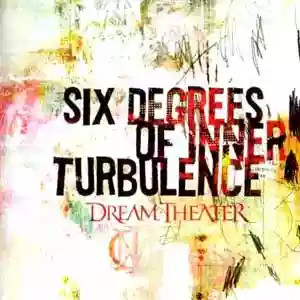
There are two types of Dream Theater fans: on one side, those with a more open and progressive mindset who are able to appreciate any of their releases, even their strange and controversial albums, the true Dream Theater fans in a few words; on the other side, the more traditional and conservative ones who inevitably demand an album in the style of "Images And Words" or "Awake," otherwise they unleash a flood of criticisms on the band (but where have the Dream Theater gone?). Want an example? When "Scenes From A Memory" was released, whose sound clearly echoed I&W, the album was acclaimed by everyone; but when "Six Degrees Of Inner Turbulence" was launched, an intentionally innovative and sophisticated album, the roads diverged: appreciated by the more open fans and criticized by the more traditionalist and closed ones.
This "Six Degrees Of Inner Turbulence" marks a serious turning point in Dream Theater's music as already hinted. The album indeed features more experimental and refined sounds, approaching the origins of progressive music; without doubt, the most genuinely progressive album in their discography, with such unique and crafted sounds never before seen in a Dream album. But the shift isn't only in the progressive aspect; in the metal aspect, in fact, the album marks almost an abandonment of classic metal influences in favor of a harsher and nu-metal-inspired sound (let's not forget that nu-metal heavily influenced the rock of that period). Yet one can still define it as an album in Dream Theater style and nothing is taken away from their technique and virtuosity, which are certainly their hallmark.
The album is the longest ever produced by the band: 2 CDs for 96 minutes of great progressive metal; the first CD contains the first 5 songs of the album, the second the entire track number 6, a 42-minute song (!) that, among other things, gives the album its name and, given its length and the length of the other songs, could never have fit on the first CD with the others.
Note that with this album begins a cycle of connections and numerical games involving the band's albums. Sixth album, 6 tracks, and a title that includes the number 6.
The first track, "The Glass Prison", in fact, begins with the same noise that closed "Finally Free", the last track of "Scenes From A Memory". It is the first track of the "Alcolisti Anonimi" saga written by Mike Portnoy to tell about his past alcohol dependencies. A 13-minute song with clear nu-metal references: first 4 minutes of distorted guitars and frantic rhythm and a nice riff by Jordan Rudess; the second part in clear Slipknot style with scratchy guitars, powerful screams by Portnoy and LaBrie, and even some vinyl scratching at the start, all to listen to in your room while you throw pillows to the ground; third more technical part where you admire Petrucci and Rudess’s solos and a heavy final riff where Petrucci showcases all his abilities to then slow down at the end and conclude with a bottle smashing. A great track.
The real experimentations of this album begin to be felt in "Blind Faith", track number 2: a semi-orchestral start well initiated by Rudess, first minutes characterized by psychedelic verses with very particular sounds that culminate in an aggressive chorus, then a great instrumental part where we first hear a great Petrucci solo, then a beautiful piano melody by Rudess, which breaks the sound of the guitars for a few seconds and then a nice keyboard riff by the same and a nice guitar-keyboard unison; then another chorus and equally psychedelic finale.
Pure experimentation in "Misunderstood": real pinkfloydian progressive in the first three and a half minutes with Rudess standing out among computer-style electronic melodies and orchestral sounds accompanied by Myung's bass. Then Petrucci kicks in with the strong guitars. The last minutes feature distorted guitars, imaginative melodies by Jordan Rudess, and a long and SPLENDID guitar feedback that will leave you speechless.
Another great track is "The Great Debate" which in thirteen minutes sees the alternation of electronic riffs, powerful guitar riffs, and sudden tempo changes; around 9 minutes we witness another instrumental part first with a nice Rudess solo, then a splendid soloist by Petrucci and then another beautiful melody by Rudess; finale again experimental with Rudess once more as the protagonist and his electronic riffs.
And we close the first CD with the pinkfloydian-style ballad "Disappear": piano and acoustic guitar (with a bit more electric guitar at the end) but not excluding experimentalism.
And we move to the second CD where we hear the true masterpiece of this album, the long 42-minute suite "Six Degrees Of Inner Turbulence"; 8 parts, some harder and others softer: as if it were an opera, the piece opens with an Overture where we can especially admire Rudess creating a typically classical melody on his own without any orchestra, then moving to "About To Crash", characterized by catchy melodies well played by Petrucci and company; with "War Inside My Head" the sound becomes more aggressive until it becomes extreme in "The Test That Stumped Them All" (absolutely to be played loud in the car ignoring the girls behind asking you to play Gigi D'Alessio) where technique emerges thanks to excellent solos by Rudess and Petrucci; rhythm then calms down to enter "Goodnight Kiss", the softest part of the piece, characterized by light and touching melodies reminiscent of the best Pooh; a more rhythmic finale characterized by very Star Trek-style sounds and a great Petrucci solo that takes us to the more pop episode, "Solitary Shell" with good acoustic guitar and beautiful melodies by Jordan Rudess to become more rhythmic and technical toward the end; we then reach the reprise of "About To Crash" with a very classic hard-rock style tone at the start and later more progressive with Rudess as the protagonist; a sizzling finale with "Losing Time" an emotional song marked by more melancholic guitars and more background keyboards; a suite that concludes with a long feedback that gradually fades away until it disappears entirely. The only thing I don't understand about this suite is the reason for splitting it, making people think they are faced with eight separate tracks: songs should not be divided, a song must be a standalone music file, in my opinion.
An album worthy of the best Dream Theater, almost on par with various "Images And Words," "Awake," and "Scenes From A Memory." If you don't like it and can't appreciate it, you just prove you can't listen to records and then... ...go to work!
Loading comments slowly
Summary by Bot
The review praises Dream Theater’s 2002 album Six Degrees Of Inner Turbulence as a turning point embracing progressive experimentation and nu-metal elements. It highlights the 2-disc structure including a 42-minute suite as a bold artistic statement. The album stands out for its technical skill, creativity, and complexity, appealing mainly to open-minded fans. Despite some fan division, the album is likened to the band's best works. The review provides detailed insights into key tracks and thematic depth.Tracklist Lyrics
Dream Theater
American progressive metal band formed in 1985, known for virtuosic musicianship and landmark albums such as Images And Words and Metropolis Pt. 2.160 Reviews
Other reviews
By Coelum
"'The Glass Prison' is powerful and fast and leads the listening to the beautiful 'Blind Faith,' which then gives way to the calmer 'Misunderstood.'"
"The album is 'too much,' and this time the quantity somewhat annoys the quality."
By Piccio
I believe this is an album worthy of being purchased, but it’s also true that only after many listens can its beauty be grasped.
It starts with a sequence of piano chords from the great Jordan Rudess that gives you chills on the spine from the very first listen.
By Dreamtheater
"Only after many hearings can you appreciate the beauty of this double effort."
"The final track is worth the price of the CD — beautiful, truly fascinating with a melancholic atmosphere."
By mauro60
A stroke of genius!: a wonderful album, one of their best that contains all these forms.
"The Great Debate" is a phantasmagoric kaleidoscope of times, rhythms, original notes but with a classic aftertaste.
