
 •
Rating:
•
Rating:
THE REVIEW
After the raw and heavy sounds of Train Of Thought, Dream Theater rediscover their more melodic vein with the excellent Octavarium, possibly one of the most underrated albums of their career. Perhaps we're far from Images And Words, but this album still offers very effective moments. The need to calm down and have a nice cup of chamomile tea was strongly felt by the band after the vitriol of "Train Of Thought"; it's very noticeable in tracks like "These Walls," "The Answer Lies Within," and "I Walk Beside You," and in general, the entire album leans towards rather moderate tones. However, it doesn't lack extreme pieces like "The Root Of All Evil" and especially "Panic Attack." There's also a certain variety among the tracks: each track seems to be different and have its own story, with none resembling another. The tracks also seem to recall that verse-chorus structure that Dream have always resorted to in those moments when ideas weren't very clear, but we have to say that these structures benefit the album. The only criticism that could be directed at the album is perhaps the lack of personality shown by the band members in the song compositions, which sees them drawing melodies from various groups, but it's not a significant flaw for the album. It's like a record with a slightly scratched surface that still plays perfectly.
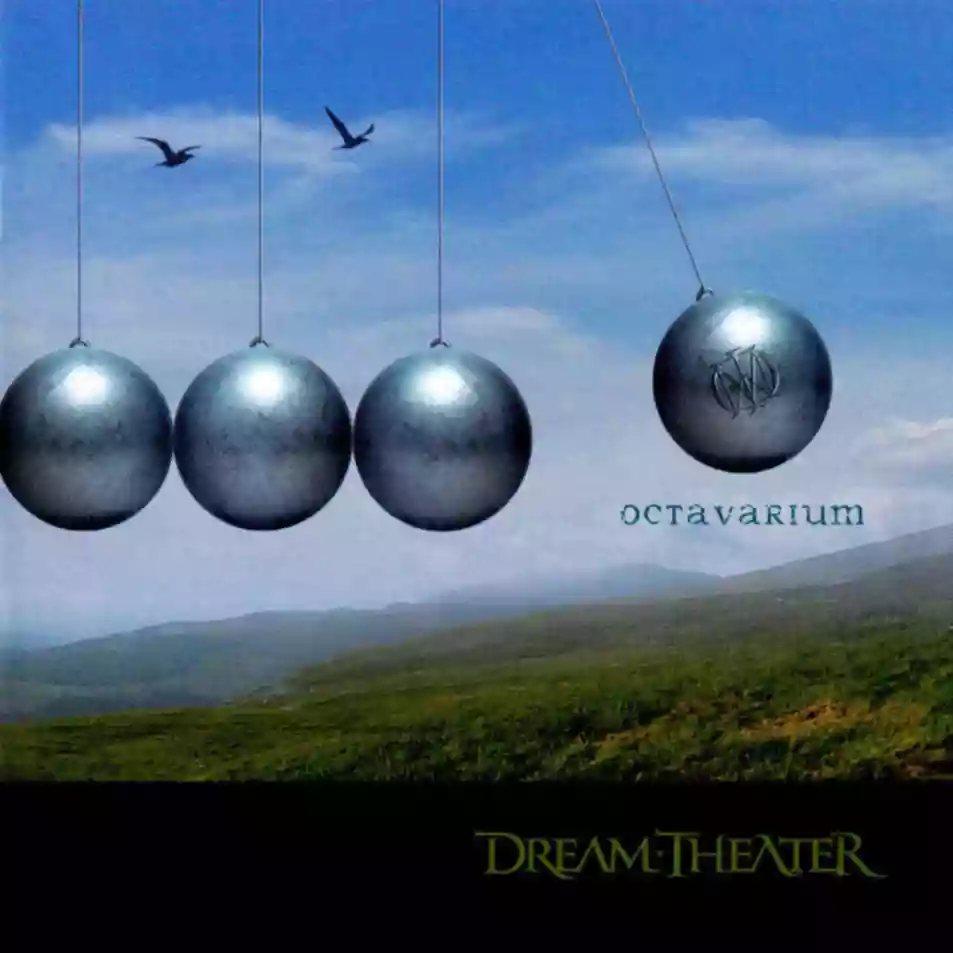
Another curiosity that will keep you glued to the internet to learn more is the incredible numerical connection on which the album is based: eighth album and so... it's called Octavarium, has eight tracks and many other hidden tricks in the cover, on the CD, in the song durations; so many that it would take a day to explain them. Note how the tracks are also keyed to different tones, starting from an F with the first track to reach the F that closes the eighth with the last, and how these tracks are linked by accurate interludes (excluding those tracks keyed among those notes where there is no semitone).
Scanning through the tracks, it opens with "The Root Of All Evil" (third episode of the alcoholic anonymous saga), which begins with the last piano note of "In The Name Of God" (once again linked to the previous album). It's a very experimental start, almost Pink Floyd-like (the Pink Floyd of Time almost) and then spills into distorted and angry melodies that very much recall "Slither" by Velvet Revolver, well softened by Rudess's keyboards. Notable is the keyboard solo at mid-song, beautiful piano ending.
And we are immediately delighted with the ballad "The Answer Lies Within," almost vintage-styled, led by piano and string quartet. Good for those looking for truly strong emotions.
"These Walls," on the other hand, seems to capture the influences of nu-metal and neo-progressive with a slow and flowing rhythm. The chorus features Petrucci's distorted guitars dueting with Rudess's beautiful keyboard riff, the verses are characterized by experimentalism. And I challenge anyone to deny that the song resembles "From The Inside" by Linkin' Park for rhythm and melody changes. We’ll talk again after listening.
"I Walk Beside You" perhaps represents the most blatantly commercial episode of the band's career. An extremely essential song with guitars in evidently pop-rock style U2.
And we reach the album's and perhaps their career's most extreme episode, "Panic Attack": we've never seen Dream so frantic, it's evident just hearing the initial bass attack. But everything without giving up melody thanks to Rudess who offers excellent Gothic-style melodies. There's also room for an instrumental section with guitar and keyboard solos and unisons.
"Never Enough" greatly feels the influence of Muse, especially if you listen to "Stockholm Syndrome." Yet, it's a fairly technical track despite respecting the verse-chorus structure. Noteworthy are Rudess's fine keyboard riffs (at times more melodic, at times more distorted), and the instrumental part where Petrucci and Rudess duet as they always have.
"Sacrificed Sons," more detached from the song form, is perhaps the album's lowest point. Slow start with excellent piano, then moving to more aggressive rhythms alternated with orchestra accompaniments.
And so we arrive at "Octavarium," the centerpiece, with its 24 minutes in which we truly hear all the faces of Dream Theater. A song that represents almost a journey through the various progressive forms history has known. Very spatial start, not much different from "Shine On Your Crazy Diamond" by Pink Floyd, with background keyboards accompanied first by Jordan Rudess's continuum and then by the lap steel guitar (also played by him). Then we delve into neo-progressive with touching piano melodies and 12-string guitar that end, around the 12th minute, leading into roughly 7 minutes of true progressive metal opened by a spectacular synthesizer solo by Jordan Rudess, marked by a delightful instrumental part with Petrucci and Rudess truly in form and closed by a guitar riff that becomes increasingly aggressive (as does LaBrie's voice, who even screams as never before) while in the background you can hear voices from the 7 previous songs of which only those who washed their ears in the morning will notice. The finale opts for more symphonic prog where a Petrucci solo is accompanied by the orchestra. The song ends with the beginning of "The Root Of All Evil," marking the end of a cycle (the cycle that saw them connect albums from the 5th to the 8th).
Excellent album, beyond what can be said, criticized, contested. Sure that if you continue to remember the Dream only for "Images And Words" and "Awake," you will not be able to appreciate anything of what great they will continue to do.
Loading comments slowly
Summary by Bot
Octavarium marks a return to melodic elements for Dream Theater after the heavy Train of Thought. The album features a balanced mix of moderate tones and intense tracks, with variety in composition reflecting different musical influences. Despite some critique on originality, the album's conceptual depth and meticulous structure shine through, especially in the 24-minute title track. Octavarium is a standout prog metal work deserving more recognition.Tracklist Lyrics Videos
Dream Theater
American progressive metal band formed in 1985, known for virtuosic musicianship and landmark albums such as Images And Words and Metropolis Pt. 2.160 Reviews
Other reviews
By Stratocontact
"This album showcases a different configuration from the previous ones, with less intricate sounds aiming for greater melody."
"After 75 minutes of listening, Dream Theater has achieved their goal; the quality of the product has not changed, whether one likes them or not."
By Lordsandreik
Let’s be honest, the Dream are NO longer the ultra-tech metal-prog-band they wanted to appear to be.
Maybe Dream, after reaching a good level worldwide, want to relax and enjoy fame and money, but I don’t think music, in general, can benefit from this.
By AndJusticeForAll
A disappointment? Yes. From Dream Theater, one expects something entirely different.
"Panic Attack" is literally a masterpiece, the song that makes the album worth it.
By Vinpe75
DT’s prog is back, listen to believe.
Notably, each song ends with the intro of the next.
By Metropolis79
Octavarium is the epitome of this, especially for the precise use of the real orchestra behind the New York quintet.
DT 'demonstrates they don’t need to prove' to anyone their technical prowess.
