
 •
Rating:
•
Rating:
THE REVIEW
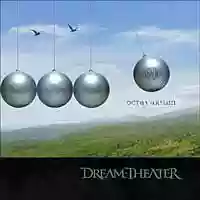
They're back. After the fantastic 'Train Of Thought,' the masters return to the scene with an album that has been described as a summary of their entire career, also being the last one with the Atlantic label.
But setting aside the aura of mystery surrounding this project (talks of the golden ratio used in the songs, various self-celebratory citations in the lyrics, and more) what truly interests us is the music. The music, which has rendered the DTs immortal since the first loved/hated album with Dominici on vocals, in this 'Octavarium' leaves one a bit puzzled. The first two tracks slip by without a trace, and in fact, "Answer Lies Within" is downright annoying with its overly sweet chorus. With the third track, "These Walls," a smile returns, only to plunge into the sheer mediocrity of "I Walk Beside You" which wouldn't look out of place (and that's not a compliment) on MTV. The fifth track is by far the best moment of the album, "Panic Attack" opens with a compelling bass riff from the unfortunate Myung, who until now had hardly been heard, carrying on with truly enjoyable vocal experiments accompanied by consistently powerful riffing. It moves on to "Never Enough" which musically contains some interesting moments (an excellent stopped harmonics riff that accompanies the effected vocals in the middle of the song, as well as the lengthy instrumental passage, almost a solo, leading to the final verses) but whose vocal lines did not completely convince me.
A prologue of vaguely hypnotic radio voices leads into the penultimate song "Sacrificed Sons." 10 minutes or more that could easily have been 6 if the DTs hadn't overly stretched the first part of the track; in the end, a track that despite containing some nice passages scattered here and there, doesn't leave much for the listener. And finally, the title track, "Octavarium," with its 24 minutes. The beginning is in Pink Floyd style, with highly stretched atmospheres and a seventies guitar, but for the first 4-5 minutes, there's very little of a song, and even later, the piece drags out wearily with vocal lines repeated ad nauseam. In short, it is not "A Change of Seasons" but an ordinary DT song with verses pedantically repeated until you wish to turn off the player; you have to wait until the 12th minute to hear a variation, a nice Petrucci solo that introduces a more rhythmically sung second part. From here until the 20th minute there's the best part of the piece, almost entirely instrumental with Petrucci's guitar weaving threads of 70s prog flavor. The conclusion is once again slow and drawn-out, but you can do without listening and stop at the 20th minute because after there's a long solo accompanied by a keyboard orchestration that adds nothing to the rest.
In conclusion, it cannot be said that it is a bad album, but one was obliged to expect something better.
Loading comments slowly
Summary by Bot
Dream Theater's Octavarium marks a return after 'Train of Thought' with a mix of strong and weak tracks. While some moments like 'Panic Attack' shine with powerful riffs and vocals, other songs feel overly stretched or lack memorable hooks. The ambitious title track drags in parts, making the album fall short of expectations set by the band's previous work. Overall, it's not a bad album but somewhat uneven in execution.Tracklist Lyrics Videos
Dream Theater
American progressive metal band formed in 1985, known for virtuosic musicianship and landmark albums such as Images And Words and Metropolis Pt. 2.160 Reviews
Other reviews
By Stratocontact
"This album showcases a different configuration from the previous ones, with less intricate sounds aiming for greater melody."
"After 75 minutes of listening, Dream Theater has achieved their goal; the quality of the product has not changed, whether one likes them or not."
By Lordsandreik
Let’s be honest, the Dream are NO longer the ultra-tech metal-prog-band they wanted to appear to be.
Maybe Dream, after reaching a good level worldwide, want to relax and enjoy fame and money, but I don’t think music, in general, can benefit from this.
By AndJusticeForAll
A disappointment? Yes. From Dream Theater, one expects something entirely different.
"Panic Attack" is literally a masterpiece, the song that makes the album worth it.
By Vinpe75
DT’s prog is back, listen to believe.
Notably, each song ends with the intro of the next.
By Metropolis79
Octavarium is the epitome of this, especially for the precise use of the real orchestra behind the New York quintet.
DT 'demonstrates they don’t need to prove' to anyone their technical prowess.
